


The Significance of Chorazin (Chorazim) in the Bible
By ICEJ USA Education Director Jeff Baxter
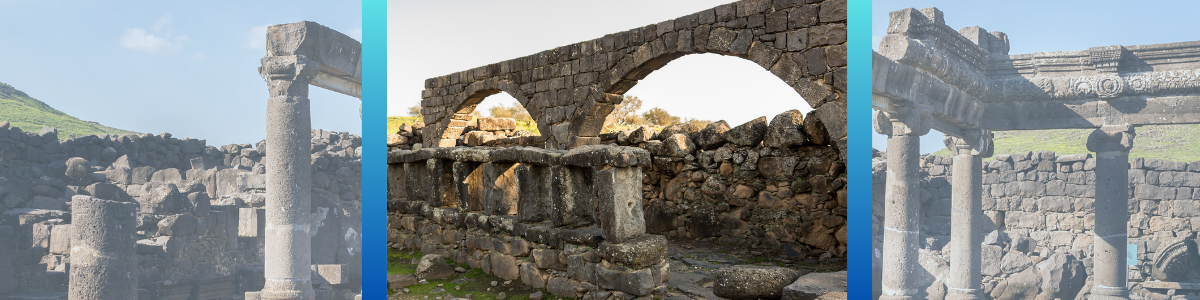
Few archaeological sites evoke the weight of biblical prophecy quite like the dark, haunting ruins of Chorazin in the Bible. Volcanic rock can be seen everywhere near this ancient city, stretching all the way two miles to the Sea of Galilee in Israel. This city was made of basalt rock, distinguished by its black color, and its ruins look like a sign of the curse uttered by Jesus 2,000 years ago: “Woe to you, Chorazin!” (Matthew 11:21).
Coins found in the area seem to indicate Chorazin began at the time of the Maccabees about a century before Jesus walked the streets of the city. A century after Jesus was here, Rome destroyed Chorazin because of its involvement in the Jewish Revolt in Jerusalem led by Simon Bar Kochba (AD 132–135).
The town would be rebuilt with a new beautiful synagogue, a plaza area, and new houses lining its streets.
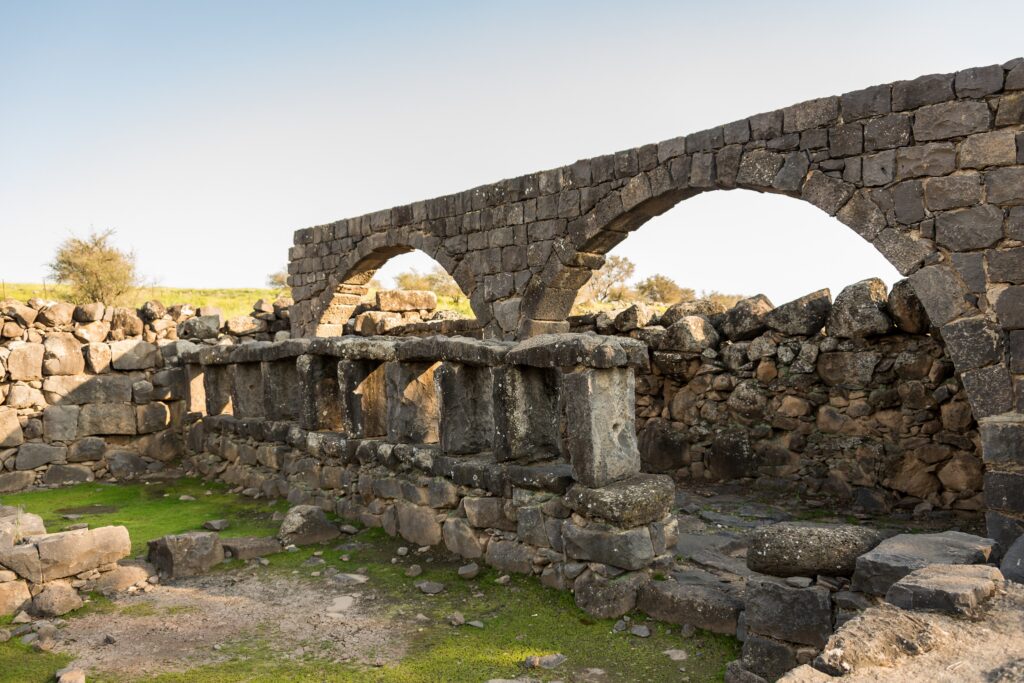
Most of the buildings were reconstructed from the fallen rock in the fourth century AD. The excavated and reconstructed parts of the city made of basalt rock are a synagogue, public courtyard, and houses.
Prosperity did not last long in Chorazin (or in modern English, Chorazim), for it was destroyed again at the end of the fourth century AD.
Religious tension continued in the area in the middle of the fourth century, which probably led to this destruction. Although Emperor Constantine legalized Christianity in AD 313, his rule and that of his sons was followed by Julian, who opposed followers of Jesus. Julian supported Jewish causes and even helped rebuild parts of the temple to weaken Christianity.
However, after his death in AD 363, there were constant attacks on synagogues and the Jewish community around the Sea of Galilee. The destruction of the synagogue in Chorazin may have been a result of one of those attacks. Though there was a subsequent rebuilding of this ancient city, an earthquake in AD 747 ultimately destroyed all the towns along the Jordan Valley.

The Synagogue in Chorazin
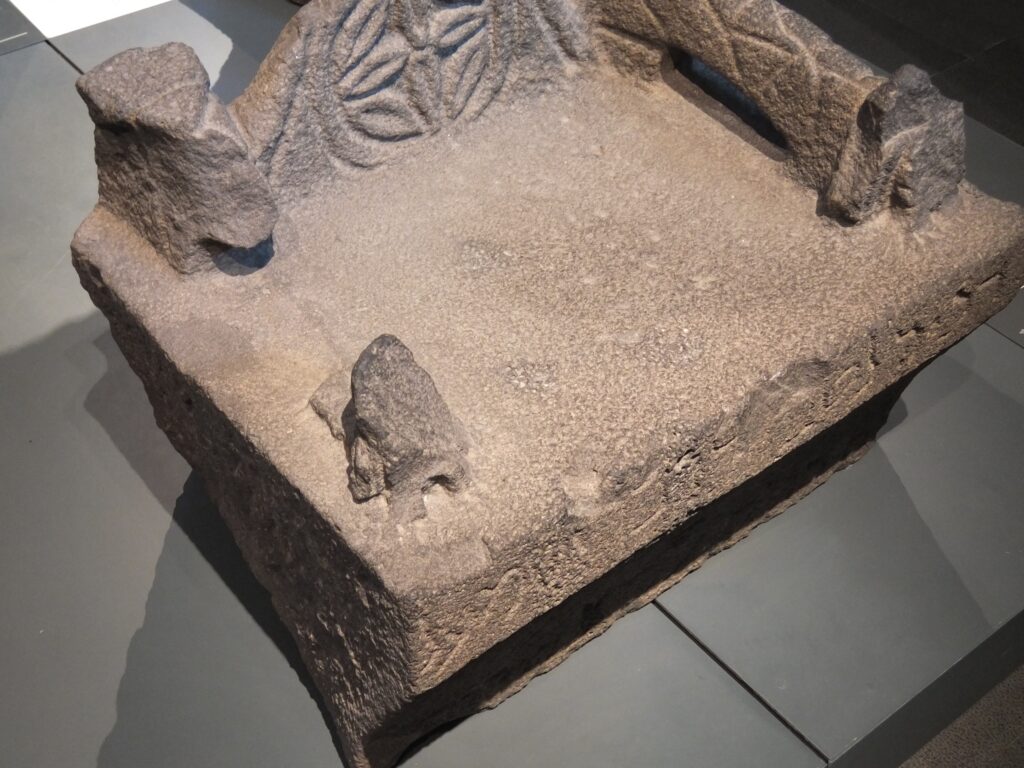
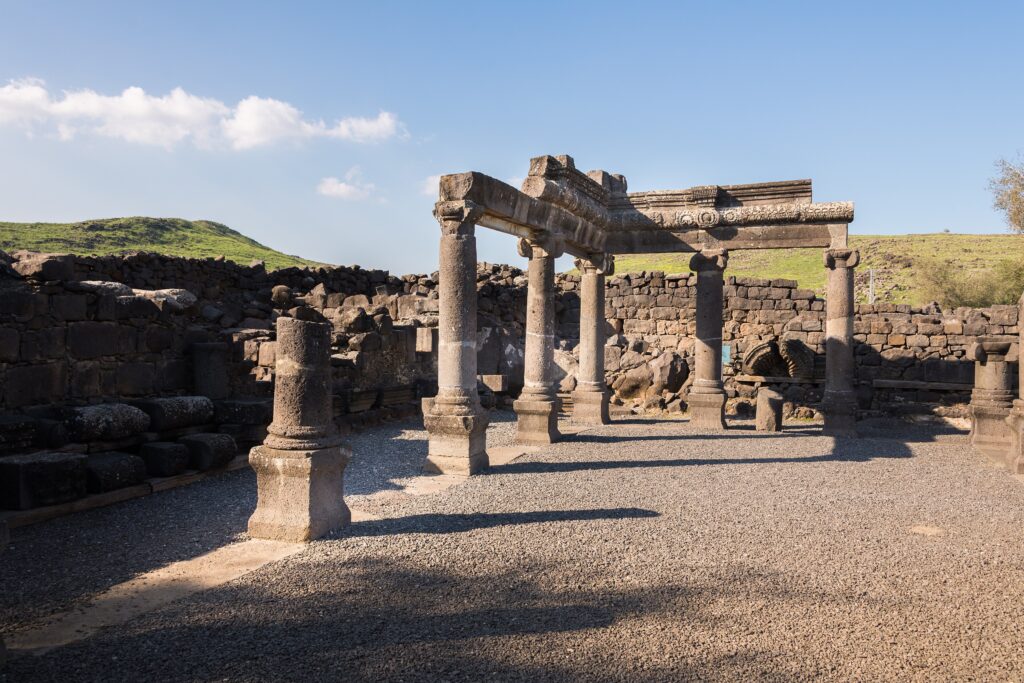
The highlight of visiting this archaeological site is the synagogue. The remains are elaborate with one large hall and stone benches on the floor, which would have had a broad staircase leading to the façade that faced south toward Jerusalem. Visitors will quickly notice the Seat of Moses (or the Moses Seat), carved from a single basalt block, from which the Torah would be read. On its back is an inscription in Aramaic signifying who made and donated the original to the synagogue. The original Moses Seat is in the Israel Museum today.
Why Did Jesus Curse Chorazin?
Jesus warned the crowds against those who “sat” in the Moses Seat. The religious leaders of Jesus’ day would sit and teach from the Torah here but would leave the synagogue and disobey what they had just read, proving to be hypocrites (or actors in a stage production). Jesus said to do what they said, but not what they did. The Pharisees looked good on the outside but were corrupt on the inside (Matthew 23:1–12).
Jesus warned what would happen if they remained prideful: “For those who exalt themselves will be humbled, and those who humble themselves will be exalted” (Matthew 23:12). Jesus would go on to reprimand and scold the Pharisees with seven “woe” statements in the rest of the chapter (Matthew 23). This serves as a good reminder for us to not only know how to live for Jesus, but to put it into practice today.
Lessons from Chorazin
To spend time with Jesus during His earthly ministry was to walk amid the supernatural. The miracles He performed were not mere spectacles—they were divine credentials, validating Jesus as God in the flesh and authenticating His identity as the long-awaited Messiah.
For the greater part of His three-year ministry, Jesus concentrated His efforts within a compact, several-mile radius in northern Galilee. Capernaum, Chorazin, and Bethsaida formed what scholars call the “Evangelical Triangle”—an area granted more spiritual light and eyewitness definition than anywhere else on earth. Yet, despite this unprecedented access to the power of God, the relationship between Jesus and these communities eventually reached a turning point. God’s presence had been in their midst, but the people remained unmoved. Matthew’s Gospel records the sobering moment Jesus drew the line:
Then Jesus began to denounce the towns in which most of his miracles had been performed, because they did not repent. “Woe to you, Chorazin! Woe to you, Bethsaida! For if the miracles that were performed in you had been performed in Tyre and Sidon, they would have repented long ago in sackcloth and ashes. But I tell you, it will be more bearable for Tyre and Sidon on the day of judgment than for you. And you, Capernaum, will you be lifted to the heavens? No, you will go down to Hades. For if the miracles that were performed in you had been performed in Sodom, it would have remained to this day. But I tell you that it will be more bearable for Sodom on the day of judgment than for you. (Matthew 11:20–24)
Jesus began to curse these cities where most of His miracles took place for their lack of repentance and refusal to turn to Him. They knew so much, but they believed so little. They saw the fullest extent of God in front of their eyes, watched people’s lives be transformed, and witnessed miracles firsthand, yet they would not believe. They had seen a sick child made well, the deaf made to hear, and blind people regaining eyesight, yet they refused Jesus as Messiah. Jesus said even Sodom —a city synonymous with wickedness and pagan rebellion—would be better than these cities (Matthew 11:24). Something drastic needed to happen.
Conclusion
Chorazin stands in ruins today for a reason—the result of Jesus’ curse, not merely Roman attacks or an earthquake. When we see those ruins, we are reminded that it is better to not experience a miracle than to have witnessed one and not believe. It is better to not know God than to know God and never be changed. Jesus cannot remain neutral in our lives, and the events of Chorazin make that point.
As followers of Jesus, we must be careful not to just read about Jesus without actually following Him. Jesus was inviting these communities to place their trust in Him because He had done miraculous things before their eyes and proved He was the Messiah. People’s physical lives had been changed. The residents of these cities knew the names of those transformed by Jesus; yet many did not trust Him.
Today, He is inviting us to live a life of following Him. Jesus does not want frantic fans; He wants faithful followers. Chorazin in the Bible serves as a wonderful reminder to place all our trust in Him.
See Chorazin in the Bible for yourself! Join an ICEJ USA tour today.
Related Articles
Shiloh in the Bible: From Sacred Center to a Cautionary Tale
The Story of Masada in Israel: History, Rebellion, Sacred Legacy
The Biblical Significance of Magdala in Israel
Mount Ebal Amulet Affirms Israelite Worship of “Yahweh”