



What Is the Priestly Blessing?
By ICEJ USA President Dr. Susan Michael
God loves to bless His people. He wants us to be fruitful, growing, and to have an abundant life. In the Old Testament, He even instructed the high priest to pronounce His blessing over His people—known as the Priestly Blessing—and there’s something beautiful we can learn from it.
The Priestly Blessing
This unique blessing is found in Numbers 6:22–27:
And the Lord spoke to Moses, saying: “Speak to Aaron and his sons, saying, ‘This is the way you shall bless the children of Israel. Say to them: “The Lord bless you and keep you; the Lord make His face shine upon you, and be gracious to you; the Lord lift up His countenance upon you, and give you peace.” So they shall put My name on the children of Israel, and I will bless them.’”
God did not leave the blessing of His people to chance. He instituted a specific, audible mechanism for it, instructing the priesthood to act as the vessel through which His favor was pronounced.
Notice that God said by pronouncing this “priestly blessing,” the priests would in effect “put God’s name” upon the children of Israel. In the ancient Near East, a name was not merely a label—it represented the very essence, character, presence, and authority of a person. It signified identity and ownership, like a seal on precious cargo. For example, if you traveled under the name of a powerful king, you carried the full authority of that king’s shield. An enemy wasn’t just dealing with you as an individual; they were potentially battling an entire empire.
Therefore, having God’s name “put” on them acted like a seal of divine ownership, marking the Israelites as His personal possession and placing them under the sovereign protection of their King. By placing His name on His people, He was also establishing them as a mobile, living sanctuary. His presence was not confined to a building; rather, it went with them into the wilderness, into battle, and into their daily lives.
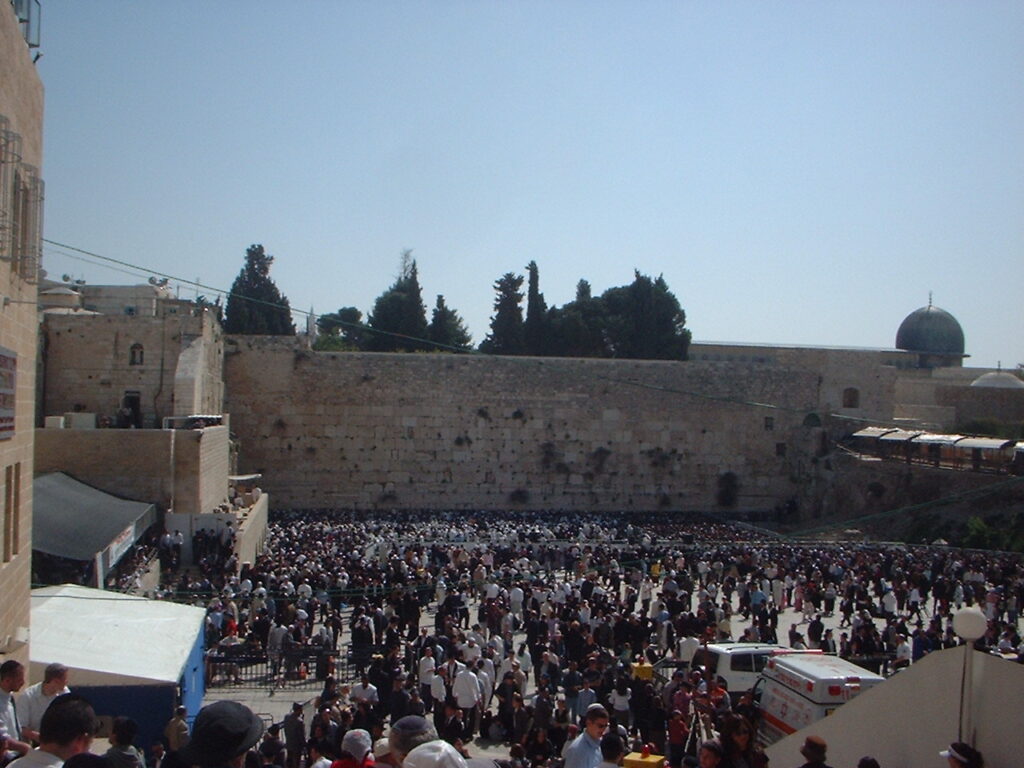
To this day in traditional Jewish synagogues, descendants of the priestly lineage of Aaron—the Kohanim—still perform this service, known as the Birkat Kohanim (the Blessing of the Priests). As they speak the words, they raise their hands and separate their middle and ring fingers while touching their thumbs together, forming the shape of the Hebrew letter Shin (ש). This gesture carries profound significance: Shin is the first letter of Shaddai, from El Shaddai—the Almighty, All-Sufficient God. By shaping their hands into this holy letter, the priests are visually and symbolically projecting the name, authority, and identity of God directly onto the congregation.His image. This means we are all equal in His sight, and every single human life has dignity and value and deserves respect.

Face, Favor, and Peace
The priestly blessing also appeals to God to “make His face shine upon you.” This represents His delighted attention and pleasure. The text continues: “May the Lord lift up his countenance upon you and give you peace.” The Hebrew word for “countenance” is panim, which literally means “face.” In Hebrew thought, “lifting up the face” was an idiom that meant actively raising one’s head to make direct, joyful eye contact with someone (as opposed to hiding one’s face in anger or shame, as Cain did in Genesis 4:6). For God to “make His face shine” and “lift His countenance” upon His people meant focusing His full attention on them—and smiling. It was the ultimate expression of intimacy and favor.
Lastly, the blessing requests that God give His people peace. This is not merely the absence of conflict or a quiet, calm feeling. Rather, it is rooted in the Hebrew word shalom and its root shalam, which means “to make whole, to restore, to make full amends, or to pay a debt.” God’s promise of shalom was a promise of wholeness in every area of their lives—physical, emotional, relational, and spiritual.
The Global Mission of Blessing
God wanted to bless His people, but that blessing was never meant to stop with them. He wanted the surrounding nations to understand exactly where those blessings came from. Psalm 67:1–2 beautifully echoes the intent of the priestly blessing:
May God be merciful to us and bless us, and make his face to shine upon us, that your way [what God is like] may be known on earth, your saving power among all nations. (ESV)
God’s blessing and attention on Israel would make His saving power known throughout the earth. Those among the nations would see how Israel was uniquely blessed and protected and say, just as Moses recorded in Deuteronomy: “Surely this great nation is a wise and understanding people. For what great nation has a god as near to them as the Lord our God is near to us whenever we call on him?” (4:6–7).
Conclusion: God’s Blessing Upon You
Like the nation of Israel, God wants to bless you so much that those looking in on your life will see Him—His authority, His power, and His peace. Just as Israel’s favor was meant to impact the surrounding world, may the blessing on your life draw others to the One True God.
Related Questions
Is the Priestly Blessing the Same as the Aaronic Blessing?
Yes, they are the same blessing. The Aaronic Blessing refers to the prayer Aaron and his sons were instructed to speak over the people of Israel (Numbers 6:22–27). In Judaism, it is commonly known as the Birkat Kohanim, or the Priestly Blessing.
How Does the Priestly Blessing Apply to the New Testament Believer?
Jesus has already permanently granted everything in the Priestly Blessing—we have peace with God through Jesus according to Romans 5:1.
How Should Christians Approach the Priestly Prayer?
The Priestly Blessing should be a reminder of what we have in Jesus and a request to understand those blessings more fully.
Where in the Bible Is the Priestly Blessing Referenced?
The theme and language of the Priestly Blessing appear throughout Scripture—most notably in Numbers 6, Psalm 67:1–2, Psalm 80, and Psalm 121. It also reflects God’s foundational promise to Abraham in Genesis 12:2–3 to bless His people so they may be a blessing to all nations.
Can Parents Speak the Priestly Blessing over Their Children Today?
In Jewish tradition, fathers and mothers traditionally recite Numbers 6:24–26 over their children on Shabbat evenings. However, many Christian families also speak this blessing over their children every day as an intentional, Scripture-based way to pronounce God’s covenantal favor, protection, and identity over them.
Related Articles
Gentiles in God’s Plan of Redemption
Do Gentiles Have a Role in the Restoration of Israel?
Simeon in the Bible: Why We Must Have “Eyes of Expectation”
Zechariah’s Prophetic Visions: A “Righteous Remnant”
Keep Learning
What Is Antisemitism? Unpacking History’s Longest Hatred