



Significance of Jerusalem: Why It’s Important to Jews & Christians
By Shelley Neese, ACLI Coordinator
What is the significance of Jerusalem in the Bible, and why is it so important to the Jewish people and Christians today? For millennia, empires fought over this Holy City—from the land-hungry Babylonians to the religiously motivated crusaders. Without the Bible, however, Jerusalem’s fame makes little sense. Despite the psalmist’s portrayal of Zion, the Judean mountains look more like weathered hills than dramatic peaks. Yet, if spiritual history could be measured in feet and holiness equated with grandeur, Jerusalem sits atop the highest and most stunning range. Even if Jerusalem is not the literal geometric center of the earth, it is at the heart of any spiritual map.
For Jewish people, Jerusalem is synonymous with their entire faith. The First and Second Temples stood on the mount, and the covenant promises to Abraham and David took root in this soil. For Christians, Jerusalem is the backdrop to Jesus’ teachings, miracles, trial, crucifixion, and resurrection. For both Jews and Christians, Jerusalem is God’s footstool—the place where His name remains forever (2 Chronicles 33:4). To study Jerusalem’s history is to retrace the geographic fingerprints of God, where He revealed Himself to humanity.
Keep reading to learn more about why Jerusalem is important or click to a topic that interests you.
- The City of Melchizedek
- David’s City
- The Place of God’s Presence
- The Second Temple
- Jerusalem at the Time of Jesus
- The Spiritual Capital of Judaism
- The Holy City of Christianity
The City of Melchizedek
Jerusalem first appears in Genesis 14 under its ancient name, Salem. The city was ruled by the mysterious priest-king Melchizedek, who appears in Genesis without a backstory or genealogy. Melchizedek met Abraham in the valley as the patriarch returned from battle against an alliance of Canaanite kings. He brought out bread and wine to share with Abraham as a formal sign of peace. Melchizedek blessed Abraham, and, in turn, Abraham voluntarily gave him a tenth of his spoils.
The Genesis account is brief, yet the spiritual authority of Melchizedek resonates throughout Israel’s history. In Psalm 110:4, God issues a formal oath for the coronation of a future king: “You are a priest forever according to the order of Melchizedek.” As the nation of Israel developed, the law strictly divided the roles of king and priest—a separation that often caused tension between the palace and the temple. However, this ancient “order” pointed back to an older authority in Jerusalem—one that existed before the crown and the altar became separate offices. The author of Hebrews identifies Melchizedek as a messianic type. This figure found His ultimate fulfillment in Jesus, who serves as both priest and king, ruling over Jerusalem and bridging the divide between God and man (Hebrews 7:1–3).
Physical evidence now supports the history of this mysterious king. In the City of David, excavations have revealed a rock-cut altar that dates to the era of Melchizedek. Unlike other Canaanite sanctuaries from that era, no small idols were found. This may be evidence that, under Melchizedek’s authority, Salem permitted only the worship of the one true God.
David’s City
The Jerusalem ridge system in Israel holds two sacred peaks: Mount Moriah and Mount Zion. Mount Moriah, the northern ridge, is home to the Temple Mount. To the west and south, the ridge of Mount Zion became the location for David’s palace.
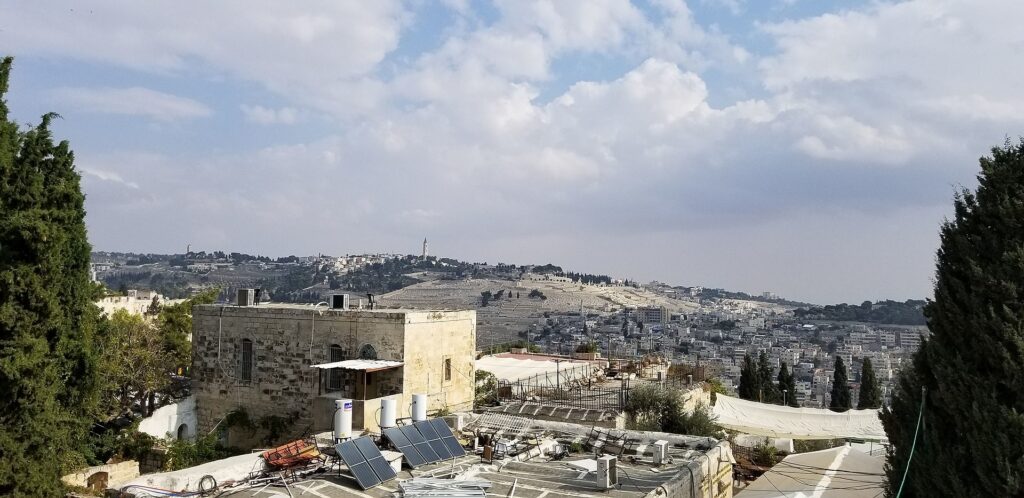
It was to Mount Moriah that Abraham, at around 120 years old, brought his son, Isaac. Just as Abraham prepared to offer his son on the altar, God stayed His hand. Recognizing Abraham’s faith, He pointed out a ram caught in a thicket to be the sacrifice. Abraham named the spot “The-Lord-Will-Provide.” Indeed, God continued to provide for Abraham’s descendants on that same mountain—a place set apart by Abraham’s obedience and God’s mercy.
Roughly six centuries separate Abraham’s near sacrifice on Mount Moriah from Joshua’s attempt to capture Mount Zion, an area adjacent to Mount Moriah that had grown from a small village into a Jebusite mountain fortress. The Jebusites were skilled engineers. Archaeologists have since unearthed giant stone terraces and a 60-foot-high retaining wall, now known as the Stepped Stone Structure, built during this period.
These strategic defenses made it impossible for Joshua and his army to take the city during the conquest of the Holy Land. Although Joshua killed the Jebusite king in open battle, his troops never breached the walled fortress. Throughout the period of the Judges, the Israelites controlled the countryside, while the Jebusites watched them from their towers.
When David was first appointed king, he ruled from Hebron in the Southern Kingdom. As his power grew, he chose Jerusalem as a neutral capital to unify the nation because it sat on the border between the northern and southern tribes.
Around 1000 BC, King David rallied his troops outside the city walls. The Jebusites were so confident in their defenses that they claimed even the “blind and the lame” could hold the city. However, David’s general, Joab, found a way to avoid scaling the cliffs. In a move like a biblical Trojan horse, he led his troops up a vertical water shaft that opened inside the city. This surprise attack handed Mount Zion over to King David.
Later in David’s reign, a plague swept through the land. Desperate to stop the death toll, David saw a vision of the Angel of the Lord standing over Jerusalem. God commanded the “king after His own heart” to build an altar on the ridge of Mount Moriah. The site was a threshing floor owned by a Jebusite man. David insisted on buying the property, refusing to offer a sacrifice to God that cost him nothing. Once again, Mount Moriah witnessed the miracle of God’s mercy and His protective hand over His people.
The Place of God’s Presence
King David felt uneasy living in a palace of cedar while the ark of the covenant remained in a tent. He desperately wanted to create “a dwelling place for the Mighty One of Jacob” (Psalm 132:5). Although God allowed David to bring the ark to Jerusalem, He forbade David from building a temple. Through the prophet Nathan, God explained that David was not the right king for this task. David was a warrior, and he had seen too much blood on his hands.
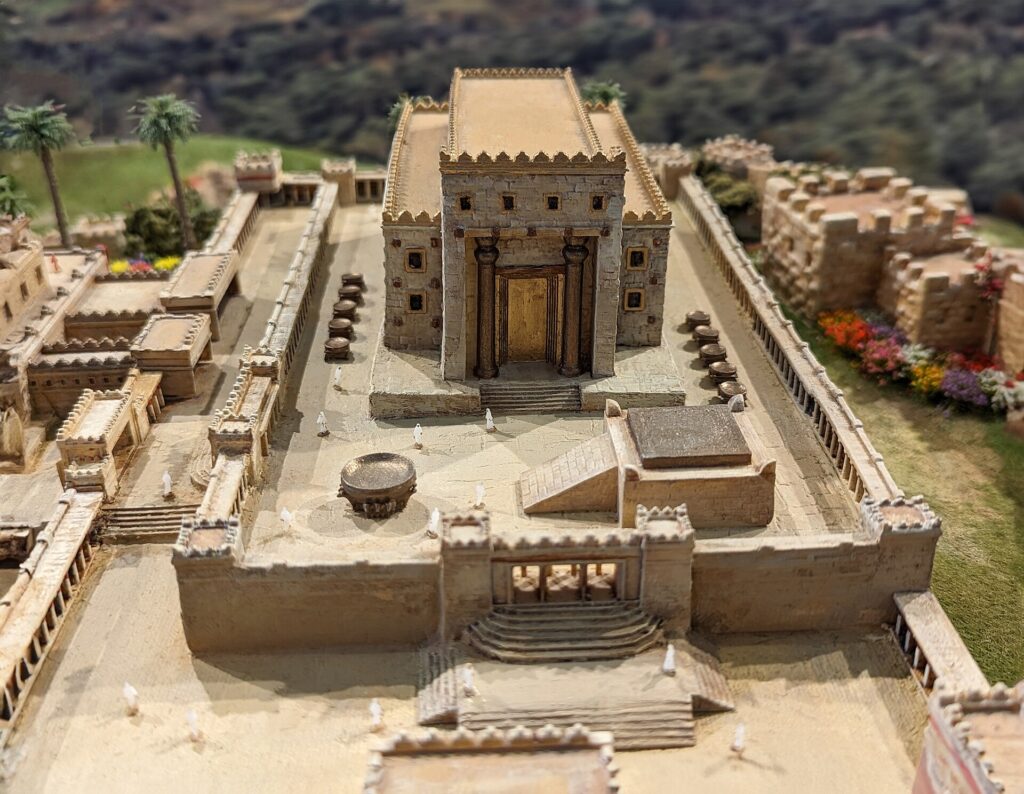
Instead, King Solomon built the house for God in Jerusalem. The wise king used the finest cedars from Lebanon and imported precious metals and stones. For seven years, he employed skilled Phoenician artisans and thousands of Israelite laborers. When the work was finished, Solomon moved the ark of the covenant from the City of David to its new home in the Holy of Holies. All those present watched as the Shekhinah—the visible glory of God—filled the house.
second-templeAt the temple dedication, Solomon declared: “I have surely built You an exalted house, and a settled place for You to dwell in forever” (1 Kings 8:13). Yet Solomon also understood that God is not limited by physical space. When the work was complete, Solomon asked: “But will God indeed dwell on the earth? Behold, heaven and the heaven of heavens cannot contain You. How much less this temple which I have built!” (1 Kings 8:27).
Despite a civil war between Israel and Judah and several foreign raids, the First Temple stood for four centuries. In 586 BC, King Nebuchadnezzar besieged the city and set it ablaze. The Babylonians stole the sacred treasures, melted the gold and bronze, and smashed the two bronze pillars into fragments. After a failed escape, King Zedekiah was caught and exiled to Babylon along with the rest of Jerusalem’s elite.
Though the temple was reduced to ashes, the memory of Zion lived on. During their 70-year exile, the people longed for Jerusalem. Psalm 137 captures their loyalty to Jerusalem:
By the rivers of Babylon, there we sat down, yea, we wept when we remembered Zion . . . If I forget you, O Jerusalem, let my right hand forget its skill! If I do not remember you, let my tongue cling to the roof of my mouth—if I do not exalt Jerusalem above my chief joy. (Psalm 137:1, 5–6)
The Second Temple
A unique pairing led the return to Jerusalem. Zerubbabel was the grandson of the last reigning king of Judah, and Joshua was the son of the last high priest to serve in the First Temple. Together, they led a faithful remnant of roughly 50,000 people. These pioneers were willing to leave the comforts of Babylon to return to a city that remained in ruins. They were filled with a messianic hope and an awareness that they were fulfilling prophecy (Jeremiah 25:11).
Zerubbabel and Joshua spearheaded the initial work of laying the temple foundations, yet both men fade from the biblical record before the project was completed. Decades of silence followed. Eventually, Ezra, the scribe,arrived from Babylon at the head of a second wave of exiles. Nehemiah (a former employee of the Persian royal court) followed. He aimed at rebuilding the walls and repopulating the city, knowing spiritual revival could only happen if it had a secure perimeter and occupied homes. Ezra then worked to rebuild the nation’s spiritual foundation, calling the people back to the covenant.
Although they were poor in resources and surrounded by enemies, the returnees poured everything they had into rebuilding the temple. The result was a modest sanctuary. When the foundation was laid, the young people—who had never seen Solomon’s Temple—rejoiced. Meanwhile, the elders wept aloud at the sight of the humble building.
Jerusalem at the Time of Jesus
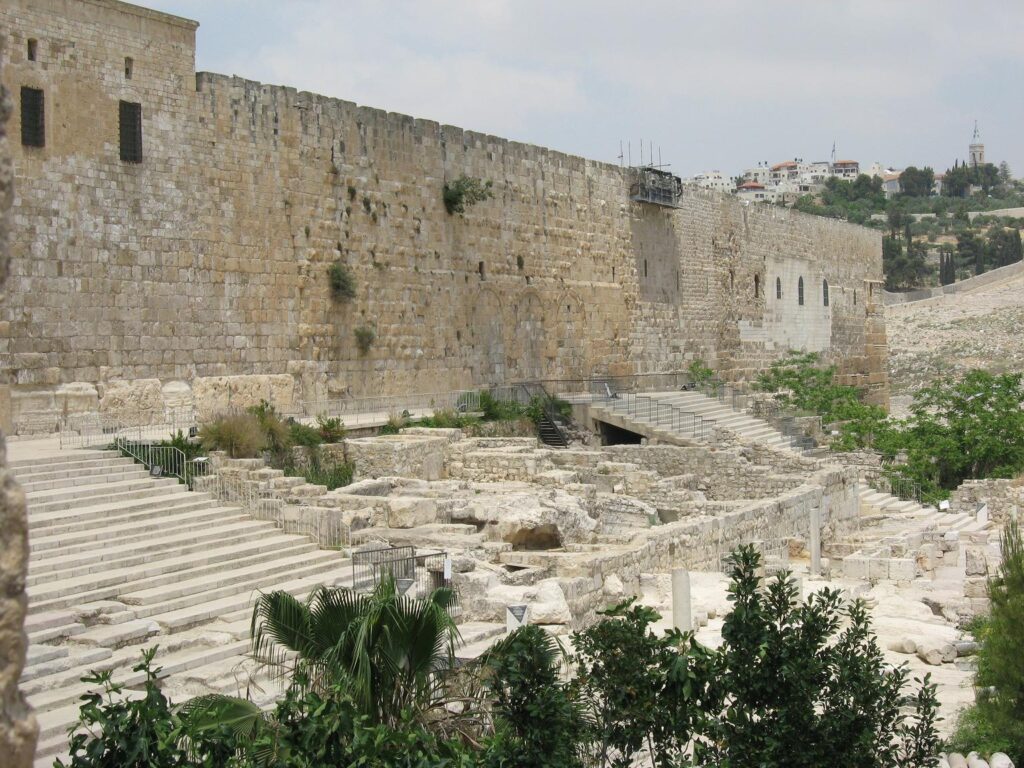
Around 20 BC, King Herod the Great sought to secure his legacy by building a temple that would rival any in the world. Herod did not just renovate Zerubbabel’s temple; he expanded the mountain itself. His engineers built four massive retaining walls around Mount Moriah and filled the gaps with earth to create a giant, flat plaza. By the time the project was finished, the temple was a sight of blinding beauty.
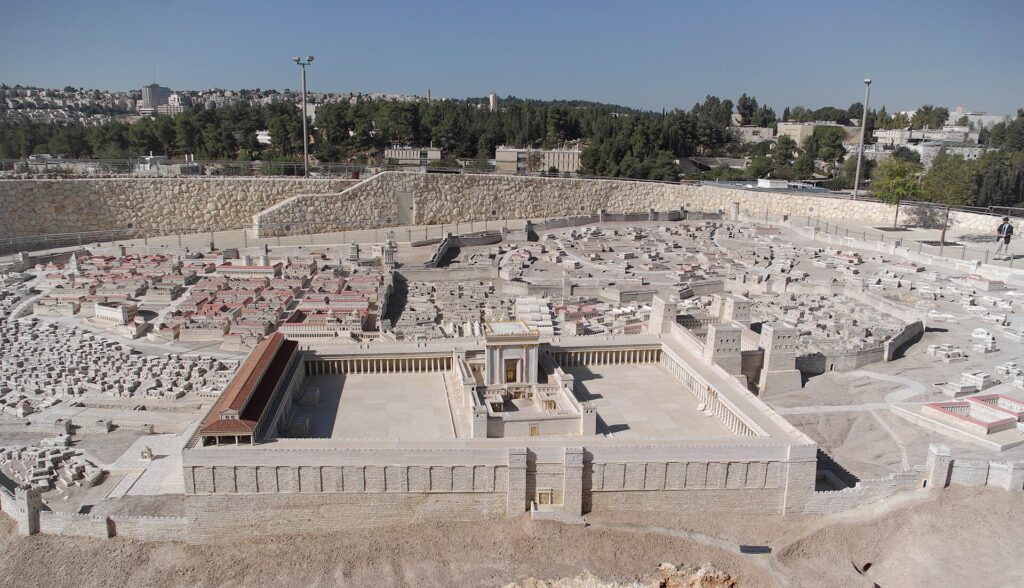
Herod’s marble-and-gold temple was the backdrop for the Gospels. Everything that happened in the final week of Jesus’ life—His teaching, betrayal, and crucifixion—unfolded within or just outside these city walls.
Even as He taught in its courts, Jesus saw the coming punishment of Jerusalem. He knew the city was destined to be trodden by the Gentiles, yet He wept over it. He longed to gather the people of Jerusalem together, like a hen gathers her chicks under her wings (Matthew 23:37).
The destruction Jesus predicted arrived 37 years after He died. In AD 70, the Romans responded to a Jewish rebellion with overwhelming force. General Titus besieged Jerusalem until the people were starving. When the legions finally broke through, they set the city and temple ablaze. The heat was so intense that the gold melted and ran into the gaps between the stones. Roman soldiers then pried every single stone apart to scrape out the gold. They threw the blocks into the street below until nothing of the sanctuary remained. All this happened exactly as Jesus said: not one stone stayed on top of another (Matthew 24:1–2).
The Spiritual Capital of Jerusalem
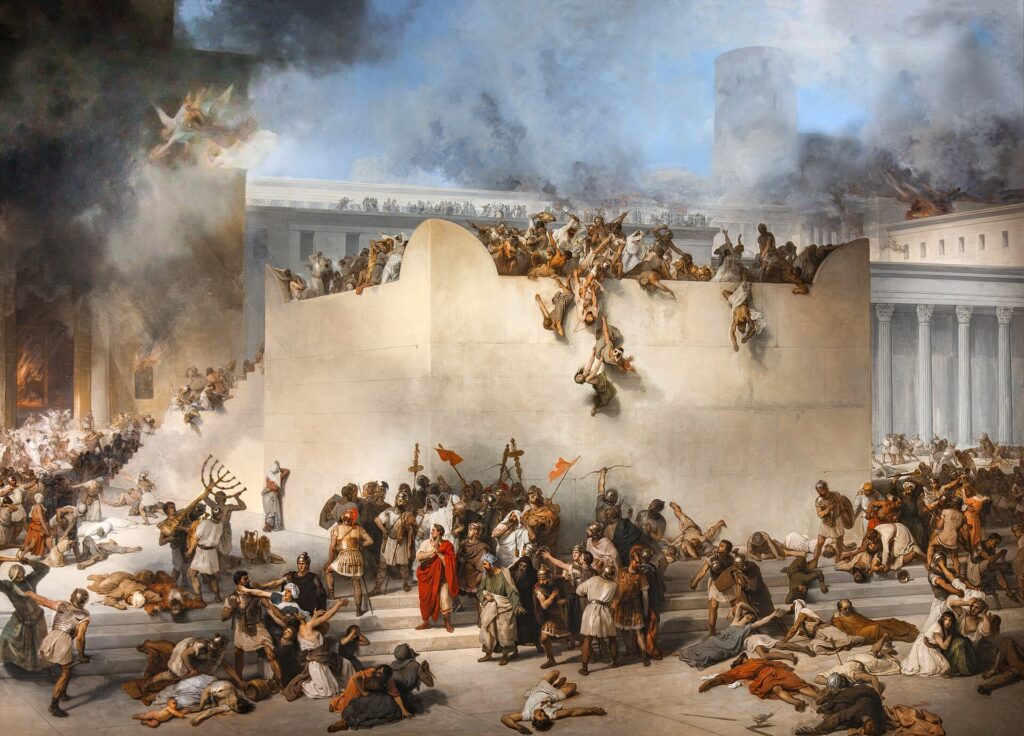
Throughout 2,000 years of exile and a steady stream of foreign invaders, the Jewish people never forgot their holy city. Three times a day, religious Jews face toward Jerusalem to pray for its restoration. Every Passover Seder ends with the same ancient cry: “Next year in Jerusalem.” The Jewish people never stopped longing for Zion, the place God chose for His name to dwell (2 Chronicles 6:6).
The rebirth of the State of Israel in May 1948 gave the Jewish people a sovereign home after two millennia. However, that first taste of independence did not include their ancient capital. When the smoke cleared from the War of Independence, Israel held West Jerusalem, but the Old City—containing the City of David, the Temple Mount, and the Western Wall—fell under Jordanian control. For 19 years, a “No Man’s Land” of concrete and snipers sliced through the heart of the city. During this time, Jews were strictly barred from their holiest sites.
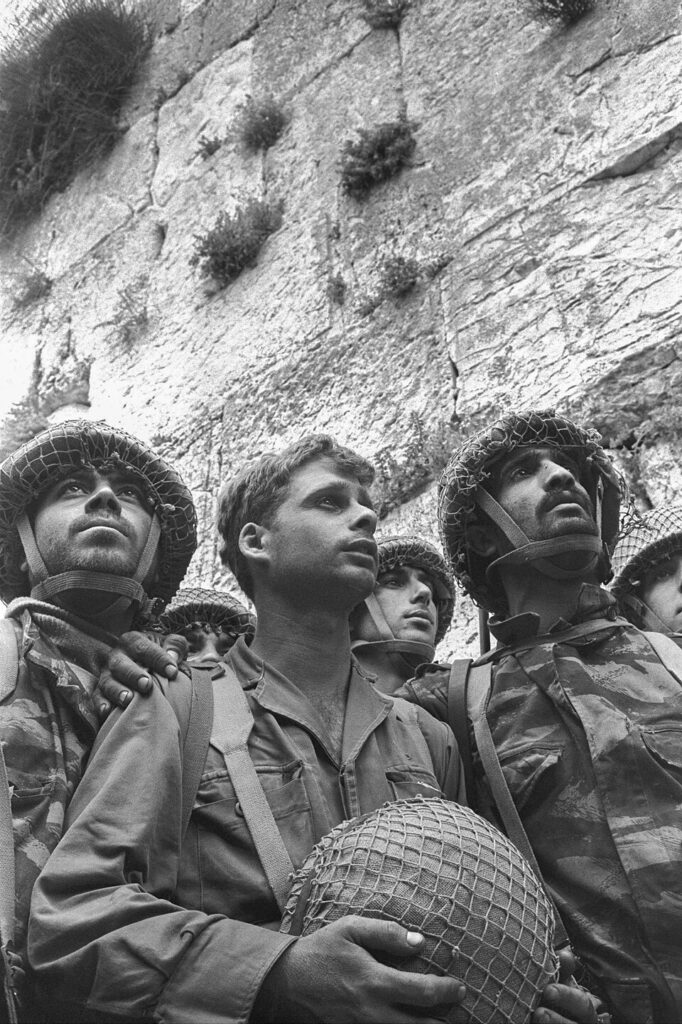
In 1967, Israel faced another struggle for survival against armies on three fronts. Though the Israeli government urged Jordan to stay out of the conflict, the Jordanian army joined the fight. In the counterattack, Israeli paratroopers broke through the Lion’s Gate. When they reached the Western Wall for the first time in nearly two decades, a war of defense turned into an unexpected homecoming.
The reunification of the city felt like a modern miracle—the closing of a 2,000-year-old circle. Against all historical odds, the divided city became once again a “city that is bound firmly together” (Psalm 122:3).
The Holy City of Christianity
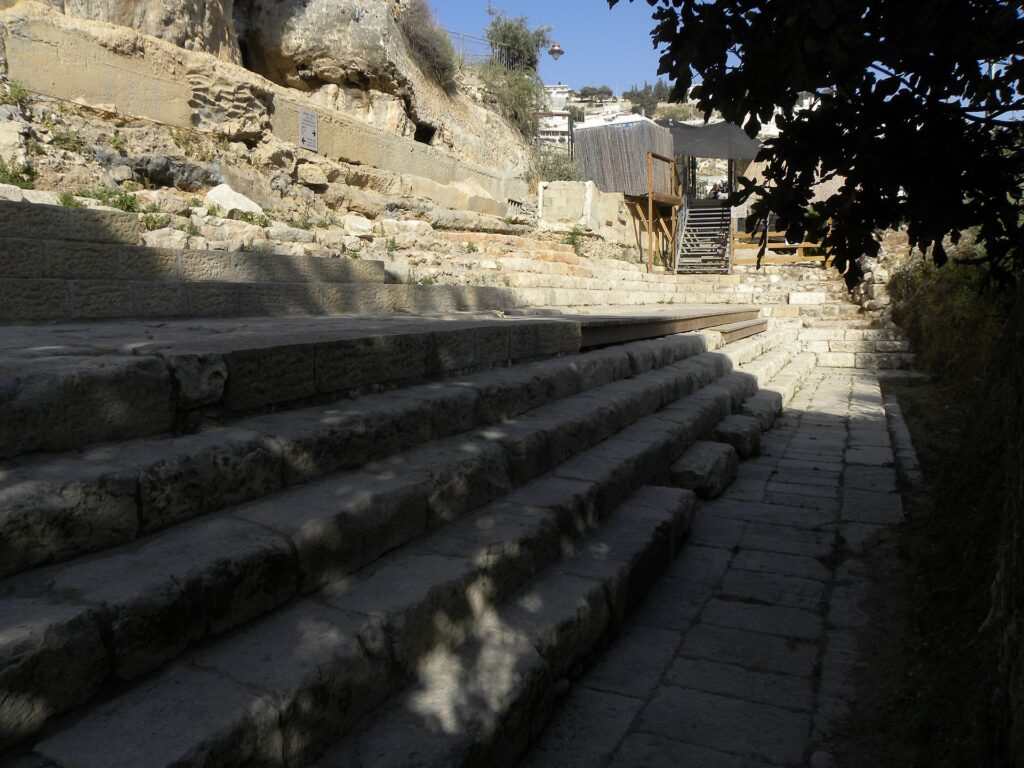
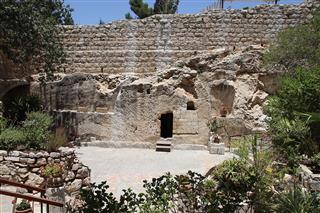
Christians also look to the Holy City as the cradle of their faith. For Christians, Jerusalem is the stage for the most pivotal moments in the life of Jesus—where He walked, taught, and performed miracles. It is the site of the Upper Room, Gethsemane, the Pool of Siloam, and the empty tomb. To walk the streets of Jerusalem today is to follow the footsteps of the Savior—though the modern pavement now sits roughly 12 feet above the ground He once trod.
Millions of Christians also see the modern restoration of Israel as a fulfillment of biblical prophecy. We believe God is not finished with the Holy City. Just as Jesus ascended to heaven from the Mount of Olives, He will one day return to the very spot where He ascended (Acts 1:11).
Jerusalem is effectively two cities in one. There is the earthly Jerusalem—the city of stone, dust, honking buses, and busy shoppers. Then there is the heavenly Jerusalem—God’s perfect dwelling place. For millennia, this dual identity has captured the imagination of every monotheist. We look at the earthly stones, but we long for the heavenly peace they represent.
Conclusion
In the book of Revelation, the “New Jerusalem” is the place where God permanently lives with His people (Revelation 21:2). While the modern city faces earthly struggles, it points toward a future city of peace where there is no more death or pain. It is a reminder that the story of humanity moved through these specific stone streets, but it will find its ultimate rest in a city of light. The significance of Jerusalem cannot be understated—it remains the most important city in the world because it is the only place on earth where the map of history and the map of eternity coincide.
See Jerusalem for yourself—join an ICEJ tour and watch yourBible come to life!
Related Articles
Iran in the Bible: From Persia’s Past to Prophetic Future
Shiloh in the Bible: From Sacred Center to a Cautionary Tale
The Biblical Significance of Magdala in Israel
Keep Learning
The Feasts of the Lord and Their Rich, Biblical Significance