



A Passion for Advocating for Peace: Shelley Neese
By ICEJ USA President Dr. Susan Michael
This post is excerpted from Susan Michael’s book Every Generation’s Story: 75 Years of American Christian Engagement with Israel, which follows the unique experiences of 18 American Christians representing 5 generations who responded to God’s call to go to Israel—and how it changed their lives forever.
In 1999 my college sweetheart, Brian, and I went to the Student Union on Louisiana State University’s campus to check his post office box. We had spent the afternoon under the shade of one of LSU’s thousand oak trees, deliberating the timeline of our next steps. He was about to finish his undergraduate degree and apply for medical school, but I still had one year left at LSU to complete my bachelor’s degree. Young and in love, we did not know how much longer we could wait to get married, and we were also not keen on living apart geographically while he went to medical school.
A pamphlet for a medical school at Ben-Gurion University (BGU) was among his mail that day at the post office. Every college student is accustomed to getting promotional brochures and letters from potential graduate schools. However, this pamphlet was different—it promoted a medical school in Beer Sheva, Israel. Maybe it was the glossy desert landscape that caught his attention, or perhaps the fact that the school was associated with Columbia University in New York. Either way, he applied and later flew to New York for an interview. …
I am the daughter of a preacher and teacher from a small town in Louisiana. I had never moved in my entire life except to go to college. Even then, LSU was only a two-hour drive from my home. But love has a way of clouding one’s vision. If going to medical school in Israel meant that we could get married sooner and live in the same city, even if that city was across the world, that seemed worth the sacrifice.
On June 10, 2000, Brian and I were married in my dad’s church. Within a month we sold our cars and few possessions, put our wedding presents in storage at my parents’, and flew to Israel with nothing other than what we could fit in our suitcases. LSU allowed me to finish the last year of my degree as an overseas student at BGU’s main campus in Beer Sheva.
My Introduction to Israel
To say that we knew almost nothing about Israel before moving there is an understatement. The problem is that we thought we knew something. We were Christians with an average familiarity with the land of the Bible. In our imaginations, we were going to spend our weekends jogging around the Galilee or hiking up the Mount of Olives, all of which we assumed were unadulterated by any modernity.
Only when I was sitting at the gate in Frankfurt, Germany, for our connecting flight to Tel Aviv did I realize that I was about to become a religious minority for the first time in my life. Before boarding the flight, dozens of Orthodox Jewish men and women stood and began praying, rocking back and forth and reading from small prayer books. Small-town Louisiana life had not exposed me to Judaism. I had no context for what modern Judaism looks like in practice. This was the first moment in my Israel journey when my ignorance was made abundantly clear.
When we arrived in Beer Sheva to start looking for an apartment, I picked up a newspaper at a gas station after seeing a headline on the cover announcing the arrival of Israeli Prime Minister Ehud Barak and Palestinian Leader Yasser Arafat to Camp David. Though I still lacked knowledge about Israel’s modern history, I thought peace negotiations were a positive sign. I even emailed my parents the picture of Bill Clinton standing next to Barak and Arafat to relieve their fears about their youngest daughter’s plan to live in the Middle East.
The Second Intifada
On September 28 the Second Intifada began, although no one was calling it that yet. At first the violence centered around the Temple Mount and consisted of rock throwing and exchanges of gunfire. The media presented it as a spontaneous Palestinian uprising in response to Ariel Sharon’s visit to the Temple Mount. However, we now know that Arafat had already called for an organized uprising in the heart of the Jewish State.
With official orders from Arafat, violence soon metastasized throughout the country. Suicide bombers were a pervasive threat, as they detonated on crowded buses, in bustling malls, and at Friday markets. The Israel Defense Forces (IDF) responded to the wave of terror emanating from both the West Bank and Gaza with aerial attacks, targeted assassinations of terror leaders, and IDF ground operations into organized terror cells.
The logistics of our day-to-day life changed, and keeping up with the rules was challenging. For example, our bags had to be checked by security officers to enter a grocery store or go through the university’s gates. My college classes were just getting off the ground, but suddenly, several of my Israeli professors and classmates were called up to serve in their reserve units. And a significant percentage of my American classmates were called back to their home universities that were unwilling to have their study abroad students at risk.
Digging Deeper
I had been a math major before switching from LSU to BGU, but my propensity for math now felt meaningless compared to the political events I was witnessing. I was only 20 years old and did not know the difference between Hamas, Fatah, Hezbollah, or Islamic Jihad.
While I was learning about the politics and significant players in the conflict, Brian and I were developing deeper relationships with our Jewish neighbors and classmates. We rarely lacked an invitation to Shabbat dinner on Friday night. The political and religious conversations around those Shabbat dinner tables represented an intense learning curve. My studies to understand the darkness enveloping the country were complemented by learning about Judaism, which helped me better understand the light I felt emanating from Israeli Jewish homes. All I had known about Judaism before coming to Israel was from the Bible. I had never even imagined the vitality of ongoing Jewish traditions and holidays or what they could teach me about my Christian faith

The Ongoing Influence of Antisemitism
Once I completed my bachelor’s degree, I enrolled in a graduate program at BGU in Middle Eastern Studies. At that point, I was beginning to get my footing concerning Israel’s 50 years of history.
While studying so much Jewish history, I could not separate the past from what my Israeli friends were enduring in the present. I began to see the connection between the incidents of antisemitism throughout the centuries and across the globe. On March 27, 2002, Brian and I attended a large Passover Seder dinner with friends from school. During a break in the communal reading of the Seder, people learned of a terrorist attack at a Seder dinner in Netanya, Israel. The family hosting our Seder was religious, which meant that technically, they were not supposed to turn on the news. But in this case, they did.
We all stared at the television screen showing images of 30 dead and over a hundred injured. Somehow, the suicide bomber had made it through hotel security with a suitcase loaded with explosives. Among the victims were Holocaust Survivors and a Swedish tourist. It was the deadliest attack of the Second Intifada. Experiencing the pain of the breaking news amid the retelling of the Exodus story affirmed in my soul that something had to be done to stop the progression of evil against the Jewish people.
In response to the Passover Massacre, the Israel Defense Forces (IDF) launched Operation Defensive Shield. The IDF had not conducted such a large-scale operation inside the West Bank since 1967. The first goal of the operation was to put Arafat in lockdown at his Ramallah residence. In Bethlehem, the IDF tracked down dozens of terrorists who had managed to get inside the Church of the Nativity. They then surrounded the church, refusing to allow terrorists to abuse holy places.
For the next 38 days, I obsessed over the news. International pressure to release the terrorists mounted as the threat to the church and the monks trapped inside grew unbearable. When the crisis was resolved—peaceably, by the standard of any other Israeli-Palestinian negotiation—I was determined to find out what happened and why those negotiations seemed successful as opposed to almost everything else going on in the Middle East.
I was taking a class on conflict management at the time, and I asked my professor if he would oversee my dissertation. I wanted to write about the crisis negotiations that occurred in Bethlehem that resulted in the deportation of the terrorists and the safe release of the monks without any damage to the church. To my surprise, my professor had been part of the Israeli crisis negotiation team in Bethlehem. He wanted the story shared, so he orchestrated the interviews I needed with the major players from all sides, including IDF negotiators, the mayor of Bethlehem, Palestinian negotiators, and a British mediator.
Advocating for Peace
After three years in Israel, we returned to the United States, where my dissertation landed me an internship working with a think tank associated with Harvard Law School. The think tank ran a program to teach negotiation skills to Israeli and Palestinian leaders based on the models used in Harvard’s business and law schools. At that time, I still believed that advocating for peace was the best way to advocate for Israel.
However, it did not take long for me to become disheartened with the process of trying to teach rational negotiation techniques to Israelis and Palestinians. The methods may have worked for managing sewage systems, electric grids, or public transportation routes but did not suffice for highly emotional and religious issues like Jerusalem and the Temple Mount.
During one of the negotiation conferences in Israel, I went with a group of Israelis and Palestinians to dinner at the American Colony Hotel in Jerusalem. Normally, participants got along well as professionals, but at this conference, I overheard an Israeli talking with a Palestinian friend about the issue of statehood. The Israeli said that if the Palestinians wanted statehood, they should declare it, and no one could stop them. That is what Israel did in 1948, and it changed the reality on the ground.
Notably, at one point in the debate, the Palestinian admitted they do not want two states but only one Palestinian state. From his perspective, the Jewish State had no right to exist. I resigned from the internship soon after that trip, certain that if my life was meant to advocate for the State of Israel, the so-called peace effort would not be the most effective means. From that point on, I purposed to advocate for the best interests of Israel unapologetically.
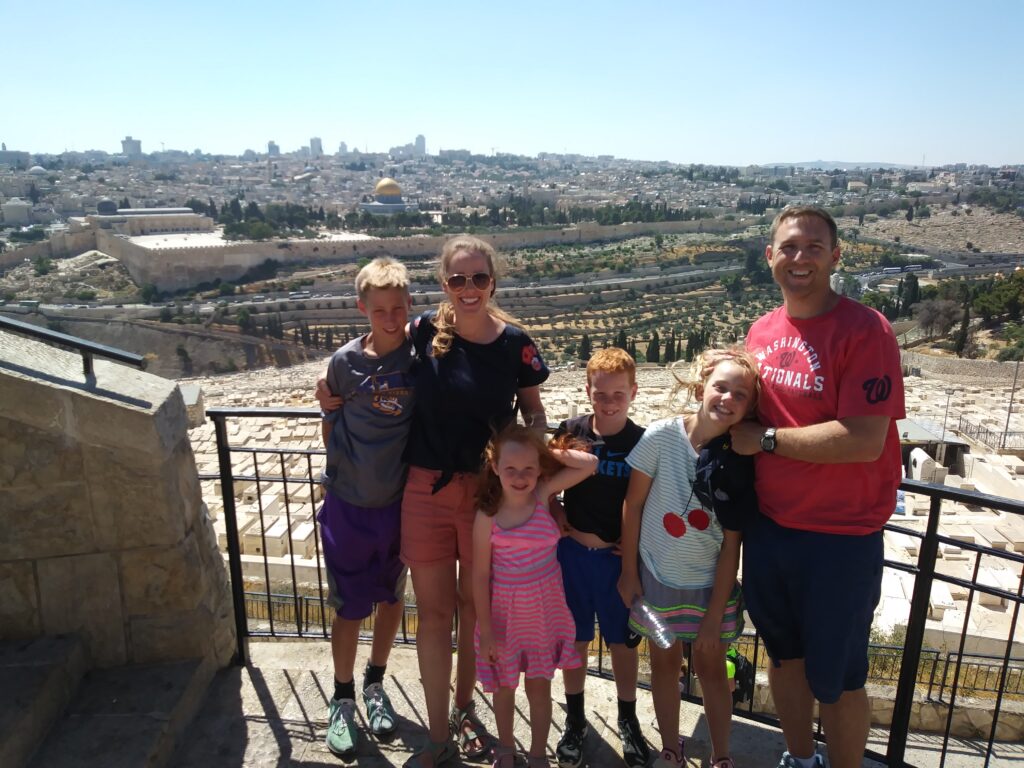
Discovering the World of Christian Support for Israel
In 2004 Brian and I moved to Northern Virginia for his family medicine residency. I needed to find a new job based on my graduate degree in Middle Eastern Studies. Prospects seemed quite narrow. I called Jim Hutchens, the president of The Jerusalem Connection, an organization I was familiar with from their magazine. Jim hired me as the editor for The Jerusalem Connection magazine. During this time, I oversaw the transition from print to digital, wrote monthly pieces for the magazine, and formed relationships with Jewish and Christian thought leaders in the Zionist world in America.
After several years as the magazine’s editor, I took on the role of vice president of The Jerusalem Connection. We focus everything we do on our mission to inform, educate, and activate support for Israel and the Jewish people. I believe millions of Christians in America are instinctively pro-Israel. But the media and anti-Israel organizations try to undermine those instincts in the hope that Christians lack the education to push back. In my own journey, all I could do was try and keep up with what was happening in Israel in real-time and pursue an understanding of the complex history of the long Jewish story before 1948.
Education, relationships, and listening to the Lord were what led me to devote my life to advocacy for Israel. I hope to do the same for others by teaching and fostering opportunities for Jewish-Christian engagement.izes everything that has happened in my life over the past 43 years: “Trust and obey, for there’s no other way.” The thread of trust flows through all my decisions, leading to where I am today and making Israel my home.I trusted God and obeyed His call. In return, God took this American from the “boomer” generation who knew nothing about Israel or the Jews and orchestrated a life focused on supporting His purposes for this ancient land and people.
See Israel for yourself! Join a life-changing ICEJ USA tour to Israel.
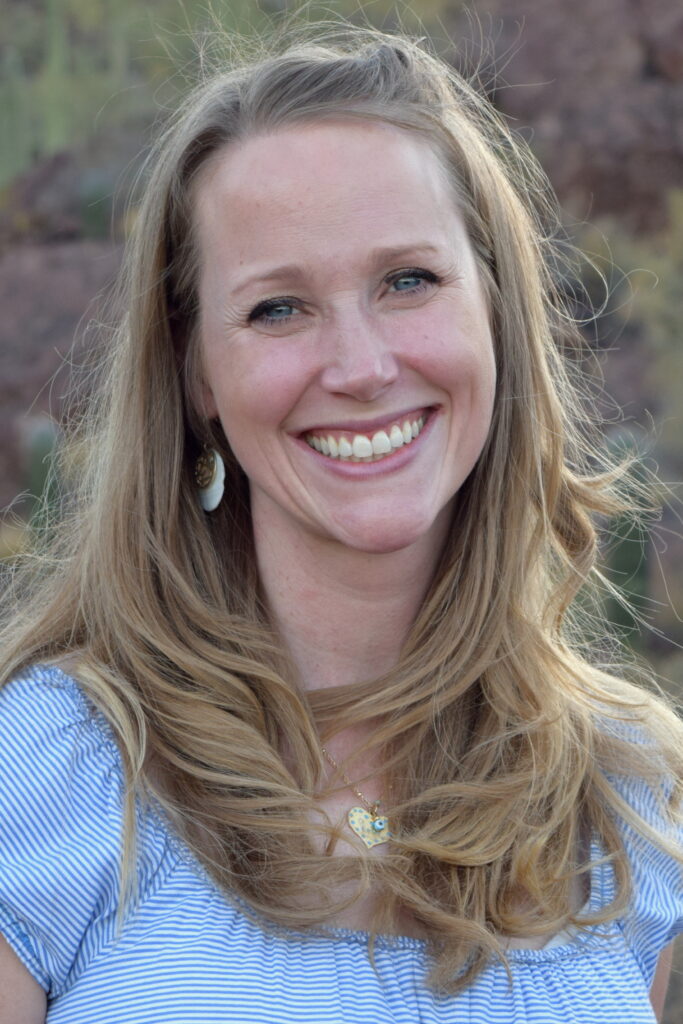
Shelley Neese is the president of The Jerusalem Connection and the American Christian Leaders for Israel Coordinator. She received her MA in Middle Eastern Studies from Ben-Gurion University and is currently a graduate student at The Bible Seminary studying biblical history and archaeology. Shelley is the author of the best-selling book The Copper Scroll Project and host of the weekly podcast Bible Fiber, a year-long study of the 12 Minor Prophets.
Related Articles
Gentiles in God’s Plan of Redemption
Do Gentiles Have a Role in the Restoration of Israel?
Simeon in the Bible: Why We Must Have “Eyes of Expectation”
Zechariah’s Prophetic Visions: A “Righteous Remnant”