



My Journey as a Black Christian Zionist: Dumisani Washington
By ICEJ USA President Dr. Susan Michael
This post is excerpted from Susan Michael’s book Every Generation’s Story: 75 Years of American Christian Engagement with Israel, which follows the unique experiences of 18 American Christians representing 5 generations who responded to God’s call to go to Israel—and how it changed their lives forever.
I am a Christian Zionist, which means I believe the Jews are God’s chosen people, and the Land of Israel belongs to them. However, I also believe that Israel’s right to live in peace goes well beyond scriptural interpretation and is based on moral and historical grounds.
I was born Dennis Ray Washington on February 17, 1967, in Little Rock, Arkansas, part of the segregated South. I legally changed my first name to Dumisani in the early 1990s to embrace my African heritage. Dumisani comes from the Zulu phrase Dumisani u Yehovah, which means “Praise the Lord.”
My parents, David and Lillian Washington, were from Little Rock. My mother was a seamstress from a young age. My father’s father was a sharecropper, so my father grew up on a farm that grew all sorts of crops, including cotton. My father did not graduate high school, primarily because he had to run the entire farm by himself when his brother and father fell ill.
My mother often spoke about Little Rock and the life of the community she loved. We were active members of King Solomon Baptist Church, where Reverend Thomas was the pastor. My mother told me I loved music so much as a baby that I would rock and sway as the choir sang. Unfortunately for Reverend Thomas, I was not fond of preaching. Whenever he took the podium, I would cry at the top of my lungs. As a result, my mother had to take me out of the sanctuary almost every week after the music ended. Perhaps I just wanted the music to continue.
My father was a gifted singer, a leader of the men’s chorus, and served on the deacon board. My mother was a deaconess and worked with the youth ministry, among many other things. She graduated from the only high school for Black children in Arkansas, Scipio Africanus (S. A.) Jones High School in Little Rock. S. A. Jones High School was the pride of Arkansas. Like many Black schools during segregation, there was a deep sense of connectedness among the teachers, administrators, and students.
A Time of Learning
I read the Bible as a child and was intrigued by everything about the Israelites. Though I loved reading the Gospels and “walking with Jesus” through the Scriptures, I was drawn more to the Old Testament. I knew the stories of David and Goliath, the Patriarchs, and the Exodus by heart. As a young adult, I wanted to learn more about the Hebrew roots of my faith. I was blessed to meet Jewish musicians at the Western Wall, Judaism’s holiest site, in Jerusalem’s Old City, who introduced me to the feasts of the Lord, such as Passover, Pentecost, and Tabernacles. They shared songs and prayers in Hebrew that began transforming my worship and songwriting.
In the mid-1990s I started researching the Jewish Diaspora because I was captivated by news of Beta Israel, the Jews of Ethiopia. I began to follow current events regarding Israel and Africa and learned about the absorption process of the Ethiopian Jews.
A friend and fellow musician had a band that performed songs of Zion and music of the Jewish people. I joined the band for a series of Christians United for Israel (CUFI) events called “A Night to Honor Israel.” At these events, I learned about modern Israel—its people, culture, global charitable work, breakthroughs in innovation and technology, and security concerns. I also learned of the Palestinian refugee crisis and the nature of the Arab Israeli conflict.

The more I learned, the more I understood the false charges made against Zionism and the connections between the Black struggle for justice and that of the Jews.
Black American history was something I learned in my home as a child at the dining room table, in the kitchen, and in my mother’s sewing room. Knowledge of the realities of true apartheid exposes the false accusation of Israeli apartheid. I began to understand how Israel’s enemies used the historic Black struggle for justice to demonize her—and I was personally offended. But I also learned of notable Black Americans in the 1970s who were likewise offended by the false claim that Zionism is racism.
A Fire Is Lit That Continues to Grow
The first time I spoke publicly about Israel was at a Sacramento City Council meeting in 2012. The leaders were considering a proposal to make Sacramento a sister city with Ashkelon, Israel. I experienced my first virulently hostile, anti-Israel crowd in a packed room divided along ideological lines. I heard the false accusations of Israeli apartheid, Jim Crow racism and segregation, and the alleged genocide of the Arab Palestinians. The attacks were relentless and baseless.
When it was my turn to take the podium, I refuted the claims of Israel’s racism and discrimination. I explained that while no nation is perfect, Israel was nothing like what my parents experienced in Little Rock or Malume experienced in Durban. Israel is a free, pluralistic society forced to defend herself against an untold number of enemies bent on her annihilation. I let everyone in the chamber know I was there to defend both Israel and the distinctiveness of the African American historical experience.
I quickly learned that people who oppose Israel do not respond well to Black people defending her. The combination of shamelessly abusing my people’s heritage and lying about Israel, one of the most significant regional partners to many African nations, lit a fire in me that has not diminished but continues to grow.
I’ve spoken at many Israel events since 2012, and I have learned that when it comes to slandering the Jewish State, no people’s history or legacy is off-limits. Anyone’s story—no matter how sacred or painful—will be exploited to demonize the Jews and their homeland. As I came face to face with such an extraordinary amount of disinformation and anti-Israel propaganda, my advocacy for Israel had officially begun.
The Institute for Black Solidarity with Israel
My first trip to Israel was during Hanukkah in December 2012, as part of CUFI’s African American pastors’ tour. At that time, the African American outreach coordinator was Dr. Michael Stevens, pastor of The City Church of God in Christ in Charlotte, North Carolina. Though I had long wanted to go to Israel, I was unprepared for how overwhelming Jerusalem was. While at the Western Wall (Kotel), I felt burdened to work on strengthening the Africa-Israel/Black-Jewish alliance. I will never forget the sights, sounds, and aromas of my first trip to the Holy Land, though I’ve returned 11 times since 2012. After that first trip, I returned to California and started the Institute for Black Solidarity with Israel (IBSI) in response to what I can only explain as a divine call. My son, Joshua, serves as IBSI’s executive director.

As CUFI’s diversity outreach coordinator, I sought to spread the message of solidarity with Israel throughout the multiethnic body of Christ. Our goal was simply to take the Christian Zionist message to what the book of Revelation calls “every tribe and tongue and people and nation” (Revelation 5:9). I also had the honor of welcoming international attendees to CUFI’s annual Summit in Washington, DC. Each year Africa was among the most well-represented continents.
During my first speaking tour for IBSI, during which I met diverse anti-Zionists, I would often reflect on the words of my friend, Yaffa Tegegne. Yaffa is an Ethiopian Jew and daughter of the late Baruch Tegegne, a pioneer in the movement that resulted in the return of Ethiopian Jews to Israel. As a Black Jew and vocal Zionist during her college years in Canada, Yaffa encountered antagonists who could not understand her. In a 2013 interview with IBSI, Yaffa recounted:
I studied politics at Concordia University [which had] probably one of the biggest Arab student populations in North America. In 2002–2003 [Israeli Prime Minister] Netanyahu was supposed to come, and there was a riot, and we had a huge solidarity for Palestinian rights movement, and there were terrible incidents. I used to literally argue on campus all the time, and I think I was the only Ethiopian Jew and the only Ethiopian they had ever met, and it was very difficult for them. … They would have a really hard time dealing with me because I didn’t fit the mold of their argument.
My experience was like Yaffa’s. For many anti-Zionists, a Black person standing with Israel is offensive. They are unaware of—or don’t care about—the long tradition of Black-Jewish cooperation in this nation. As a result, many falsehoods and deceptions have been promoted. It has become quite common to meet Black people, especially on college campuses, with a negative view of Israel, if not Jews in general. Jamie Kirchick noted in his 2018 commentary article “The Rise of Black Anti-Semitism”:
Attitudinal surveys conducted by the ADL [Anti-Defamation League] consistently show that African Americans harbor “anti-Semitic proclivities” at a rate significantly higher than the general population (23 percent and 14 percent respectively in 2016). [1]
In the 1960s Dr. Martin Luther King, Jr. well understood the factors adversely affecting the Black-Jewish relationship and the antisemitism fomenting in some circles. In a chapter in his 1967 book Where Do We Go from Here: Chaos or Community? (titled “Where Are We Going?”), he offered a partial explanation:
Negroes nurture a persistent myth that the Jews of America attained social mobility and status solely because they had money. It is unwise to ignore the error for many reasons. In a negative sense, it encourages antisemitism and overestimates money as a value. In a positive sense, the whole truth reveals a valuable lesson: Jews progressed because they possessed a tradition of education combined with social and political action. [2]
Some of Dr. King’s most impassioned pleas for continued Black-Jewish cooperation came toward the end of his life. This was also when Israel’s enemies were attempting to drive a wedge between Blacks and Jews and between Israel and the African nations, despite Black Americans’ long history of shared struggle with the Jewish people. Mark Twain once said, “History doesn’t repeat itself, but it does rhyme.” I believe we are living in a time not unlike the late 1960s and 1970s, and Christians are being called to stand with—and be a blessing to—Israel and the Jewish people.
The issue of Black civil rights took center stage once again with the 2020 killings of George Floyd, Breonna Taylor, Ahmaud Arbery, and others. Israel’s enemies use those tragedies and other challenges within the Black community to manipulate people into blaming and hating Israel and the Jews. Given the power of social media and the systemic way Israel and Jews are characterized on many college campuses, it can be argued that the exploitation of the Black community for the sake of promoting antisemitism is worse now than it was in the 1960s. …
I am humbled to be able to do the work of strengthening the Black-Jewish, Africa-Israel alliance. I am also extremely optimistic about the future. As Dr. King said, “We’ve got some difficult days ahead, but we will reach the promised land.” [3]
To my fellows in the church, I say that we will see God move on behalf of those who stand with His firstborn—the Jewish people.
See Israel for yourself! Join a life-changing ICEJ USA tour to Israel.
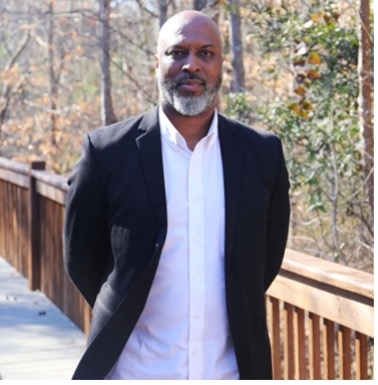
Dumisani Washington is the founder and CEO of the Institute for Black Solidarity with Israel (IBSI) and the former diversity outreach coordinator for Christians United for Israel (CUFI). He is a pastor, graduate of the San Francisco Conservatory of Music, professional musician, and author. His latest book is Zionism and the Black Church: Why Standing with Israel Will Be a Defining Issue for Christians of Color in the 21st Century (now in its second edition). An original version of Dumisani’s story was first published as an article in the Journal of Free Black Thought: www.freeblackthought.substack.com/p/zionism-and-the-black-church
[1] Anti-Defamation League, Survey of Anti-Semitic Attitudes in the United States (New York: Anti-Defamation League, 2016).
[2] Martin Luther King Jr., Where Do We Go from Here: Chaos or Community? (New York: Harper & Row, 1967), 147.
[3] Martin Luther King Jr., “I’ve Been to the Mountaintop,” speech delivered at Bishop Charles Mason Temple, Memphis, TN, April 3, 1968, in A Testament of Hope: The Essential Writings and Speeches of Martin Luther King Jr., ed. James M. Washington (San Francisco: Harper & Row, 1986), 286.
Related Articles
Story of Modern Israel Download (Free PDF)
Do Gentiles Have a Role in the Restoration of Israel?
Zechariah’s Prophetic Visions: A “Righteous Remnant”