



America, Bible Prophecy, and a Divinely Appointed Sanctuary
By ICEJ Managing Editor Karen Engle and ICEJ Communications Director Shannon Bennett
This month, as we celebrate 250 years since the United States became a nation, we recognize the heartbreaking surge in antisemitism in our land. While this hatred is nothing new—it has existed here from almost the beginning of our country’s birth—America has also provided something for the Jewish people we often don’t think about. Amid centuries of global persecution, the United States has served as a divinely appointed place of safety where they could survive, thrive, and where they would be instrumental in securing the global Jewish community and a Jewish State in their ancient homeland.
The Global Diaspora and the Promise of Preservation
Throughout the Old Testament, God told the children of Israel they would receive blessings for obedience, but disobedience would bring judgment—He would scatter them to the four corners of the earth. After centuries of warnings against idol worship and breaking covenant with Him, God remained true to His Word and allowed for Israel to be dispersed—first to one country, Babylon, and then across the globe. He knew their life outside the land would not be easy; indeed, while exiled, Israel found “no respite . . . no resting place for the sole of [her] foot” but rather “a trembling heart and failing eyes and a languishing soul” (Deuteronomy 28:65). Her life outside the land has been a struggle for survival.
To be clear, God permitted the dispersion as a covenantal consequence, but He never ordained or sanctioned the hatred and violence the Jewish people endured at the hands of men. Scripture is clear: the nations that afflicted Israel beyond what God intended were themselves held accountable for their cruelty (Zechariah 1:15). The relentless persecution of the Jewish people is not the work of God—it is the work of sinful men and, as Revelation 12 reveals, the agenda of a spiritual enemy who has sought to destroy God’s covenant people throughout history. God’s posture toward those who harm the Jewish people has never changed from His ancient promise to Abraham: “I will bless those who bless you, and I will curse him who curses you” (Genesis 12:3).
The Jewish people made new homes in foreign countries only to be later kicked out, blamed for the world’s problems, and nearly exterminated multiple times. Their temples, synagogues, books, and holy Scriptures were destroyed, and they were tortured and massacred. To this day, no matter what they do, the world sees the Jewish people—and now, the state of Israel—as a provocation that justifies the world’s hatred toward God’s covenant nation. This is not divine judgment at work—it is the unmistakable fingerprint of evil targeting the people through whom God chose to reveal Himself to the world.
God’s Watchful Eyes over His People
But while dispersed out of their promised land, something remarkable happened. Historically, when a people group is conquered, exiled, and scattered across the globe, they inevitably lose their identity—assimilating into other cultures until they completely cease to exist as a distinct nation. Yet, the Jewish people have defied this law. Despite two millennia of global dispersion—without a centralized government, a common land, or a national army—they remained entirely distinct, even preserving their language, their culture, and their faith.
Their survival as a unified people across generations and within many nations is a historical anomaly that cannot be explained by sociology alone; it is nothing less than a living testament to the faithfulness of a God who promised that the children of Israel would never cease being a nation (Jeremiah 31:36). Centuries before the Jewish people were scattered throughout the world, God even said that while they are in the land of their enemies, He will neither “cast them away” nor “abhor them so as to destroy them utterly and break [His] covenant with them” (Leviticus 26:44). No matter what empires rise against the Jewish people, they will never be completely wiped out because their preservation is tied directly to His character—God said it, and He is faithful.
Many Scriptures that speak of the preservation of God’s people use the Hebrew word shamar, which means “to keep, watch over, or hedge in with thorns.” These verses picture God as an intensely vigilant guardian over His people, Israel: God has kept a watchful eye over this tiny nation, the “apple of His eye” (Zechariah 2:8), while scattered from their promised land:
“Behold, he who keeps (shamar) Israel will neither slumber nor sleep.” (Psalm 121:4)
God never promised that His people would avoid difficulties. But He did assure them that He would be watching and that His presence would be with them in the dark times—and that they would emerge intact (Isaiah 43:1–2).
America, a Sanctuary by Design
A recurring theme throughout the biblical narrative is that no matter how severe the persecution or exile, God always preserves a “remnant” (in Hebrew, she’arim) of the Jewish people in a place of safety to ensure their survival. Consider Isaiah 37:31:
And the surviving remnant of the house of Judah shall again take root downward and bear fruit upward. (ESV)
And interestingly, prophets like Jeremiah foretold of places of safety in the “coastlands” that God set apart:
Hear the word of the Lord, O nations, and declare it in the coastlands far away; say, “He who scattered Israel will gather him, and will keep him as a shepherd keeps his flock.” (Jeremiah 31:10)
Isaiah frequently speaks of God using distant lands, islands, and maritime powers to protect and eventually carry the Jewish people. In theological literature connecting America to biblical prophecy, the phrase “from the end of the earth” or references to the “coastlands” and “ships of Tarshish” (Isaiah 60:9) have often been interpreted as a reference to the far-western hemisphere—a vast, distant land across the sea from Israel that would serve as a sanctuary.
And God has been working throughout history to cause these prophecies to come to pass.
A Foundation of Liberty
America as such a place of safety goes back to George Washington’s famous 1790 letter to the Hebrew Congregation in Newport, Rhode Island. In it, he declared that the US government gives “to bigotry no sanction, to persecution no assistance.”1 This ushered in a religious freedom unheard of in Europe at that time, and it did not emerge out of nothing—the ideals that shaped it had deep roots in the very Scriptures the Jewish people had preserved, copied, and carried with them through centuries of exile.
America’s Founding Fathers were deeply inspired by the Hebrew Scriptures—Benjamin Franklin and Thomas Jefferson even suggested that the Great Seal of the United States depict Moses leading the Israelites across the Red Sea, a profound testament to how deeply the Hebrew story had captured the American founding imagination. John Locke, whose political philosophy was the intellectual oxygen the Founders breathed, drew extensively from the Hebrew Bible in constructing his theories of natural rights and limited government. In a profound sense, the fingerprints of the Jewish people, through the Scriptures their ancestors were inspired to write and faithfully transmitted across millennia, were on the very documents that would one day guarantee their freedom.
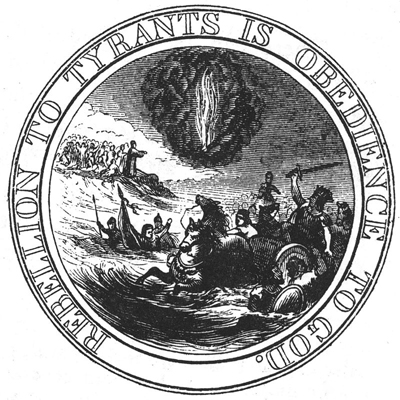
Another providential dimension to their contribution was born not of privilege, but of persecution. For centuries across Europe, Jews had been barred from land ownership, excluded from guilds, and prohibited from most professions. Forced into the narrow lanes of finance, trade, and commerce, they developed extraordinary expertise in the very engines that power nations. When they arrived in America, they brought those hard-won skills with them. Remarkably, Jewish financier Haym Salomon became one of the principal financiers of the Continental Army, helping to fund the American Revolution itself at critical moments when the cause of independence was on the verge of collapse. What the nations of Europe had intended as a means of marginalization, God redeemed as a means of nation-building.
The American Revolution led to the United States being the first nation in the world where antisemitism was fundamentally contrary to the national constitution2 and where Jews were entitled to full rights as citizens of the national government. In his article “Defeating Antisemitism in the World’s First Democratic Republic,” Paul Finkelman writes that when the American Revolution began, every nation in Europe discriminated against the Jewish people, but adds that “the very presence of Jews in [the United States] helped lead to a national policy of religious liberty that would quickly be adopted by most states within the American system of federalism.”3 This reversal was God’s design: stripped of citizenship in every corner of the earth, these unique people helped define what true citizenship—and true religious freedom—looks like for an entire nation. The Jewish people did not merely find sanctuary in America; through their Scriptures, their suffering, and their sacrifice, they helped build it.
The Growth and Preservation of the Remnant
By the eighteenth century, life for Jews in Europe was intolerable. European Jews were confined to ghettos, barred from owning land, and denied citizenship. In contrast, the new nation of America offered full civic equality by design, providing a sanctuary to Jewish families who chose to come there.

Indeed, throughout later periods of European history, including the Russian pogroms and the Holocaust, the United States was this geographic “root,” allowing Jewish religious scholarship, culture, communal life, and families to not only survive but to “bear fruit upward” in unparalleled freedom.
This became visibly clear in the late 1800s when millions of Eastern European Jews fled those horrific Russian pogroms, journeying west across the Atlantic—a literal exodus from death to life. Though they arrived in the United States with nothing, they used America’s free enterprise system to build vibrant communities, schools, and cultural institutions, weaving themselves into the fabric of American success.

Slowly, over the centuries, Jews from other countries found their way to America, including Sephardic Jews from Spain and Portugal, as well as Jews from Germany, the Ottoman Empire, and Persia (Iran). Most fled their home countries because of unbearable political hostility and religious persecution. These immigrants established communities in places like New York City, Seattle, Los Angeles, the Midwest, and in the South, and became highly successful, and helped pioneer various industries that would end up blessing the citizens of the country they now called their own.
The Jewish Contributions to America
The Jewish people’s presence in America has been a blessing that extends far beyond their role in shaping the nation’s founding ideals. From the earliest days of the republic, through its most defining conflicts, and into the modern era, Jewish Americans have woven themselves into the fabric of this nation in ways that have blessed not only the United States but the entire world—and in doing so, have demonstrated the truth of God’s ancient promise—that through Abraham’s descendants, “all the families of the earth shall be blessed” (Genesis 12:3).
During the Civil War, thousands of Jewish soldiers fought bravely for their respective sides, and President Abraham Lincoln appointed the first official Jewish military chaplains to serve the troops, a significant acknowledgment of Jewish Americans’ full place in national life. Lincoln’s respect for the Jewish people ran deep; his informal peace envoy to the South, Issachar Zacharie, was a Jewish immigrant whom Lincoln described as “beyond doubt the most successful man I have known.”

The Jewish contribution to American culture and moral identity has been equally powerful. Emma Lazarus, moved by her work with Jewish refugees fleeing persecution, wrote the poem “The New Colossus.” The words in that poem “Give me your tired, your poor, your huddled masses yearning to breathe free”transformed the Statue of Liberty into a universal symbol of refuge. Elie Wiesel—a Holocaust Survivor and Nobel Prize winner—carried that same moral witness into the modern era, shaping American ethics on human rights and the imperative of exposing evil through his writing.

Jonas Salk, who developed the polio vaccine that saved countless lives, was the son of Jewish immigrants. He refused to patent the vaccine, reflecting tzedakah, the Jewish principle of pursuing justice through giving. And in the digital age, Sergey Brin—a Russian Jewish immigrant who cofounded Google alongside Larry Page—transformed how the world accesses knowledge and information. Mark Zuckerberg, also of Jewish heritage, built Facebook into a global communications platform that connects billions of people across every nation and language.
Jeremiah 16:15–16
America has been a place for the Jewish people to be preserved, a diplomatic shield for Israel on the world stage (like the UN), and a secondary home where Jewish people could live proudly without hiding their identity.
However, this “haven” is currently being tested by the recent surge in antisemitism, making it unbearable for many Jews to continue living here. To be clear, God’s Word never excuses such hatred—in fact, it warns in Genesis 12:3 that those who harm Abraham’s descendants face judgment. But He often sovereignly uses the hostile actions of the world to fulfill His prophetic timeline. He does not endorse antisemitism—but He does take what is evil and turn it for good (Genesis 50:20).
Consider an interesting passage in Jeremiah:
As the Lord lives who brought up the people of Israel out of the north country and out of all the countries where he had driven them. For I will return them to their own land that I gave to their fathers. “Behold, I am sending for many fishers,” declares the Lord, “and they shall catch them. And afterward I will send for many hunters, and they shall hunt them from every mountain and every hill, and out of the clefts of the rocks.” (16:15–16)
Many scholars interpret this prophecy about “fishers and hunters” to mean God would first gently woo His people back to the land, but He would later send “hunters” to chase them out of their comfortable hiding places, driving them home to Israel. For two and a half centuries, America has indeed been a place of “gentle fishing,” where Jewish individuals and families chose to move to Israel. We see this in how organizations like the Jewish Agency for Israel (JAFI) have used hooks of inspiration like ideology, faith, and a pioneering spirit to draw them home—by choice. But the modern rise in hostility and persecution may be the sound of hunters—a painful but divine situation meant to disrupt their comfort in foreign lands and point their hearts toward Israel as their true home, and where their promised restoration will be fulfilled.

Conclusion: A Call to the Church
Despite a persistent undercurrent of antisemitism, America has been a modern-day “Goshen” for the Jewish people—a place of sanctuary and abundance where they could grow, preserve their identity, and build the resources necessary to sustain the global Jewish community through its darkest century. However, this chapter may be coming to a close.
The true reason for that protection is unfolding before our very eyes—and God is calling us to be a part of it. We are to love, comfort, and stand with the Jewish people, help them return home, and pray without ceasing until they fully possess their promised inheritance: the Land of Israel.
In the meantime, the Christian defense of the Jewish community in our country is more critical than ever. We must stand in the gap, confront hatred, and ensure America remains a true friend of the Jewish people for as long as they are within our gates.
Don’t remain silent—sign the Declaration Against Antisemitism today.
Related Articles
Gentiles in God’s Plan of Redemption
Do Gentiles Have a Role in the Restoration of Israel?
Simeon in the Bible: Why We Must Have “Eyes of Expectation”
Zechariah’s Prophetic Visions: A “Righteous Remnant”
Keep Learning
What Is Antisemitism? Unpacking History’s Longest Hatred
___
[1] George Washington, “To the Hebrew Congregation in Newport, Rhode Island, 18 August 1790,” in The Papers of George Washington, Presidential Series, vol. 6, ed. Mark A. Mastromarino (University Press of Virginia, 1996), 284–286.
[2] Finkelman, P., & Sussman, L. J. (2025). Defeating Antisemitism in the World’s First Democratic Republic: The American Revolution and Jewish Legal and Political Equality. https://core.ac.uk/download/649360615.pdf
[3] Finkelman, Defeating Antisemitism.