



How Israel Became My Lifelong Mission: Bishop Robert Stearns
By ICEJ USA President Dr. Susan Michael
This post is excerpted from Susan Michael’s book Every Generation’s Story: 75 Years of American Christian Engagement with Israel, which follows the unique experiences of 18 American Christians representing 5 generations who responded to God’s call to go to Israel—and how it changed their lives forever.
It was 1993. I was living in Jerusalem, serving several ministries—the International Christian Embassy Jerusalem (ICEJ) chief among them. I was a 24-year-old from Buffalo, New York, with a Bible college degree but virtually no context for what it meant to be residing in the Jewish State resurrected from the dustbin of history.
I didn’t realize I was missing a real connection to the land of the Bible I read about all my life, but when I heard about an opportunity to volunteer at the ICEJ, I figured, why not? The idea of an adventure in the Holy Land piqued my curiosity and interest. There—in Israel as a young leader—my entire life was about to change forever.
One day wandering about Jerusalem, taking in the sights and sounds and exploring a culture vastly different from my own, I came upon a scene in the outdoor courtyard of what I now know as the Great Synagogue. It was an exuberant event with music and dancing, and I wanted to know what it was all about. I approached the outskirts of the crowd to engage some of the attendees in conversation. One question led to another, and the next thing I knew, I was in the middle of a celebration with a group of Orthodox Jews. They explained that today was Yom Yerushalayim, or “Jerusalem Day,” and they were celebrating HaShem’s (God’s) faithfulness to the city of Jerusalem.
In that brief encounter, I had a revelation that stuck with me: these young men, with their traditional black-and-white garb and unusual customs, were praying to the same God I prayed to. The same God Jesus prayed to. The God of Abraham, Isaac, and Jacob. My God was the God of the Jews.
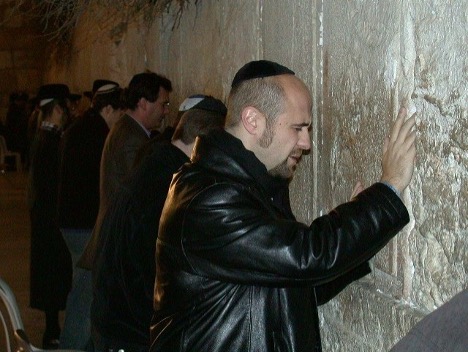
At the time, I had no framework for this new understanding. Sure, I knew the Old Testament often refers to Israel. And as someone who grew up in the church and pursued training for Christian ministry, I knew all the stories: Jonah and the “whale,” Elijah and the prophets of Baal, David and Goliath.
But I, like many others, had also been taught that what really mattered was belief in Jesus—and that Old Testament stories only had meaning as they related to the unfolding of Jesus’ birth, ministry, death, and resurrection. Furthermore, Jerusalem only had meaning in connection with the gospel being released to the world.
That life-changing encounter at the Great Synagogue in 1993 commenced a decades-long journey of discovery that continues to this day and is the focus of my life’s mission: to help Christians find, love, and support Israel and the Jewish people.
A Growing Connection
During that extended trip, the Lord gave me a crystal-clear, unmistakable vision in which I saw flames of spiritual revival connecting major cities across the East Coast of the United States with the city of Jerusalem. … As I inquired of spiritual leaders in my life, searching out the meaning of the vision in the weeks and years that followed, what emerged was the central importance of Israel and Jerusalem to our faith as Christians and the strategic unfolding of God’s plan to unite the body of Christ in this generation. This understanding resulted in the birth of Eagles’ Wings as a ministry and a growing connection to the people and Land of Israel.
As a traveler and bridge-builder by nature, I began bringing people to Israel so they could learn more about what God was doing in the Land. We participated in the annual Feast of Tabernacles celebration sponsored by the ICEJ and other conferences and gatherings. … Eagles’ Wings became known for the “Israel piece” we brought to everything we did globally—my passport has been stamped at the Tel Aviv airport more times than I can count.
Christians Awakening
In the early 1990s Christian support of Israel existed but was nowhere near what it is today, an organized global movement. The ICEJ’s leadership spearheading the yearly Christian celebration of the Feast of Tabernacles was key to this development. Through my involvement as staff for that event, I got to know leaders from around the world who were also experiencing a transformation concerning the centrality of Israel.
In 2002, through a sequence of divinely orchestrated events, the Lord led me and the late Dr. Jack Hayford … to launch a new annual holiday on the Christian calendar in the season of Yom Kippur. At a meeting in the Consulate of Israel in New York City with a handful of Christian leaders and representatives from the State of Israel, the Day of Prayer for the Peace of Jerusalem was born. … As far as we know, it is the single largest Jerusalem-focused Christian prayer movement in history, with millions of Christians participating annually.
It was a miracle to be sure for Jews and Christians to begin relating to each other after almost 2,000 years of separation. I remember meeting significant Jewish religious and political leaders and the guarded nature of those early interactions—both sides were trying to discover if the other had a hidden agenda. But by taking baby steps toward each other, we found imperfect yet firm footholds to begin to bridge the gap.
The Next Generation
As these unprecedented relationships between Christian and Jewish communities grew, it became evident that no matter how historic and significant these new interactions were, they wouldn’t last if we didn’t involve the next generation.
So we launched a program for Christian student leaders—the Israel Experience—in which they would learn about Israel’s culture, biblical and historical significance, and global impact through an immersion experience in the Land. To date, we have taken students to Israel from over 110 American universities.
This effort was an uphill battle from the start—so much was being taught in Western universities that cast Israel in an unfavorable light and blamed the Jewish State for terrorists’ agendas against Israel’s borders and her people. But the impact personal experience had on the lives of those who went to the Land was more powerful than the propaganda. Classroom knowledge could not substitute for the firsthand understanding that came from these travels, and no amount of academic demonization of Israel could steal the living revelation those young adults gained from visiting the Land.
David Nekrutman
I met David Nekrutman when he worked in the office for interreligious affairs at the Consulate of Israel in New York. Several years after leaving the consulate, he became the executive director at the Center for Jewish-Christian Understanding and Cooperation (CJCUC) in Efrat, Israel, under the oversight of Rabbi Shlomo Riskin. David has been an important advisor in many of our initiatives, such as the Day of Prayer for the Peace of Jerusalem, the Israel Experience, and the Watchmen on the Wall Program—our “Israel 101” training program for Christians of all ages.
As David and I got to know each other, we realized that we shared many of the same values and goals, even though we approached issues from two very different perspectives. Over the years, we have developed a friendship and bond that goes much deeper than collaboration. Our relationship speaks to the unifying nature of God’s covenant that has never changed, despite centuries of Christian antisemitism, mistrust, suspicion, and alienation from our Jewish brethren.
Even as David and I waded into unfamiliar waters relationally, it felt more like a “coming home” than entering foreign territory. It was historic. We were onto something.
Disengagement and Deeper Engagement
In 2005 I was invited to a private meeting with Prime Minister Ariel Sharon. A few weeks later, he led the heartbreaking and controversial disengagement from Gaza. I remember awaiting the news with concern and foreboding over what would happen when Jewish families would be forced to leave their homes and farms they had tended for decades—all in the hopes of an elusive peace even the Oslo Accords and future efforts could not achieve.
As we watched the disengagement in Israel, we decided to get Christians even more engaged with this amazing land. We started outreaches to enable senior pastors (and their associate pastors, many of whom are millennials) to travel to Israel for the first time. In more cases than I can count, these pilgrimages provided a life-altering, personal, ministry-defining moment that impacted participants in a visceral way that left them undone.
Lifeline amid Terrorism
The violence Israelis face time and again is not only directed at them. Christians in cities like Bethlehem are also increasingly subject to violent outbreaks from their Arab neighbors solely because of their faith.
When the Palestinian Authority was given control of Bethlehem in 1995, violence and unrest intensified, causing Christians to flee en masse. By the time the second intifada broke out in 2000, Bethlehem and the West Bank had become one of the most dangerous areas in the Middle East regarding terrorism. This reality prompted Israel to construct a security fence to protect its people from suicide bombers who attempted to enter Israeli territory.
The so-called “Christian exodus” from the Middle East was personified by the alarming downturn in the Christian population of Bethlehem, especially in the years following 1995. So I decided early on that it was critically important for Christian travelers to not only visit holy sites in Israel but also meet their brothers and sisters in Bethlehem … to show our support for their businesses and efforts in the region. This precious community of believers needs our continued heartfelt and tangible support; it is a lifeline for them.
Time for Jerusalem
A year before President Trump officially recognized Jerusalem as the capital of Israel on December 6, 2017, ordering the move of the embassy, I was asked to write an online opinion piece in the New York Times (alongside opposing views by others) in favor of the administration’s intent. I wrote that the Middle East needed principled leadership that didn’t cower to fear and that the move of the embassy was an overdue action that would benefit Israelis and Palestinians alike.
The backlash I received online was intense. And on a wider scale throughout the nation, threats abounded that World War III would result if the United States made the move—that the Middle East would plunge into a bloodbath from which it might never recover. But through the great work of US Ambassador to Israel David Friedman, plans were made to move the embassy on May 14, 2018, in honor of Israel’s seventieth anniversary. May 2018 arrived—and the United States delivered on its promise.
And just the opposite happened from what detractors predicted! The move of the embassy happened peacefully, and historic peace agreements followed between Israel and several Arab nations through the Abraham Accords.
As a ministry, we recognized the significance of the moment and decided these historical times called for large numbers of Christians to come to Jerusalem. So we launched the first Awake Jerusalem 72-hour worship gathering that fall in conjunction with the annual Day of Prayer for the Peace of Jerusalem. Hundreds joined for a moment that felt like it was right out of the pages of the Bible. It was the culmination and fulfillment of what many Christians and Jews had worked on together for many years.
The Present and Beyond
The need has never been greater for Christian advocates of Jerusalem, Israel, and her people. Israel’s enemies continue to surround her and threaten her existence as she faces increased challenges on multiple fronts. In addition to ongoing terrorism and the economic impact caused by COVID-19, the pandemic interrupted people’s ability to travel to Israel and demonstrate support for what God is doing in this critical hour.
However, I believe the best days are ahead for Christians and Jews to come together around our shared values. I also believe that when Israel’s borders reopened, it opened the floodgates for a wave of pilgrims that may exceed anything Israel has yet seen.
My prayer for that beloved land today comes from the ancient words penned by King David:
Pray for the peace of Jerusalem: May they prosper who love you. Peace be within your walls, prosperity within your palaces. For the sake of my brethren and companions, I will now say, “Peace be within you.” Because of the house of the LORD our God I will seek your good. (Psalm 122:6–9)Jewish people to their ancient homeland. We are watching prophecy be fulfilled and rejoice in the faithfulness of God to His Word. To be on the front lines of what God is doing in Israel and around the world is a privilege and a blessing.
See Israel for yourself! Join a life-changing ICEJ USA tour to Israel.
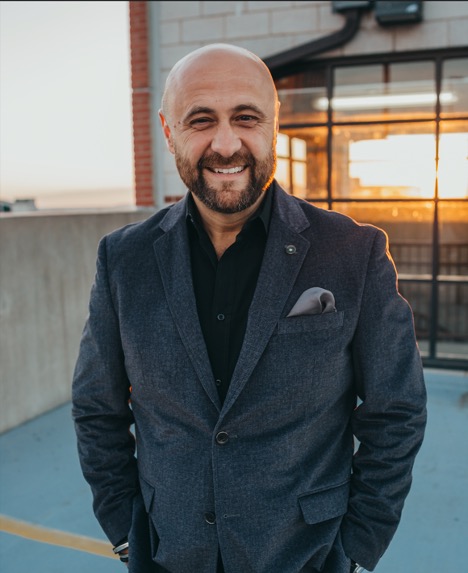
Bishop Robert Stearns is the founder and executive director of Eagles’ Wings, a global movement of churches, ministries, and leaders. In 1993 he had a life-changing encounter at the Great Synagogue in Jerusalem that started a decades-long journey of discovery and mission to help Christians find Israel. Since 1993 he has ministered in more than 30 nations around the world with a focus on the central importance of Israel and Jerusalem to the Christian faith and the unfolding of God’s plans to unite the body of Christ in this generation.
Related Articles
Gentiles in God’s Plan of Redemption
Do Gentiles Have a Role in the Restoration of Israel?
A Faith Journey to Israel: “The Homeland of My Heart”– John Swails’ Story
Zechariah’s Prophetic Visions: A “Righteous Remnant”