



17 Verses about Jerusalem in the Bible
By ACLI Coordinator Shelley Neese
The story of Jerusalem in the Bible begins long before the city became the nation’s capital. During the forty years of wilderness wanderings, God set His presence on the tabernacle. As a portable sanctuary, that meant wherever the newly freed slaves pitched their tents, the cloud of God descended and he abided with them. As the children of Israel stood on the brink of entering the promised land, Moses instructed them that the period of wandering was over. The journey was finished for both the people and God’s house, which would soon find a permanent place of rest.
A key piece of the Mosaic covenant was that God’s people would be required to bring their offerings only to the one place where God would place His name, nowhere else. In Deuteronomy, the record of Moses’ parting words, he repeated the command to centralize their worship 21 times. However, he never actually named Jerusalem outright. The place of God’s choosing remained anonymous for several more centuries.
But you shall seek the place where the Lord your God chooses, out of all your tribes, to put His name for His dwelling place; and there you shall go. (Deuteronomy 12:5)
Then there will be the place where the Lord your God chooses to make His name abide. There you shall bring all that I command you: your burnt offerings, your sacrifices, your tithes, the heave offerings of your hand, and all your choice offerings which you vow to the Lord. (Deuteronomy 12:11)
King David and the Threshing Floor
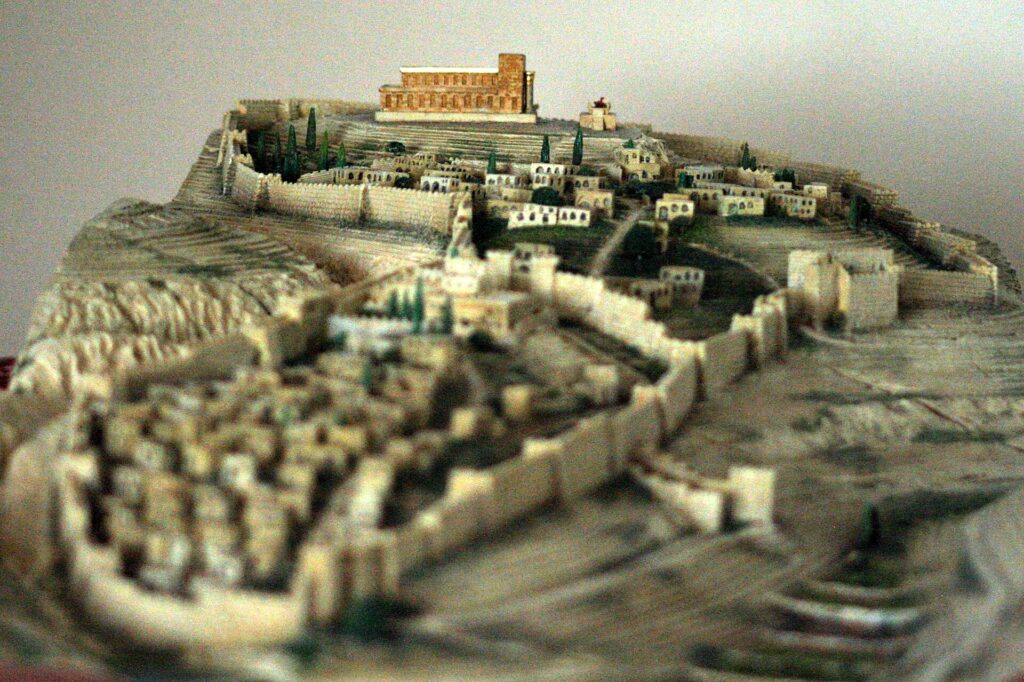
When Joshua, Moses’ successor, led the initial conquest of Canaan, he conquered many fortified cities. The book of Joshua extensively documents these military campaigns. However, his troops failed to capture the fortified Jebusite city of Jerusalem, often referred to as Jebus in the Bible. Throughout the era of the judges, the Jebusites held their stronghold, while the tribes of Judah and Benjamin settled in the surrounding valleys and the Jebusites maintained the high ground.
In 1000 BCE, the shepherd boy David assumed the throne over all Israel. After ruling from Hebron for seven years, he needed a new capital to unite the fractured tribes. He sought a location with natural defenses and political neutrality. With his sights set on Jerusalem, his commander, Joab, led a bold surprise attack on the overly confident Jebusites. By some miracle, the Israelites succeeded where Joshua had failed and took hold of the stronghold of Zion.
David declared the city the permanent capital of his kingdom. He wanted to build God’s house in Jerusalem. However, God reserved that privilege to David’s son, Solomon. The entire process from Moses’ proclamation in Deuteronomy to Solomon’s dedication ceremony for the First Temple took nearly 450 years. Only then did Jerusalem finally become the centralized dwelling place for God to set His name, the one Moses had prophetically foretold many centuries before.
And David and all Israel went to Jerusalem, which is Jebus, where the Jebusites were, the inhabitants of the land. But the inhabitants of Jebus said to David, “You shall not come in here!” Nevertheless, David took the stronghold of Zion (that is, the City of David). (1 Chronicles 11:4−5)
Now Solomon assembled the elders of Israel and all the heads of the tribes, the chief fathers of the children of Israel, to King Solomon in Jerusalem, that they might bring up the ark of the covenant of the Lord from the City of David, which is Zion. (1 Kings 8:1)
When exploring Jerusalem in the Bible, Scripture refers to the city by several distinct names—including Zion, the City of David, Salem, and Moriah.
The Kings of Judah and Israel
In the Bible, Jerusalem served as the undivided capital of the united monarchy for only 73 years (from David’s capture of the city to the end of King Solomon’s reign). When the monarchy divided, the southern kingdom keptcontrol of Jerusalem, but the northern kingdom built rival shrines in their own territory. The books of Kings and Chronicles, along with the prophets, evaluated every king in Judah and Israel based on their adherence to centralized worship in Jerusalem.
Evil kings allowed for the proliferation of altars and shrines across the country. Righteous kings restored pilgrimages and sacrifices in Solomon’s Temple. King Josiah stands among a long series of good and bad kings because he was the great reformer with a heart for the things of God. When temple workers discovered a lost scroll of what was likely Deuteronomy, Josiah repented of the nation’s lack of covenant faithfulness. He destroyed unauthorized altars across the land and reestablished Jerusalem as the only legitimate sanctuary.
For our fathers have trespassed and done evil in the eyes of the Lord our God; they have forsaken Him, have turned their faces away from the dwelling place of the Lord, and turned their backs on Him. (2 Chronicles 29:6)
Then the king commanded all the people, saying, “Keep the Passover to the Lord your God, as it is written in this Book of the Covenant.” Such a Passover surely had never been held since the days of the judges who judged Israel, nor in all the days of the kings of Israel and the kings of Judah. But in the eighteenth year of King Josiah this Passover was held before the Lord in Jerusalem. (2 Kings 23:21−23)
Jerusalem in the Life of Jesus
Eventually, the people’s covenant unfaithfulness led to their expulsion from the land and a period of exile in Babylon. When the remnant returned in 538 BCE, they rebuilt the temple the Babylonians had destroyed and refurbished the ruins of Jerusalem’s city walls. Never again did another location challenge Jerusalem’s role as the central sanctuary in the Bible. It remains the undisputed heart of Jewish worship from the end of exile until today.
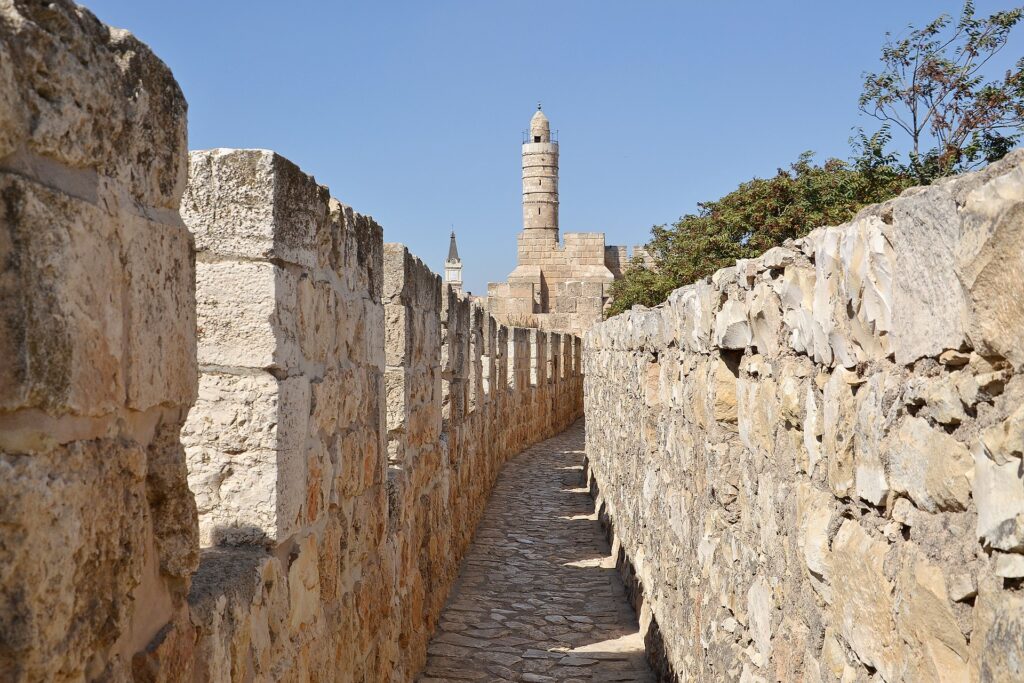
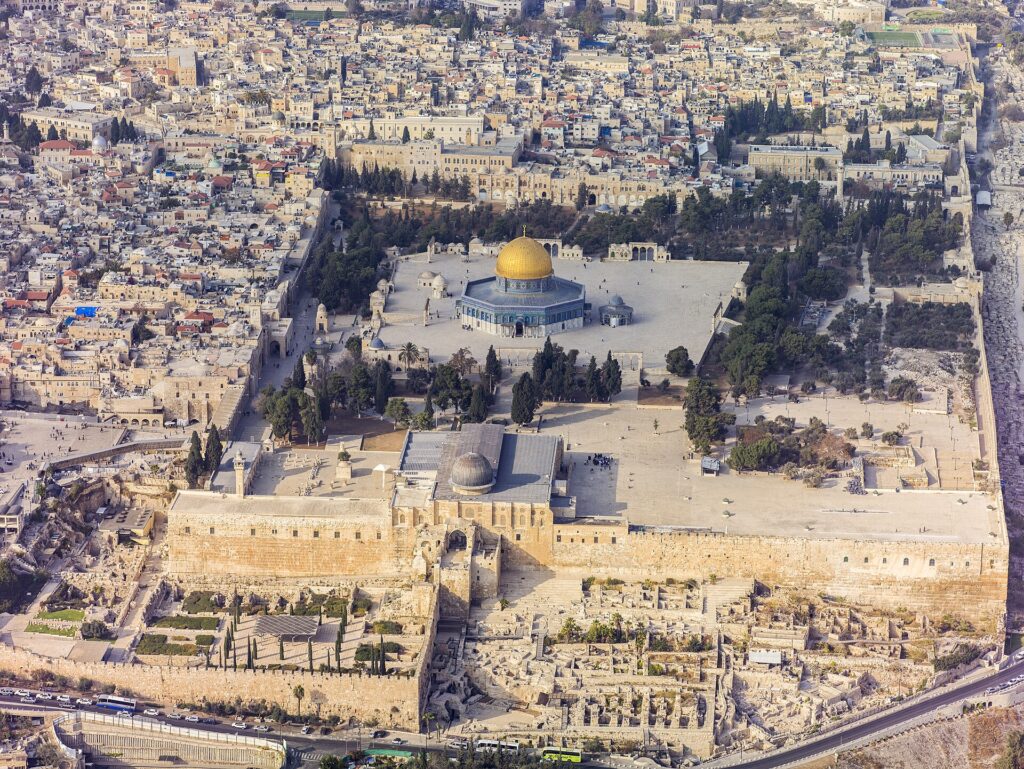
Many of the events in the life and death of Jesus happened in the Holy City. Jerusalem was the backdrop to many miracles, but also a witness to His crucifixion, resurrection, and ascension. Jesus both loved Jerusalem and understood what was soon going to happen to His Father’s house. In one gospel account, Jesus wept over the city. What He knew, and His disciples could not understand, was that soon after the Second Temple renovations were complete, Roman armies would burn the sanctuary down to the ground. Before that could happen, though, Jerusalem served as ground zero for the Great Commission. It was from the steps of the walled city that the disciples first spread the gospel message.
Jerusalem, Jerusalem, the one who kills the prophets and stones those who are sent to her! How often I wanted to gather your children together, as a hen gathers her brood under her wings, but you were not willing! See! Your house is left to you desolate; and assuredly, I say to you, you shall not see Me until the time comes when you say, “Blessed is He who comes in the name of the Lord!” (Luke 13:34−35)
But you shall receive power when the Holy Spirit has come upon you; and you shall be witnesses to Me in Jerusalem, and in all Judea and Samaria, and to the end of the earth. (Acts 1:8)
New Jerusalem in the Bible
Like the Babylonian army before them, the Romans destroyed the Second Temple and slowly killed, enslaved, or expelled the Jewish population from Jerusalem and the surrounding regions. Nearly two millennia passed before Jerusalem once again gained its status as the capital of an independent Jewish State. However, Jerusalem still lacks the divine sanctuary that originally imbued it with holiness. When tourists visit Jerusalem, they are often surprised that it is a living twenty-first-century city with crammed buses, air pollution, and real estate shortages. Add to that the fact that Jerusalem is the most contested capital in the world. The place of God’s choosing is the city that occupies international headlines more than any other.
Still, the book of Revelation teaches that Jerusalem’s story is not over. The apostle John saw a vision of New Jerusalem descending directly out of heaven. The New Jerusalem will be the culmination of God’s redemptive plan, the final step in His full revelation. The previous chapters in Jerusalem’s history gave glimpses of what it looked like for God to abide with His people. The New Jerusalem guarantees that God will forever reside in perfect fellowship with the redeemed. All the nations who refuse to recognize the Jewish people’s right to Jerusalem as their highest possession will flock to the Holy City. They will be eager to learn all that can be known of the one true God. They will finally seek the no longer anonymous city where he chose to put His name.
He who overcomes, I will make him a pillar in the temple of My God, and he shall go out no more. I will write on him the name of My God and the name of the city of My God, the New Jerusalem, which comes down out of heaven from My God. And I will write on him My new name. (Revelation 3:12)
Then I, John, saw the holy city, New Jerusalem, coming down out of heaven from God, prepared as a bride adorned for her husband. (Revelation 21:2)
Yes, many peoples and strong nations shall come to seek the Lord of hosts in Jerusalem, and to pray before the Lord. (Zechariah 8:22)
When Christians pray for Jerusalem, we are putting Psalm 122 into practice:
Pray for the peace of Jerusalem:
May they prosper who love you.
Peace be within your walls,
Prosperity within your palaces.
For the sake of my brethren and companions,
I will now say, “Peace be within you.”
Because of the house of the Lord our God
I will seek your good. (Psalm 122:6–9)
Jerusalem is the city of revelations past and revelations future. No other city on earth is so privileged to be called the place of God’s choosing—the place He chose to put His name. Mercy triumphed in Jerusalem when King David saw the angel of the Lord standing between Earth and heaven with a drawn sword. Mercy triumphed again in Jerusalem when our Savior Jesus Christ rose from the dead and ascended to heaven.
Jerusalem may seem like a geopolitical flashpoint today, but Bible believers cannot let go of the glorious promise that the New Jerusalem is sure to come when the age of mercy settles over all the earth.
See Jerusalem for yourself! Learn how you can go on an ICEJ USA tour to Israel.
Related Articles
Significance of Jerusalem: Why It’s Important to Jews & Christians