


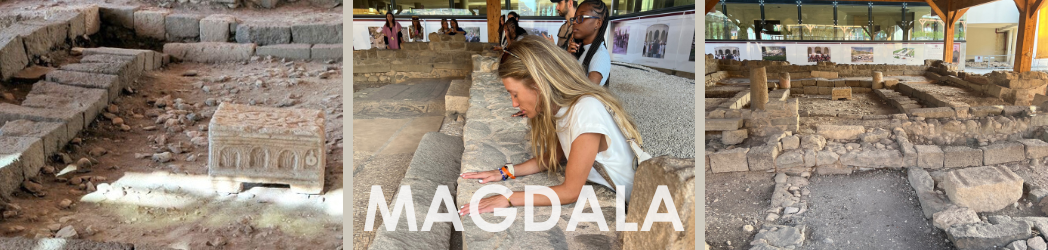
The Biblical Significance of Magdala in Israel
By Shelley Neese, ACLI Coordinator
Is there a deeper, biblical significance to the archaeological site of Magdala in Israel?
For centuries, pilgrims traveling to the Holy Land have focused their Galilee experience on a specific cluster of destinations: Capernaum, the Primacy of Peter, Tabgha, and the Mount of Beatitudes. These locations form a sacred circuit around the northwestern shore of the Sea of Galilee. More recently, a newly discovered site in northern Israel has joined the ranks of these essential stops in retracing the ministry of Jesus: Magdala. With sweeping views of the Arbel Cliffs to the west and the Sea of Galilee to the east, the location is beautiful, but even more significantly, it brings the visitor breathtakingly close to the footsteps of Jesus.
What Is the Biblical Significance of Magdala?
The name Magdala derives from the Hebrew Migdal, meaning “tower,” a title implying the area held significant strategic importance in Israel’s ancient history. By the first century, however, the historian Flavius Josephus referred to it by the Greek name Tarichaea, which means “the place of processed fish.” He described a wealthy boomtown where an “abundance of men” had “left their own countries for Magdala’s fortune.”
While the New Testament never explicitly names Magdala as a location of Jesus’ healing or teaching, it was the hometown of one of His most faithful followers, Mary Magdalene. “Magdalene” was not her surname, but a geographic title meaning “Mary of Magdala”—a distinction likely used to separate her from the many other women named Mary in the Gospels.
Yet, the logic of geography speaks louder than textual silence. Magdala was a major commercial hub located just six miles southwest of Capernaum, Jesus’ base of operations. The Gospel of Luke describes Jesus’ intention to visit every settlement in the area. After healing Peter’s mother-in-law, Jesus declared, “I must preach the kingdom of God to the other cities also, because for this purpose I have been sent” (Luke 4:43). As He traveled the main road, going about all Galilee, Magdala would have been unavoidable. Matthew 15:39 refers to Jesus going to the region of “Magadan,” which could be Magdala, but there is no scholarly consensus.
In the Galilee region, Jesus called the disciples into service, taught crowds from a boat and on a hillside, and visited synagogues—and from this area He performed the great majority of His recorded miracles. Magdala, like every other town in the Galilee, must have been abuzz with reports of this radical teacher and His supernatural powers.
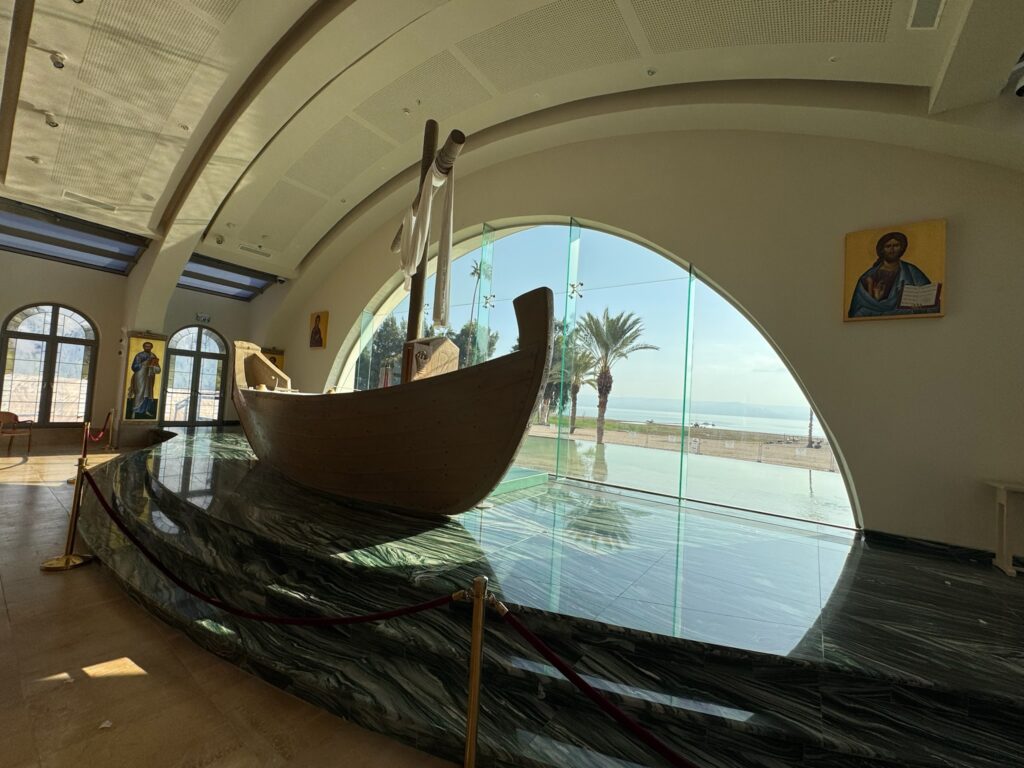
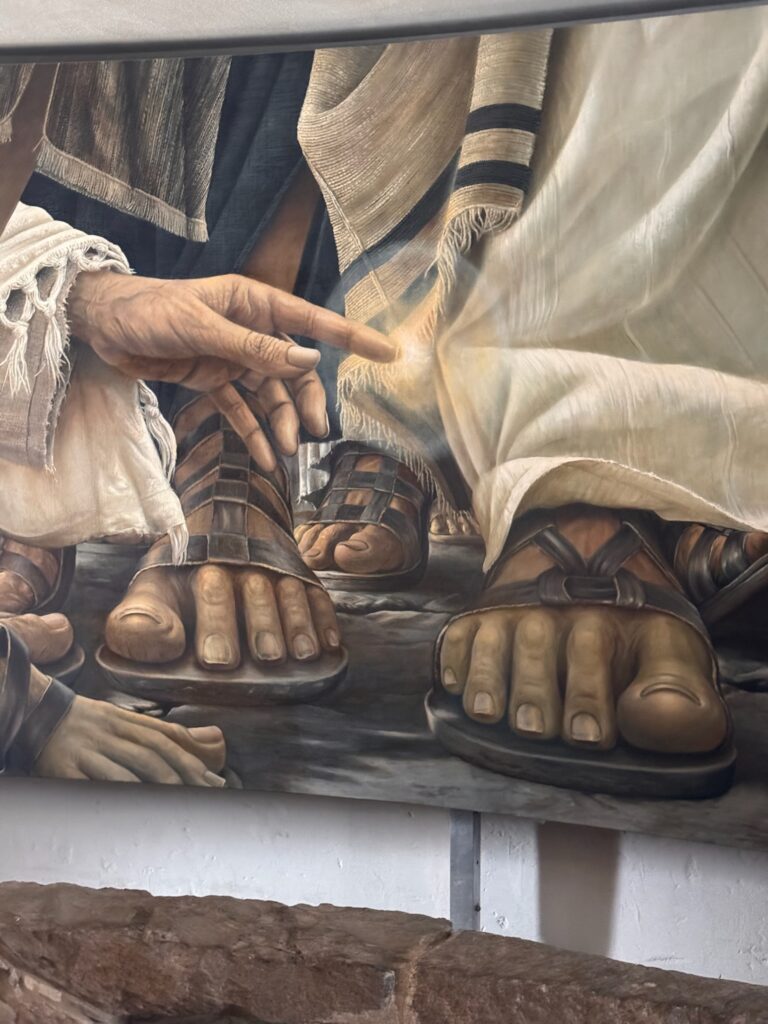
The History of Magdala in Israel
Scholarly interpretations of archaeological evidence unearthed over the last 15 years provide our primary window into Magdala’s history. Settlers established the town in the late Hellenistic period, between the second and first centuries BC. Under the Hasmonean dynasty, the town transformed from a small settlement into an urban center. During the reign of Herod the Great, Magdala entered its golden age. It flourished as a commercial hub, leveraging its location on the lake to become the center of the fishing industry.
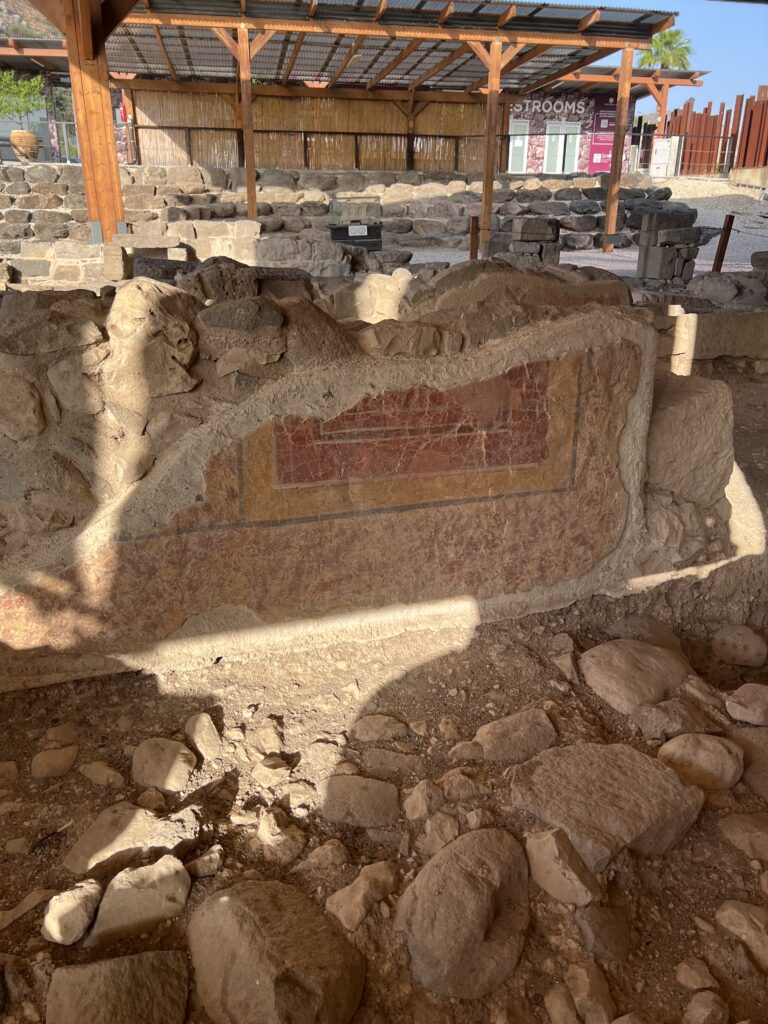
The city’s prosperity crashed to a violent halt during the First Jewish Revolt. In AD 67, Roman legions led by General Vespasian descended on Magdala in search of Jewish rebels hiding in the city. Josephus recounts a brutal siege and a bloody naval battle on the Sea of Galilee that turned the waters red. Following the Roman victory, residents abandoned the northern section of the town—where the synagogue and marketplace stood.
During the Byzantine period, Christians reoccupied the site not for its fish, but for its sanctity, building a monastery to honor the memory of Mary Magdalene. Even after the Muslim conquest in the seventh century, the site remained a significant destination for Christian pilgrims. During the Crusader period (12th century AD), records confirm that a church dedicated to Mary Magdalene still stood.
Following the fall of the Crusader Kingdom, the site declined into obscurity. By the Ottoman period, the Arab village of Al-Majdal rose over the ruins, preserving only the name of the ancient city. This village stood until the 1948 Arab-Israeli War. Following the war, the site did not fade from memory; the Franciscans acquired the land and conducted excavations on the southern portion in the 1970s, uncovering the Byzantine monastery. However, the northern section—containing the first-century synagogue—remained buried and untouched until accidental excavations broke ground in 2009.
Excavating Magdala in Israel
Father Juan Solana, a papal appointee of the Legionaries of Christ—a Catholic order—planned to build a retreat center for pilgrims at Magdala. Israeli law requires a salvage excavation before any construction can begin to ensure no antiquities are destroyed.
When the Israel Antiquities Authority (IAA), led by archaeologists Dina Avshalom-Gorni and Arfan Najar, began the initial dig, they quickly struck stone benches. As they dug further, they realized they had uncovered a first-century synagogue—one of only seven from this period ever found in Israel, and the first found in the Galilee region. Since then, the Magdala Archaeological Project, led by archaeologist Marcela Zapata-Meza, has conducted continuous annual excavation seasons, uncovering more of the first-century biblical site each year.
The excavations have revealed a thriving city with a complex identity. In the first century, the town was a cultural crossroads. While the population was predominantly Jewish, a significant portion of the residents had adopted the lifestyle of the Greco-Roman world.
It is difficult to determine exactly how much assimilation occurred, but the material prosperity of the town is undeniable. Archaeologists uncovered a sophisticated marketplace with more than 20 shops. They also discovered a specialized “fish pool,” where workers processed the Sea of Galilee’s bounty for export to Rome.
The infrastructure shows a high standard of living, most clearly evidenced by the discovery of two large mansions with private mikva’ot (ritual baths). The cultural blending of Magdala is perhaps best captured in the art found in these wealthy homes. In one mansion, archaeologists uncovered a well-preserved mosaic floor depicting a dolphin. This is surprising because Jewish law generally interpreted the Second Commandment as a ban on representing animate objects like animals or humans in art.
Even more telling, the mosaic features objects used in Greek gymnasiums, such as dumbbells and oil scrapers. The fact that these symbols were found in a home that also contained a ritual bath is remarkable evidence of a wealthy Jewish class that was comfortable with Greco-Roman culture. A fourth-century AD Rabbinic text, Lamentations Rabbati, explicitly states that Magdala was destroyed because of its sinfulness, attributing its fall to the town’s “harlotries.”
What Is the Magdala Stone?
The crown jewel of the excavation is the synagogue, a find that allows us to date the site with precision. Archaeologists discovered coins embedded in the floor ranging from AD 5 to AD 43. This numismatic evidence proves the synagogue was active during the ministry of Jesus, solidifying the likelihood that He preached within these very walls.
The structure itself is intimate. It features basalt stone benches arranged in a square, allowing the congregation to face one another. The walls were once plastered with colorful frescoes, and a small, separated “sacred space” with mosaic flooring may have served as the storage area for the Torah scrolls.
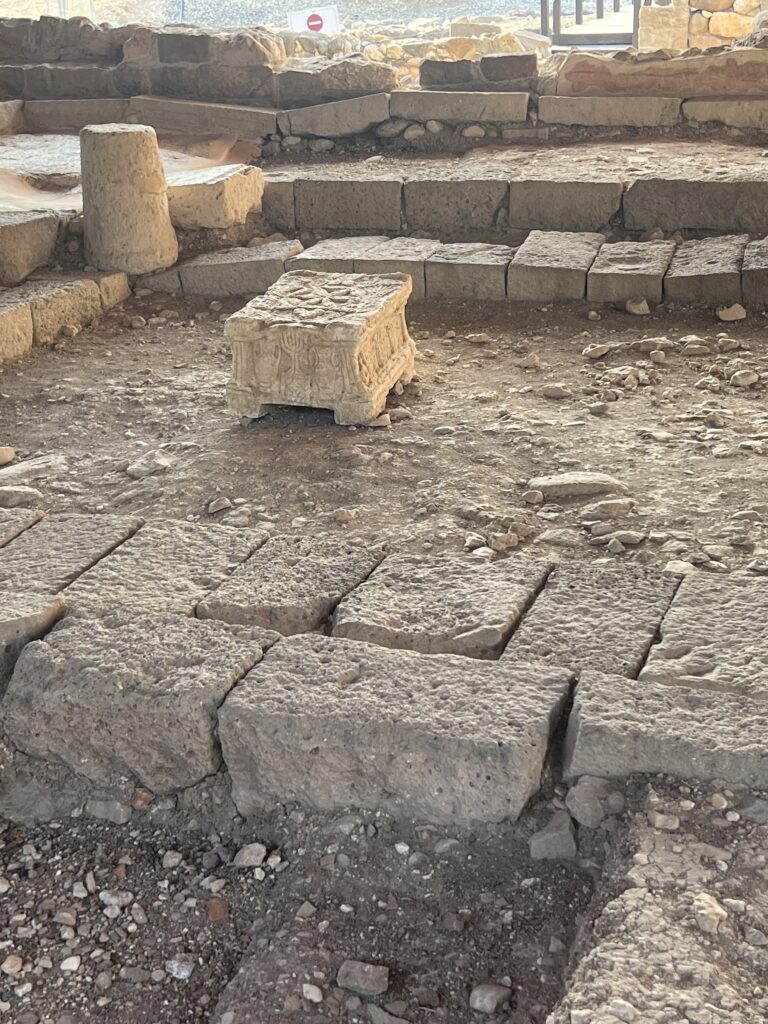
Inside this space, archaeologists found the “Magdala Stone,” a discovery that remains the most significant and perplexing find at the site. It is a rectangular block made of solid limestone. While the rest of the synagogue used local black basalt, the stone used rock typical of Jerusalem.
Scholars continue to debate its exact function. Was it a piece of sacred furniture? Did it serve as a stand to hold a Torah scroll? Or was it a 3D model of the Second Temple intended to honor Jerusalem from afar? Regardless of its utility, the carvings are a veritable treasure. Each side of the stone features decorative and symbolic motifs that essentially map out the Jerusalem temple. The front displays a seven-branched menorah sitting atop a pedestal, flanked by two jars. It is the oldest carving of a menorah found in a public place. The top of the stone features a central six-petaled rosette flanked by heart-shaped ivy leaves. Some scholars interpret these “hearts” as the loaves of bread on the Table of Showbread.

Mary of Magdala: Disciple and Witness
While the synagogue and Magdala Stone are a revelation, the town’s most enduring legacy belongs to the apostle who made Magdala a household name for millennia.
The Gospels introduce Mary of Magdala as a woman whom Jesus healed of seven demons (Luke 8:2). Scripture does not specify how this torment manifested in her life, only that the intervention of the Messiah liberated her. From the moment of her healing, she never left Jesus’ side.
The New Testament also describes Mary as a woman of means. Alongside two other influential women, Joanna and Susanna, she provided for the traveling ministry of Jesus and the disciples (Luke 8:3). The thriving export industry of Magdala may explain the source of Mary’s wealth.
Mary’s devotion was absolute. She followed Jesus to the bitter end. While many of the disciples fled in fear at the Garden of Gethsemane and Peter denied his connection to Jesus three times, Mary of Magdala stood at the foot of the cross—along with His mother and the apostle John—until Jesus took His last breath (John 19:25–27).
Joseph of Arimathea and Nicodemus rushed to prepare Jesus’ body for burial before the Sabbath began. The Gospels confirm that Mary Magdalene and the other women were sitting opposite the tomb, watching and noting precisely how and where the body was laid to rest (Mark 15:47; Luke 23:55).
After the Sabbath, Mary returned to the tomb at dawn specifically to anoint His body with spices (Mark 16:1). Finding the tomb empty, she first ran to alert Peter and John that the body was missing. After they left, Mary remained weeping. She then saw two angels, and immediately afterward, it was Jesus who appeared to her, commissioning her directly. Jesus gave a woman, once tormented by demons, the privilege of being the first messenger of the Good News, commanding her to tell His brethren, “I am ascending to My Father and your Father, and to My God and your God” (John 20:17). She ran to the disciples with the words that would change history: “I have seen the Lord” (John 20:18).
The early church gave Mary Magdalene the singular title: the “Apostle to the Apostles” because she was the first commissioned messenger sent by the resurrected Jesus to bring the Good News to the apostles.
When Mary of Magdala sought the Lord, she found Him—and that is the calling of every believer.
Today, pilgrims walk the ancient stones of Magdala carrying that same spirit of faithful searching. Standing in the synagogue where Jesus surely preached or looking out over the water that He once commanded to be still, they do what Mary of Magdala did: they seek the living God out of gratitude for what He has already accomplished, and are eager for His return.
See significant locations in the Bible for yourself—and watch your Bible come alive! Join an ICEJ USA tour to Israel.
Related Articles
Who Wrote the Dead Sea Scrolls? An Ancient Mystery Unsolved
Shiloh in the Bible: From Sacred Center to a Cautionary Tale
The Story of Masada in Israel: History, Rebellion, and Sacred Legacy
Mount Ebal Amulet Affirms Israelite Worship of “Yahweh”
Israelis Excited over Hezekiah Inscriptions – Old and New