



Witnessing the Restoration of Israel: A Christian’s Journey
By JoAnn Magnuson
This post is excerpted from Susan Michael’s book Every Generation’s Story: 75 Years of American Christian Engagement with Israel, which follows the unique experiences of 18 American Christians representing 5 generations who responded to God’s call to go to Israel—and how it changed their lives forever.
I am blessed to have spent the first 10 years of my life in my paternal grandmother Ida Emmeline Morgan Gardner’s home. Ida, otherwise known as “Gram,” was born one year after the end of the American Civil War and died two years after World War II ended. She was a serious student of history and the Bible and a keen observer of the passing scene, my only Christian relative—and my best friend. …
I was just four years old at Gram’s seventy-fifth birthday. Several relatives had come to the house for dinner and were sitting down to celebrate when a news flash came across the radio. President Roosevelt’s familiar voice announced that the Japanese had bombed Pearl Harbor, and we were now at war. My relatives who had sons of draft age began to sob, and the dinner ended quickly. Later that evening as I was helping Gram clean up the kitchen, she put her hand on my shoulder and said, “My dear granddaughter, this will be a terrible war, but Hitler and the Japanese will be defeated, and the Jews will be back in their ancient land. We must pray for that!” …
From December 1941 to the summer of 1945, Gram and I spent most evenings after dinner sitting in front of the big Silvertone radio listening carefully to “war news.” Several older cousins were serving in the US military, and we regularly raised prayers on their behalf. Gram faithfully reminded me that “God has a covenant with the Jewish people that will last as long as the sun, the moon, and the stars, and He will bring them back to their ancient land.” From her faithful teaching, I gained a sense of personal responsibility for the success of God’s restoration project.
When Gram died in May 1947, she left behind her old leather-bound King James Version Bible, in which she had underlined all the promises concerning the restoration of Israel. I poured over that Bible many times the following year, paying particular attention to all the passages Gram had underlined.
Therefore, I was impressed but not too surprised when I came home from school in May 1948 to see the headline of the Minneapolis Star-Journal shouting: “State of Israel Declared.” I thought, Wow! Gram knew this would happen because she read the Bible.
Gram’s teaching and this series of events helped form my view of the world and the Bible and set me on a path that led to my lifelong involvement with Israel and the Jewish people. …
My First Trip to Israel
One morning just before my fortieth birthday, the Holy Spirit led me to read Joshua 14:7, a quote from Caleb, Joshua’s right-hand man: “I was forty years old when Moses the servant of the Lord sent me … to spy out the land.” I went to Israel for the first time that year, and I have been “spying out the land” ever since by leading 69 tours to Israel.
The group of Lutherans, Catholics, Baptists, and Episcopalians I traveled with in 1977 was a combination of lifelong Bible students and those newly discovering the fun of reading through the sacred text, book by book. The emphasis on the eternal covenant between God and the descendants of Abraham, Isaac, and Jacob took on a clearer sense of importance as we walked the paths and highways of the Land where it all began.
We returned home from that trip with a deeper and more profound understanding of Amos 9:14–15:
“I will bring back the captives of My people Israel … I will plant them in their land, and no longer shall they be pulled up from the land I have given them,” says the LORD your God.
The continuous relationship of the Jewish people to their ancient homeland is a central theme in Scripture and is often referred to as “Zionism.” The movement referred to as “Zionism” represents support of the return of the Jewish people to Zion[1]—the city of Jerusalem and the Land of Israel—the Land God promised to Abraham and his descendants forever. …
One profound experience inspired me to continue my journey on this path. … Our group had planned to go down to the Dead Sea that day, but on our way, a thunderstorm struck, and we had to turn around and return to our hotel in Jerusalem. Everyone was tired and a bit disappointed over missing a long day at Masada. After assigning everyone to their hotel rooms, I returned to mine and was able to go to sleep.
At about 4:00 a.m., the balcony door in my room started banging— blown open by the wind—and shook me into consciousness. I begrudgingly crawled out of bed and closed the door. What’s wrong with this fancy hotel that the outer door won’t stay shut?
After it happened three more times, I finally dragged myself out of bed, leaned on the door, and looked out the window heavenward. As I glanced at the sky and the parking lot below me and watched the palm trees blowing over on their sides and the black clouds roiling around in the sky, I said, “Lord, are you trying to tell me something?”
The still, small voice of the Holy Spirit said, “Just wanted you to know what it looks like here, all the time, in the Spirit. There is always a storm raging over Jerusalem. On sunny days you don’t notice it. But the enemy of God and man is always at war over Jerusalem. So if you want to teach people to pray and understand Israel, you must know the truth about the battle!” The longer I’ve worked in this field, the more grateful I am for that experience.
Pioneers on the Road I Traveled
My pilgrimage in the field of Christian Zionism brought me into contact with several venerable pioneers in the work. One was G. Douglas Young (1910–1980), who came to Minneapolis in 1953 to teach at Northwestern College. In his studies in the late 1940s and early 1950s, he learned about the horrors of the Holocaust and the disinterest of American churches during and after that atrocity. …
His first trip to Israel in 1956 set him on a course to organize the Institute of Holy Land Studies in Jerusalem, where students from various Christian backgrounds could spend time learning from Jewish and Christian teachers in the land of the Bible. The Institute brought Christian students to the Land to learn Hebrew, study with Israeli archeologists, and go on field trips to map the geography of the Bible. Today this school is known as Jerusalem University College.
Another Christian Zionist pioneer was Rev. Franklin Littell (1917–2009). Rev. Littell visited Germany in 1939, and while there, attended the Nazi Nuremberg rally. Later in life he recalled being appalled by its open racism and religious glorification of Aryans. When Adolph Hitler made an almost godlike appearance in the stadium, bathed in a halo of lights, Littell was so repelled that he stood up and left the arena.
After the end of World War II, Littell joined the US high commissioner in occupied Germany as the Protestant adviser on de-Nazification. During his subsequent career in education, he started Holocaust studies programs at various colleges and universities, beginning in 1959 at Emory University in Atlanta. … At the same time, he also became an enthusiastic supporter of Israel, partly because he believed Israel’s very existence refuted erroneous theologies that foresaw or favored the withering away of the Jewish people. …
In 1978 Rev. Littell, along with Sister Rose Thering and Assembly of God minister Rev. David Allen Lewis, founded the National Christian Leadership Conference for Israel (NCLCI). At its inception, NCLCI lobbied against arms sales to Arab nations that refused to recognize Israel. …
A third Christian Zionist pioneer I was privileged to know was Rev. David Allen Lewis (1932–2007), chairman of the National Christian Leadership Conference for Israel. He was an ordained minister in the Assemblies of God and one of the most respected Evangelical voices for Israel. Lewis authored more than 40 books, produced 39 television documentaries on location throughout Israel, and traveled to the Middle East 67 times promoting the welfare of the church, Israel, and the Jewish people.
Rev. Lewis was also a member of the Church Relations Committee of the United States Holocaust Memorial Council. I greatly respect David Lewis as one of the few Evangelicals who was willing to take a chance and work with mainline and Catholic Christians quite early in the development of this movement. He served on a board for years with church leaders whom many of your church family regard as heretics. Rev. Lewis was a true pioneer in his support for Israel and through his cooperation with a broad swathe of the Christian world.

Organizations I Served
In addition to my work with the National Christian Leadership Conference for Israel (NCLCI), I have worked with the International Christian Embassy Jerusalem (ICEJ). My involvement with the ICEJ began when I brought a group of Christians from the United States to the 1981 Feast of Tabernacles. I then volunteered to help open an ICEJ office in the Twin Cities, served as their US prayer ministry director from 1981 to 1985, and worked with them again in 2008–09.
From 1986 to 2007, I served as the US education director for Bridges for Peace (BFP), founded by the abovementioned G. Douglas Young, a Christian Zionist pioneer. I spent over 20 years working for BFP, and these were good years. We had our ups and downs, but I am grateful for the opportunity to have worked with various folks, both Christians and Jews, who saw biblical significance in the rebirth of the State of Israel and were willing to work at supporting it and telling its story.
In addition to my involvement with NCLCI, the ICEJ, and BFP, I have been involved with Christians United for Israel (CUFI) almost since its founding. I continue to serve as CUFI’s city director for Minneapolis, Minnesota. I count it a privilege to have been able to donate my personal library of over 2,000 Israel-related books to Maranatha High School, part of Living Word Christian Center in suburban Minneapolis, pastored by Mac Hammond, a member of CUFI’s executive board.
The Gathering of the Geckos
In the Jewish and Christian communities, we activists are always on the lookout for willing volunteers. The need for volunteer laborers reminds me of a Bible teaching I gave some years ago focusing on small creatures and their secrets of success. I had been invited to speak at a Christian women’s luncheon and chose this text from the book of Proverbs:
Four things on earth are small, yet they are extremely wise: ants are creatures of little strength, yet they store up their food in the summer; hyraxes (or “conies” in the KJV) are creatures of little power, yet they make their home in the crags; locusts have no king, yet they advance together in ranks; a lizard (or “gecko”) can be caught with the hand, yet it is found in kings’ palaces. (30:24–28 NIV, emphasis added)
… Locusts advance by sticking together, an example of working collaboratively to advance the kingdom. And finally, lizards (or “geckos”) are found in kings’ palaces. They have feet with suction cup–type features, which make it easy to sneak around in high places without being noticed.
As I lobbied for Israel over the last 40 years in Washington, DC, I have noticed young, seemingly insignificant people serving in the halls of power, many of whom are young Jews and Christians working as interns for congressional officials and government agencies. I think of them as “geckos”—small people in high places. Their names may not appear on the office door, but their work can influence the course of history.
My grandmother used to say, “There is no limit to how much good work you can do‚ if you don’t care who gets the credit.”
I suspect that when the tables are laid for the grand banquet on high, there will be a special section for the geckos. And I would be delighted to find my name on that list.
See Israel for yourself! Join a life-changing ICEJ tour to Israel.
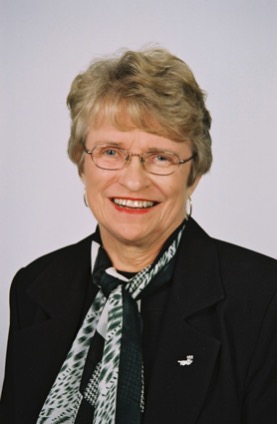
JoAnn Magnuson is an Evangelical Christian who has been involved in a lifetime of support for Israel, teaching on the Holocaust, and building Jewish-Christian relations. She has written various materials on the history of antisemitism and the importance of Holocaust education and, to date, has led 69 study tours to Israel since 1977. JoAnn has served as a consultant and staff member for many pro-Israel Christian organizations including the International Christian Embassy Jerusalem, Bridges for Peace, Christian Friends of Yad Vashem, Christians United for Israel, and the National Christian Leadership Conference for Israel.
[1] The word “Zion” occurs more than 150 times in the Bible and is synonymous with “city of God,” or Jerusalem: “The Lord loves the gates of Zion more than all the dwellings ofJacob. Glorious things are spoken of you, O city of God!” (Psalm 87:2–3). It was initially the ancient Jebusite fortress in Jerusalem, conquered by King David (2 Samuel 5:7), and eventually the seat of power in the kingdom
Related Articles
Gentiles in God’s Plan of Redemption
Do Gentiles Have a Role in the Restoration of Israel?
Simeon in the Bible: Why We Must Have “Eyes of Expectation”
Zechariah’s Prophetic Visions: A “Righteous Remnant”