



Does Christmas Have Pagan Roots?
By Barry Denison, ICEJ USA Director of Finance
Each December, as carols echo and lights adorn homes, a question surfaces among some Christians: Does Christmas have pagan roots?
The celebration of Jesus’ birth on December 25 is cherished worldwide, yet critics claim it’s tied to Roman festivals like Saturnalia, labeling traditions like Christmas trees as idolatrous. Meanwhile, biblical scholar Dr. Michael Heiser proposes a different date—September 11, 3 BC—based on astronomical signs and Jewish traditions.
By exploring the origin of Christmas through Scripture, history, and theology, we can debunk the accusations of Christmas’s pagan roots, address divisive claims, and refocus on the heart of the season: Emmanuel, God with us.
Historical Reasons for December 25
The origin of Christmas on December 25 is often argued to be attempts to Christianize pagan festivals, but early church evidence tells a different story. Critics argue that the date was chosen to replace Saturnalia (December 17–23) or Natalis Solis Invicti, the “Birthday of the Unconquered Sun” (December 25).

However, as early as AD 200, Irenaeus, a disciple of Polycarp (mentored by the apostle John), identified March 25 as the Annunciation, when Gabriel announced Jesus’ conception to Mary (Luke 1:26–38). By AD 221, Sextus Julius Africanus calculated December 25 as Jesus’ birthdate, reasoning those nine months after conception landed on this date. Emperor Aurelian’s declaration of December 25 as the sun god’s birthday in AD 274 came over 50 years later, suggesting it may have been an attempt to counter Christian influence, not the reverse.
The idea of Christmas’ pagan roots didn’t appear until a twelfth-century Syriac Bible commentary and gained traction only in the eighteenth century. Early Christians chose December 25 based on biblical reasoning, not pagan festivals.
Objections to December 25
Another objection claims shepherds wouldn’t be in the fields in December, as Luke 2:8 describes, due to Bethlehem’s cold, rainy winters. Yet Jerusalem, near Bethlehem, often experiences mild spells reaching 60°F (15°C), and Bedouin shepherds are frequently seen tending flocks during these periods. The climate doesn’t preclude a December birth.
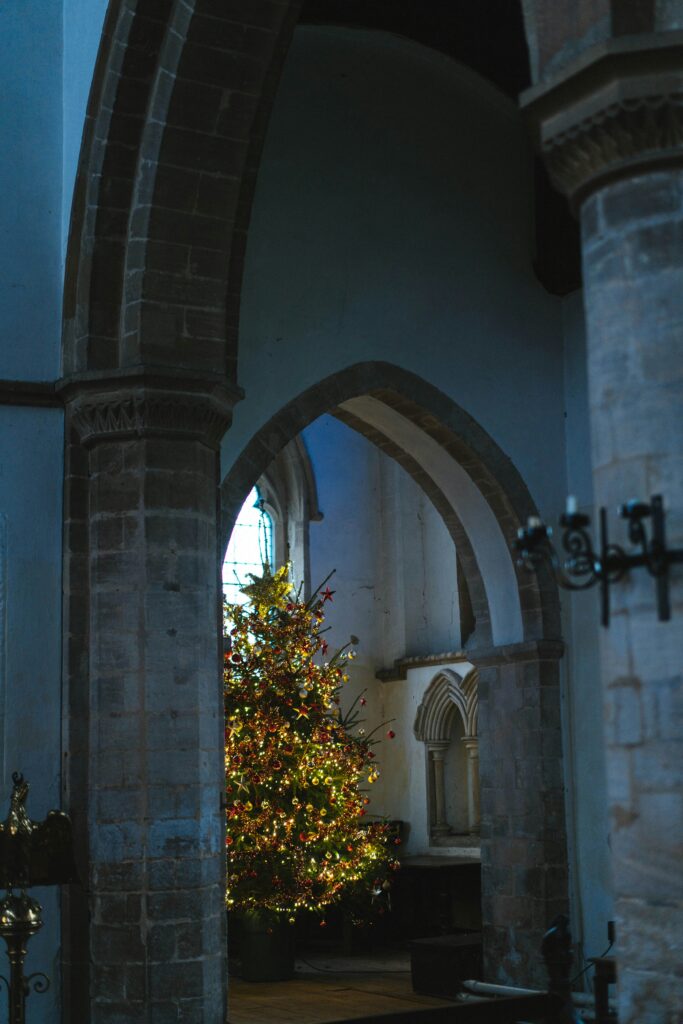
Critics also label Christmas trees and wreaths as pagan, citing Nordic Yule traditions. However, early Christian writings connect trees to biblical imagery, like Isaiah 11:1 (“a Branch shall grow out of [Jesse’s] roots”). In AD 512, Byzantine emperor Anastasius decorated churches with green trees adorned with lights and crosses, symbolizing Jesus as the Tree of Life (Revelation 22:1–5), distinct from pagan practices.

Also, Jeremiah 10:2–5 and Isaiah 44:15–17, which critics cite against Christmas trees, condemn idol worship, not decorative trees. No Christian worships their Christmas tree; it’s a symbol of the Light of the World (John 8:12).
Gift-giving, sometimes called unbiblical, draws from Esther 9:20–22, where Purim is celebrated with “presents to one another and gifts to the poor,” and from the Magi’s offerings to Jesus (Matthew 2:11). Feasting, though marred by excess in some historical periods, aligns with biblical celebrations of deliverance (Esther 9). These traditions reflect joy in Jesus’ coming, not Christmas’ pagan roots.
Luke 1:5–24
The early church’s choice of December 25 was rooted in Luke 1:5–24, where Zechariah, a priest of Abijah’s division, received the announcement of John the Baptist’s conception during temple service, likely in the fall based on historical records (late September). With Mary’s conception six months later (Luke 1:26), around March 25, Jesus’ birth would fall near December 25, possibly coinciding with Hanukkah, the Festival of Lights—a fitting time for the Light of the World.
A False Accusation
The accusation that Christians who celebrate Jesus’ birth on December 25 are practicing paganism is false and could be considered as Lashon Hara—an “evil tongue” that spreads divisive or misleading speech.
Labeling Christmas as purely pagan ignores the early church’s scriptural reasoning and fosters unnecessary conflict. Luke 2:8–14 describes heaven erupting in celebration, with angels proclaiming “good tidings of great joy” at Jesus’ birth. If God marked this event with such fanfare, Christians should feel free to celebrate without fear of pagan associations.
The origin of Christmas is grounded in biblical joy, not Roman festivals.
Another Theory
Others claim that Jesus was born during the fall feasts (moedim in Hebrew—God’s “appointed times”). Was Jesus Born on the Feast of Trumpets or Rosh Hashanah?
Dr. Michael Heiser offers a compelling alternative to December 25, proposing September 11, 3 BC, as Jesus’ birth date. Heiser, author of Reversing Hermon, argues this date aligns with celestial signs, Jewish traditions, and theology. He does so without claims of Christmas’ pagan roots. His argument centers on Revelation 12:1–7, which describes a “woman clothed with the sun, with the moon under her feet, and on her head a crown of twelve stars,” giving birth to a male child (Revelation 12:1–5). He interprets the woman as Virgo, symbolizing Israel, with the twelve stars representing Israel’s tribes. He pinpoints this alignment to September 11, 3 BC, within a 90-minute window due to the moon’s position.
This date corresponds to the Feast of Trumpets (Rosh Hashanah, Tishri 1), the Jewish New Year, symbolizing creation’s renewal and the inauguration of kings like Solomon. He connects it to Noah’s birthday (Genesis 7:6–11), which Jewish tradition places on Tishri 1, casting Jesus as the “new Noah” who reverses the corruption of Genesis 6:1–4, where the Watchers produced the Nephilim.
For Heiser, Jesus’ birth on Tishri 1 signals cosmic restoration. Celestially He notes a conjunction of Jupiter (the “King planet”) and Regulus (the “King star”) in Leo, symbolizing Judah (Genesis 49:9–10), possibly the “star” followed by the Magi (Matthew 2). The Magi, familiar with Jewish Scriptures like Isaiah 7:14, interpreted these signs as heralding a divine king. Heiser also cites Paul’s use of Psalm 19:4 in Romans 10:18, suggesting the heavens announced the Messiah’s birth.
Celebrating Emmanuel, God with Us
The historical church had strong reasons for December 25, rooted in the Jewish priestly calendar and Zechariah’s temple service (Luke 1:5–23), which places Jesus’ birth near Hanukkah, a poetic fit for the Light of the World. The case for the Feast of Trumpets, grounded in celestial and theological coherence, offers an alternative.
Conclusion
Rather than debating dates or perpetuating claims that Christmas has pagan roots, Christians should unite in celebrating Emmanuel, God with us. Whether on December 25 or Rosh Hashana, let’s honor the Savior’s transformative arrival, which angels heralded and history confirms as the hope of the world.
Related Articles
What Is Hanukkah and Does It Matter for Christians?
The Feasts of the Lord and Their Rich, Biblical Significance
Keep Learning
The Feast of Tabernacles: The Most Joyful Feast on God’s Calendar