


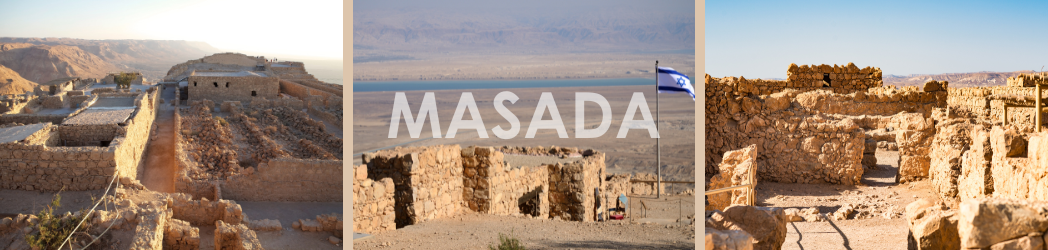
The Story of Masada in Israel: History, Rebellion, Sacred Legacy
By John Vedder, Church Relations Coordinator
The mountain fortress of Masada in Israel, perched on a rugged cliff overlooking the Judean desert and the Dead Sea, is not just the backdrop of one of the most compelling stories in history but also holds the prophetic promise to a modern movement. How can something that was built atop a mountain and preserved for nearly 2,000 years hold significance to the rebirth of the modern State of Israel? How can a story that took place so long ago show us the significance of events taking place today?
Masada in Israel: Fortress on the Edge of History
The main story of Masada, which took place around the year AD 73, is characterized by patriotism, human tragedy, kings, and rebels. Within the events alone were the makings of a great cinematic experience, which is exactly why in the late 1980s, actors Peter O’Toole and Peter Strauss brought the nearly 2,000-year-old story to life by becoming General Cornelius Flavius Silva and Eleazar ben Yair. Those names alone are enough to draw you in!
Silva and ben Yair were two powerful men who stood on opposite sides of the walls and who came away with very different results from their standoff. While their stories ended differently, both have been remembered throughout history.
Today we take a fresh look at the many layers and unravel the prophetic mystery held within that isolated mountain in southern Israel.
The History of Masada in Israel
As the Roman Empire expanded and grew into one of the largest empires in history, its many Caesars became quite used to uprisings and revolts. It was to be expected. Rome’s armies and leaders were proficient at squashing most of these rebellions before they gained too much traction. However, one group never gave in to service to the Romans: the Jews.
In the space of 70 years, the Jews revolted not once but three times. No other people in the empire—and there were many other rebel nations—had such a record.[1] It was toward the end of the Great Revolt (Jewish Revolt) of AD 66 that the mountain fortress of Masada found itself as the stage for Cornelius and Eleazar to enter into the history books.
Herod’s Masterpiece
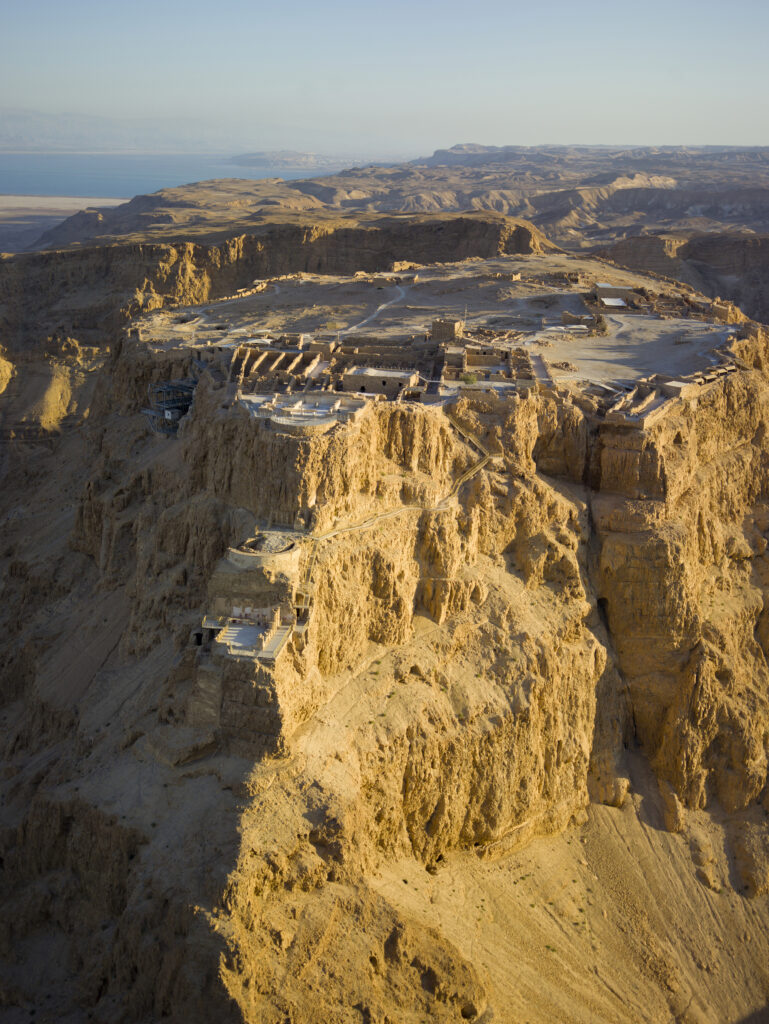
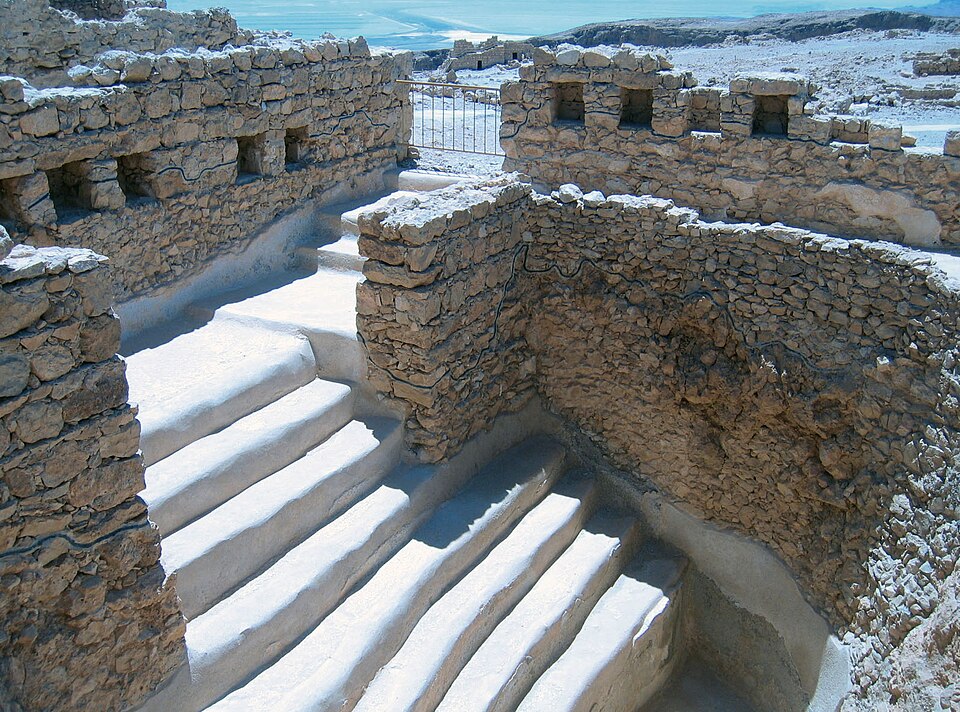
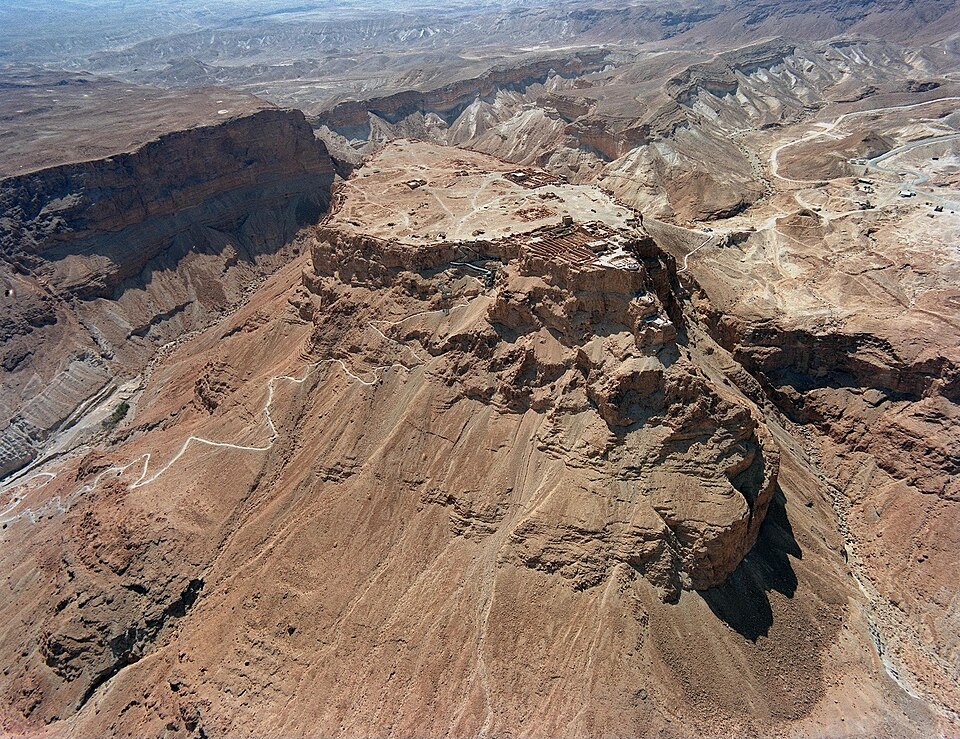
Herod the Great was by far one of the most hated and controversial figures of the ancient world. He was from a lineage that converted to Judaism, with a history of lavish living and relationships with the likes of Cleopatra and Mark Antony; he had an unquenchable hunger for power and a willingness to do whatever it took to build wealth and prestige. During his reign over Judea from 37 BC to AD 4, he fortified the mountain outcrop of Masada in Israel and built its north-facing palace. The mountain and its surroundings were unique in the region. The mountain seems to protrude out of the ground on the edge of a great cliffside range. The top of Masada rises nearly 14,000 feet above the surrounding land and has extremely sharp cliffs on all sides. It was a perfectly built mountain fortress that was almost impossible to overtake.
The Zealots’ Last Stand
It was at this palace, built by Herod, that a group of Jewish rebels, known as Zealots, found themselves in the year AD 70. The insurgents were fleeing the destruction of Jerusalem by the Roman armies under the command of Titus, the son of Flavius Vespasianus, later known as Vespasian. Three years after the destruction of Jerusalem, the Roman army, then led by General Cornelius Flavius Silva, came knocking on the doors of this fortress in which the Jewish rebels had barricaded themselves.
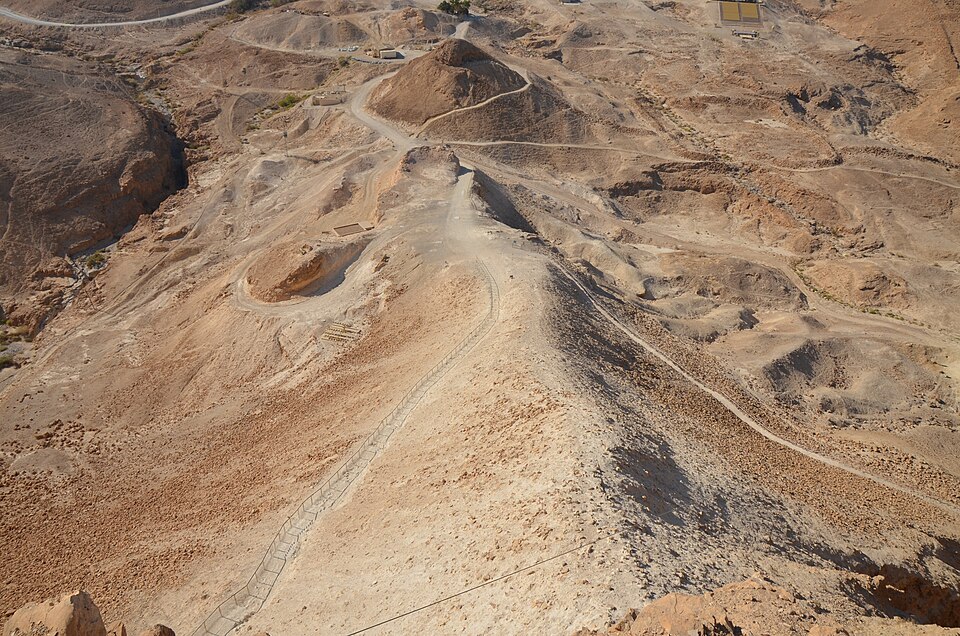
For most, the high cliffs of Masada in Israel would be impossible to overcome, but this was no problem for the Romans, who were proficient at siege warfare and had strong men to spare for the work ahead. They closed the Jews in with a lower wall at the bottom of the mountain and then began the work of building a road that would lead to the top of the mountain and give them access to the rebels within.
The Fall of Masada
The time had come when General Silva and his men finished the ramp and were ready to break down the wall. They marched to the top, lit a fire at the gate, and then retreated to the bottom until the next day. The scene was typical of countless sieges across history—but that night, a decision made by the Jewish rebels would ignite a chain of events that have reverberated throughout history.
This group of nearly 1,000 Jews, led by Eleazar ben Yair, decided to end their lives rather than be taken into the hands of the Romans and turned into slaves for the empire. It is a decision that, for many, is hard to understand. Was slavery at the hands of the Romans truly so terrible? What were the religious and ethical dilemmas associated with this decision? Would we have done the same?
These questions have been debated for centuries. What we can say for sure is that Masada in Israel represents the last Jewish stronghold of control over the land of Israel up until its rebirth as a nation in 1948.
And it is to this fact we now turn.
A Longing for Freedom
The Jewish people have always longed for freedom—not merely political or economic, but specifically religious freedom to worship God according to His commands. Moses’ cry to Pharaoh was, “Thus says the Lord, the God of Israel, let my people go, that they may hold a feast to me in the wilderness” (Exodus 5:1). God’s people wanted to worship Him freely.
The same heart was present at Masada—the longing to worship their God in peace in the land He gave them. For the nearly 2,000 years that the Jewish people have spread across the world, they have longed to return to Jerusalem to worship the Lord. This longing was not just in the hearts of the people but was prophesied in the Word of the Lord.
Masada represents one bookend of history as the beginning of the Jewish exile from the land. This exile ended officially May 14, 1948, as Israel was declared to be a Jewish State—the first Jewish control of the land since AD 73 and the fall of Masada.
Is Masada in the Bible?
Masada is not specifically mentioned in the Bible; however, part of the Bible was found in Masada, which connects ancient history to the modern-day nation. In the mid-1960s, the renowned archaeologist Yigael Yadin discovered a scroll in the synagogue atop the mountain that speaks to God’s prophetic call for the nation of Israel.
As Yadin dug under the rock and dirt, his team pulled out the scroll of Ezekiel—in particular, chapters 36 and 37.
This scroll had been covered and preserved since the rebels of AD 73 had taken their lives. Ezekiel 36 happens to be just one section of many in the Bible where God promises the Jewish people that while they would be scattered for a season, one day, He would bring them home and restore them to their land. Interestingly, Ezekiel 36 is the blueprint for not just “how” but also the “why” God promised to bring them back.
God says specifically through Ezekiel:
It is not for your sake, O house of Israel, that I am about to act, but for the sake of my holy name, which you have profaned among the nation to which you came. And I will vindicate the holiness of my great name . . . and the nations will know that I am the Lord, declares the Lord God . . . I will take you from the nations and gather you from all the countries and bring you into your own land. (Ezekiel 36:22–24)
Not coincidentally, the very place Jewish control of the land was ended in AD 73 is the same place nearly 2,000 years later God’s promise to restore His people was dug up again. What was hidden under the rocks for generations holds profound prophetic and biblical significance.
Today there is no arguing that Ezekiel’s prophesy has come to pass right before our eyes.
But there is more
Restored Hearts: God’s Blueprint for Restoration
God says it was not for His people Israel’s sake that He would bring them back but because of His holy name. God has done this to challenge the nations to confront the question: “Is the God of Israel really who he claims to be?” The answer is a resounding Yes! Amen! The God of Israel is faithful, unchanging, and steadfast—He is a covenant keeping God.
Ezekiel continues in his prophecy:
I will sprinkle clean water on you, and you shall be clean from all your uncleannesses, and from all you idols I will cleanse you. And I will give you a new heart, and a new spirit I will put within you. And I will remove the heart of stone from your flesh and give you a heart of flesh. And I will put my spirit within you, and cause you to walk in my statutes and be careful to obey my rules. You shall dwell in the land that I gave to your fathers, and you shall be my people, and I will be your God. (vv. 25–28)
This is the final part of God’s plan of redemption for His people Israel. He will restore their hearts to himself—God is always after our hearts. He longs not just for His people to be returned to their land but ultimately, that they would soften their hearts to their Messiah, Jesus, and give their hearts to Him.
A Monument to God’s Faithfulness
Masada stands as a reminder to the nations that God is who He says He is. He is the redeemer of Israel. He is the Alpha and Omega. He is the King of kings. He is the covenant-keeping God. He has made a promise to the people of Israel, and He intends to keep it.
Masada in Israel is not just a mountain fortress that was the backdrop of one of the great stories of history but is today back in the hands of Jewish sovereignty. As such, it stands as a monument to God’s covenant promise to Israel, that one day, He would bring them back and restore their hearts to Him. Masada is once again front and center to God’s prophetic promise to a people and to a land.
The story of Masada is not finished. The story of God for the nation of Israel is not finished. We wait with great expectation for these great events to unfold.
See Masada for yourself—join an ICEJ USA tour to Israel!
Related Articles
The Gospel Spreads from Caesarea to Rome
The Outpouring of the Holy Spirit in Caesarea
Shiloh in the Bible: From Sacred Center to a Cautionary Tale
Keep Learning
Biblical Geography: Why Christians Should Study It
[1] Strauss, Barry S. Jews vs. Rome: Two Centuries of Rebellion against the World’s Mightiest Empire (New York: Simon & Schuster), 2025.