
Key Topics
Refugees
Understanding the roots of Arab-Israeli conflict
Israel’s Deputy Foreign Minister Danny Ayalon features in the latest video produced by the Ministry of Foreign Affairs entitled “The Truth about the Refugees”
As the name implies, the video gives a historical account of the refugees, both Jewish and Arab, created by the Israeli War of Independance in 1948. Refugees from that war and their descendents (on the Palestinian side) are still being used by many in the Palestinian camp as an excuse to refuse to negotiate a final status agreement between Israel and the Palestinian Authority. The issue is also widely used by Israel’s enemies around the world to demonize the Jewish State, making Ayalon’s video particularly helpful for pro-Israel activists.
This video and the accompanying articles serve as an introduction to this complex and difficult subject.
Refugees Forever
The plight of the Palestinian refugees is a frequent media headliner. Some people have called on the international community to boycott Israel, blaming the nation for the creation of the refugee issue and for the poor living conditions of nearly 5 million Palestinian refugees spanning four generations. To answer the question of who is responsible for today’s refugees a little historical perspective is necessary.
In 1947 the UN passed Resolution 181, The Partition Plan, creating a Jewish and Arab state side by side that looks very much like today’s two-state proposal. Israel accepted the resolution and the Arab nations rejected it launching an attack on the newly created state of Israel. Israel defended herself and the war ended with a cease-fire line known today as the green-line which separates the West Bank and Gaza from Israel.
About 600,000 to 700,000 Arab Palestinians fled their homes in the war of 1948 and ended up outside the cease-fire line becoming refugees. About the same numbers of Jewish refugees fled or were expelled from Arab lands around the time of the war. Israel absorbed the Jewish refugees despite the economic hardship it created on the new state. The Arabs refused to absorb the Palestinian refugees.
How did roughly 700,000 Arab refugees turn into 5 million? The United Nations defined Palestinian refugees differently from all other refugees worldwide. This exclusive treatment has led to a situation where the Palestinian refugees are the only refugee group that is expanding rather than contracting.
FACTS ON NON-PALESTINIAN REFUGEES
- In December of 1949 a refugee agency was created by the United Nations called the High Commissioner for Refugees (UNHCR). They are responsible for all refugees worldwide (with the exclusion of Palestinian refugees). They are held to the legal standards of the 1951 Convention Relating to the Status of Refugees. Under the UNHCR definition of a refugee, the status of refugee pertains only to those who have lost their home and occupation in their country of nationality. They cannot pass down their refugee status to the next generation once they have been relocated and integrated in another nation providing safety and citizenship.
- The UNHCR seeks to solve refugee issues in three ways they term as “durable solutions”: (1) Repatriation – returning to one’s country (2) Integration – becoming citizens of the nation to where they have fled and (3) Relocation – moving to another nation that welcomes refugees and grants citizenship. If any refugee is granted one of these solutions his status as refugee is terminated.
- The UNHCR is held to the 1951 Convention Relating to the Status of Refugees and has helped an estimated 50 million people to restart their lives. They have a staff of just 6,300 people in more than 110 countries helping 36.4 million refugees and displaced people.
FACTS ON PALESTINIAN REFUGEES
- Palestinian refugees are under the administration of the United Nations Relief and Works Agency (UNRWA). UNRWA was established in December 1949 to “alleviate the conditions of starvation and distress among the Palestinian refugees” with “a view to the termination of international assistance for relief” at an early date – set for no later than December 1950. However, rather than ending its emergency assistance, UNRWA began development programs for the Palestinian refugees. UNRWA is now the largest UN operation in the Middle East with a staff of over 30,000 – most of whom are Palestinians themselves.
- UNRWA’s programmes include: education, healthcare, micro-financing, infrastructure development and emergency needs. The original “relief” programme accounts for only 10% of the budget with 90% dedicated to development goals. Many refugees throughout the world today are not getting adequate food and shelter while Palestinian refugees receive among other benefits, business loans, after school tutoring and university scholarships.
- Under UNRWA’s mandate, Palestinians continue their status as refugees even if they integrate or relocate to a safe country and are granted citizenship. As of current international law, the only way for Palestinians refugees to lose their status is for them to return to their lands or until a “just solution” is agreed upon. The UNHCR (for world-wide refugees) requires “durable” solutions to the situation of the refugees, whereas UNRWA (for the Palestinians) requires a “just” solution which is deeply political rather than humanitarian.
- UNRWA is not held to the 1951 Convention Relating to the Status of Refugees and is constrained by very few international or local governmental laws. They staff over 30,000 to care for just 5 million refugees and have yet to remove one Palestinian refugee from their roles except upon death.
The Palestinians as a group therefore are under a different set of rules to every other refugee in the world today.
So who is responsible for the situation of the Palestinian refugees?
Firstly, had the Arab nations accepted the 1947 UN Partition Plan providing for both a Jewish and Arab state side by side, there would have been neither war nor Palestinian refugees.
Secondly, had the UN dealt with the Palestinian refugee situation as it has with all other refugee s throughout the world, there would be fewer than 700,000 in contrast to today’s 5 million. And had the Arab nations absorbed the refugees in accordance with the 1951 Convention on Refugees, as Israel did the Jewish refugees, there would not be one Palestinian refugee today.
Forgotten Refugees
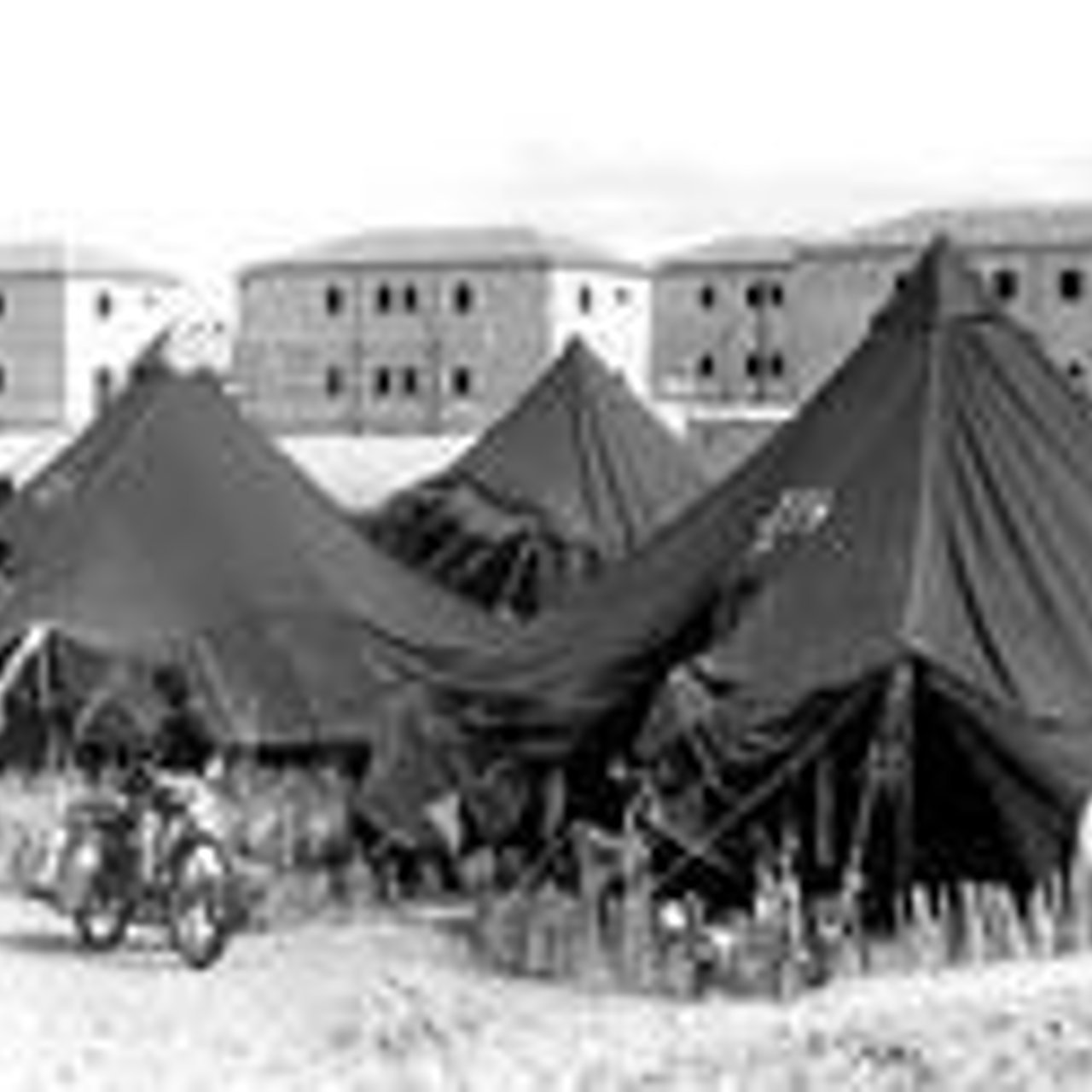
When referring to the Arab-Israeli conflict the word refugee is nearly synonymous with Palestinian. The reality is that when Israel became a modern nation in 1948 there were more Jewish refugees than Palestinian. As five Arab nations launched a regional war against the state of Israel, an estimated 670,000 Arabs fled the war and an estimated 860,000 Jewish refugees were expelled from Arab lands.
Historically this process is considered a “population exchange.” Arabs fled to neighboring Arab states and Israel became the beacon of hope for hundreds of thousands of Jewish refugees who were expelled from Arab lands losing substantial assets and the historical heritage of their families. Israel also became the haven for 600,000 European Jews who survived the holocaust.
Thus, in 1948 over a million Jewish refugees found security in the state of Israel. The infant state welcomed the refugees and sacrificed as a corporate community to provide housing, food, and even education to quickly transform their feeble refugees into functioning, prosperous members of society.
The Arab nations did exactly the opposite. Believing their armies would soon destroy Israel, they made a calculated decision not to absorb the Palestinian refugees as citizens or to re-establish their lives in any way. Untouched by the suffering of their fellow brothers, they chose to exploit the misery of the Palestinians as a political weapon against Israel continuing the war they began in 1948.
Sixty years and four generations later, the Palestinian refugees have grown to a number of over 4.4 million. Still all Arab nations continue to refuse citizenship to Palestinians. According to the United Nations High Commissioner for Refugees (UNHCR), the definition of a refugee pertains to an individual who has lost both their home and livelihood. The status of refugee is not transferred to his/her descendants. The UNHCR is responsible for all refugees worldwide, except for the Palestinians.
Under the pressure of several Arab nations, on December 8, 1948, the UN formed the agency of UNRWA, The United Nations Relief and Works Agency. The only agency in the UN dedicated to just one group of people, the Palestinians. Under UNRWA the definition of a Palestinian refugee is different from all other refugees worldwide in that the status of refugee is transferred indefinitely from generation to generation. Because of this the Palestinians are the only group of refugees whose numbers are growing rather than shrinking.
The US taxpayer supports 40% of UNRWA’s annual $300 million budget while the oil rich Saudi Arabia contributes a token 2% to the care of its Arab brothers in refugee camps the Arab League refuses to dismantle. The best solution is simply to shut down UNRWA and to transfer its responsibilities to UNHCR in order to break the refugee cycle and to provide Palestinians with the ability to build a brighter future.
UNRWA’s mandate, however, keeps being extended year by year and will continue to be so until enough people cry out against the injustice of the Arab nations toward Israel and the disenfranchised Palestinians in their midst. According to that same mandate the descendants of those Arabs displaced in 1948 will remain refugees until they are able to build communities inside all of Israel.
Under these terms there will be no end to the Palestinian “refugee” issue until there is an end to the State of Israel, a nation built by over a million forgotten Jewish refugees.