
Key Topics
The Persecuted Church
Cry of the People of Egypt
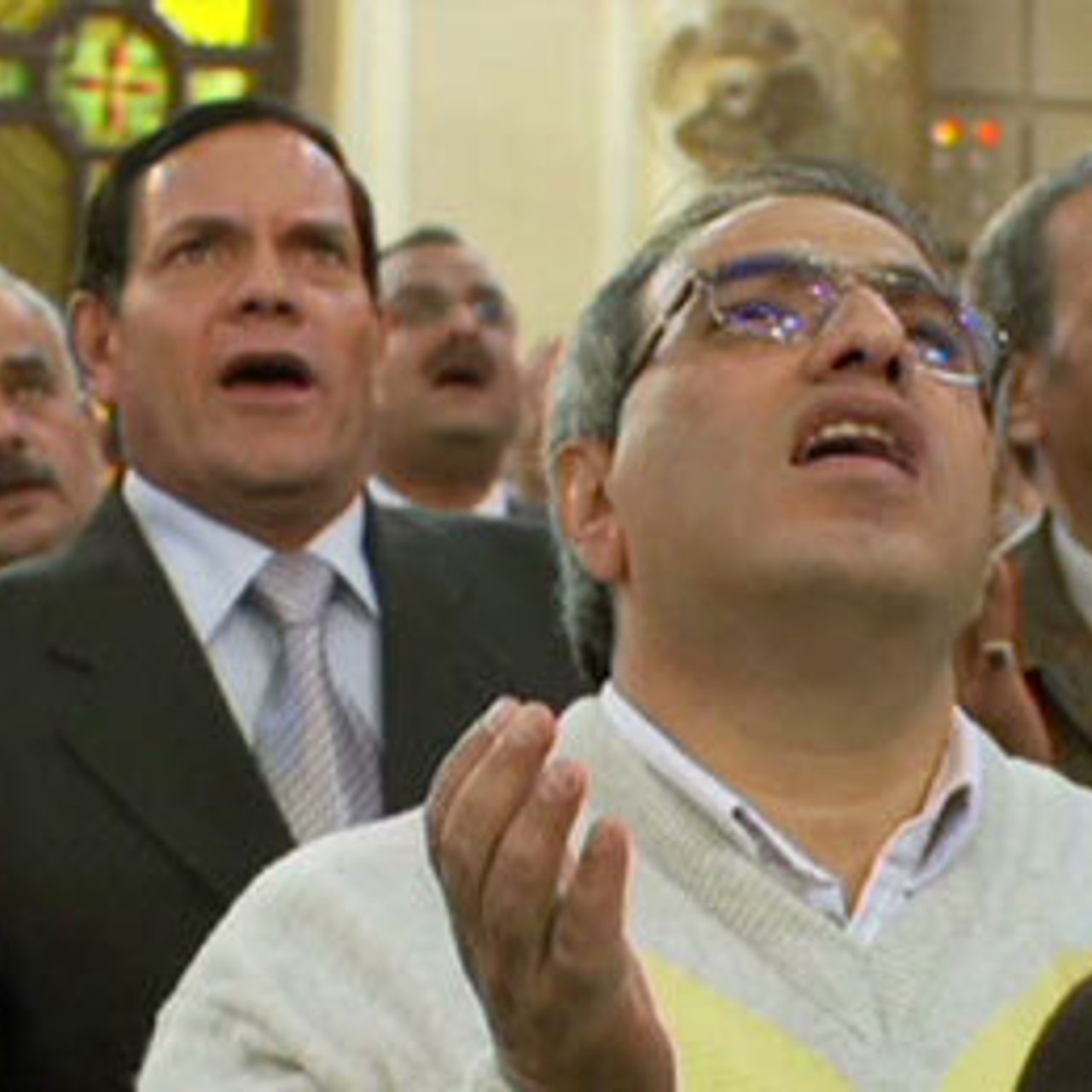
Scriptural references regarding Egypt can seem a bit contradictory as most refer to Egypt in negative terms, alluding to bondage and idolatry, while others foretell a national revival and times of restoration. Egypt is also mentioned more times in scripture than any other nation, second only to Israel who also was warned of impending judgment while promised national, spiritual restoration.
In fact, in Isaiah 19 God refers to Egypt as “My people” and Israel “My inheritance.” Therefore, current events in Egypt need to be considered in light of these scriptures and hearts need to be moved to a place of prayer for those whom God called His people.
THE LARGEST DEMONSTRATIONS IN HISTORY
In 2011, when the so called “Arab Spring” began, the world followed closely as Egypt’s young people began a peaceful, non-violent protest resulting in the fall of the Mubarak regime. The demonstrators were seeking progress, jobs, and opportunity as found in western countries.
Unfortunately, the opposition was not politically organized and, when it came time for elections, the only party that could step into the void and win the elections was the Muslim Brotherhood. One year later, the people of Egypt realized that President Morsi was a far worse dictator than Mubarak had been. Islamist ideology was guiding the country and the government was going bankrupt with no way to import bread and food. A country of 80 million was about to descend into chaos.
The opposition was able to collect the signatures of an astounding 20 million people calling for the removal of President Morsi and then organized a public demonstration of upwards to 30 million people. The military, led by General Sisi who had been appointed by President Morsi himself, responded to the people’s demands by removing President Morsi from power.
While clueless western leaders, including some U.S. officials, denounced it as a military coup, General Sisi appointed civilian Adly Mansour, a Supreme Constitutional Court Justice, as Interim President and respected economist, Dr. Hazem Beblawi as Prime Minister. He then asked the people to come back onto the streets to show America and the West their support for a military crackdown on the terror and crime that was plaguing Egypt at the hands of the Muslim Brotherhood and various jihadist factions.
THE CRY OF THE PEOPLE
It is estimated that as many as 40 million people, the largest demonstration in history, may have come onto the streets then to show their support for the military’s actions.
And yet, some US officials are threatening to cut off aid to Egypt if they do not release the Muslim Brotherhood from jail and bring the party back into the government. President Obama suspended shipment of four F-16s last month and Republican Senators John McCain and Lindsey Graham have threatened to cut-off financial aid as well.
One cannot begin to describe the disappointment and confusion felt by the people of Egypt. Egypt is a key American ally now turning to Russia and China for help when another ally, Israel, desperately needs a stable, pro-American Egypt for her own security.
Moreover, current events in Egypt signify a large scale rejection of the Muslim Brotherhood’s strict version of Islam and one can only wonder how many may in fact reject the religion altogether. A wave of Egyptians have been converting to Christianity in recent years, so the people’s heartfelt cry for help could be the beginning of a revival so huge it could sweep across the entire Arab world. Egypt needs our prayers at this critical time!
CHRISTIANS OF EGYPT
Roughly ten percent of Egyptians are Christian. They are now being used as scape goats and are accused of conspiring with the “Zionists” to bring about the fall of the Muslim Brotherhood. As a result, their churches are being burned – some 60 in one week – and the black flag of Al-Qaeda has victoriously been flown over several of them.
Until the west stops pressuring the interim government, and allows them to gain control of the gangs of Muslim Brotherhood sympathizers in the streets, the Christians will continue to suffer and greatly need our immediate prayers.
INFORMED PRAYERS
The situation in Egypt has exposed the decline in western journalism in general and US media in particular. Due to budget cuts many news outlets no longer have many journalists in the field. Therefore, they rely on one of a handful of news wires. In the case of Egypt, Al-Jazeera became a trusted source due to their 24/7 coverage of the 2011 protests and the fall of Mubarak.
The difference this time around is that Al-Jazeera, the pro-Muslim Brotherhood news channel, was covering the fall of a Muslim Brotherhood government. Video footage and reports were skewed in favor of the ousted President and this misinformation was repeated by western outlets as fact on several occasions. Al-Jazeera’s coverage was so biased, however, that some 20 journalists have now quit in protest.
The Middle East is very complicated and the Christian world cannot afford to be at the mercy of ill-informed media monopolies when our informed prayers and activism are so desperately needed by both Egypt, “My people,” and Israel, “My inheritance.”
Israel’s Troubled Neighbor Syria
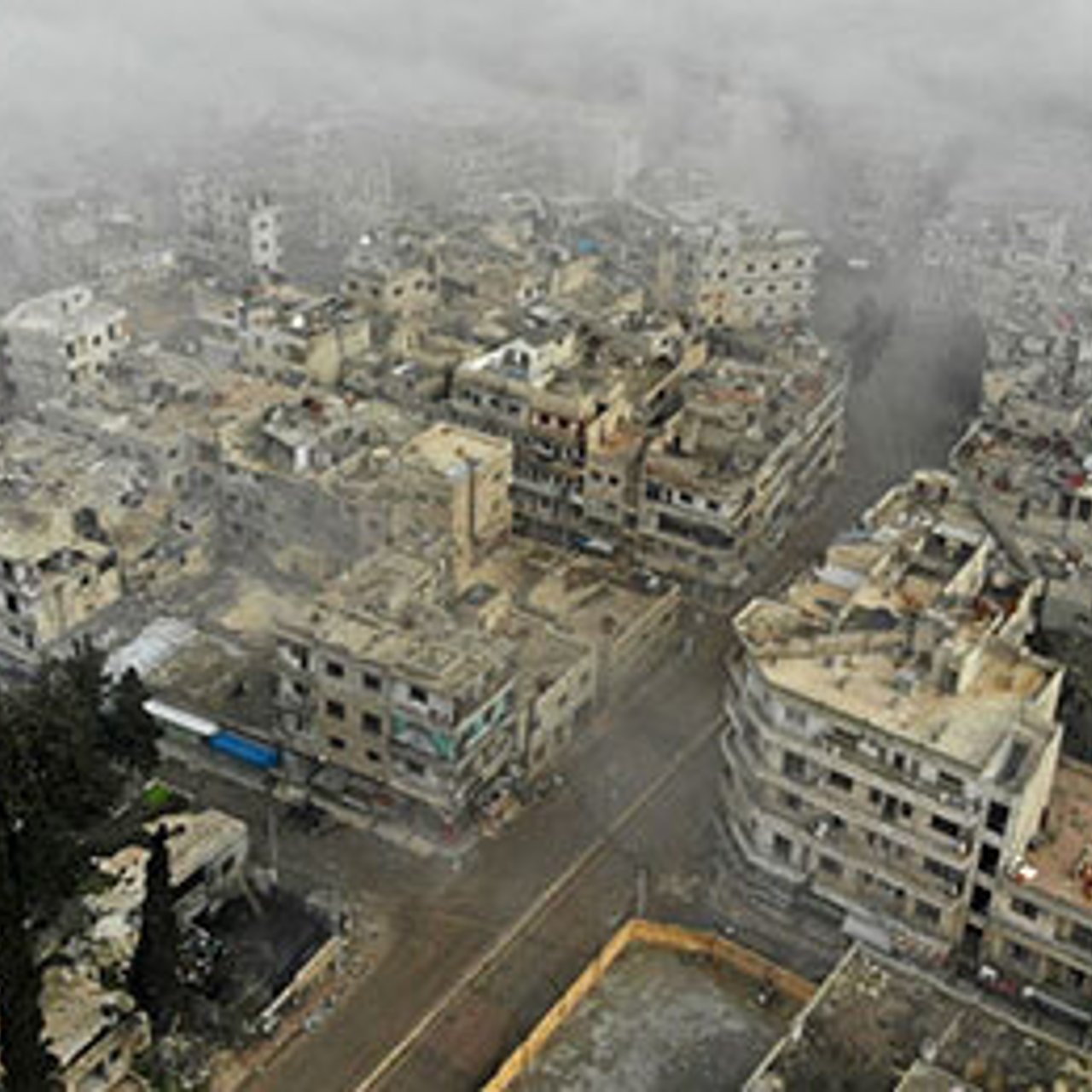
The Middle East is teetering on the brink of total chaos. Country after country has erupted into revolution or outright civil war. While younger people seeking economic and employment opportunities started much of the early dissent, Islamist terrorist groups exploited it in order to topple existing regimes in favor of more Islamist governments.
Caught in the crossfire are the Christian communities of the region. The jihadist/Islamist groups are taking their anger out on the vulnerable Christians, attempting to subjugate them and even drive them out. Nuns have been paraded in the street as spoils of war, and churches, orphanages and Christian businesses destroyed. In Egypt alone, over 100 churches were burned in one month.
Israel is quietly watching with concern as her neighborhood is increasingly unstable.
Egypt Update
In July the Egyptian military responded to the outcry of the people, removing President Morsi from power and then outlawing the Muslim Brotherhood. They began clearing out the Sinai, where various jihadist and Islamist terrorist groups had been allowed to establish themselves, shut down the border with the Gaza Strip and destroyed all of the tunnels that connected Hamas ruled Gaza to Egypt.
The terrorist presence in Sinai was not just a threat to Egypt but also Israel and the whole of the Middle East so these developments are very positive for Israel and may result in the continuation of the peace – albeit a cold one – that she has shared with Egypt for over 30 years.
The Christians in Egypt are thankful for the new government which has just banned 55,000 Islamic clerics unless they obtain a license from the non-Muslim Brotherhood Islamic authorities at Al-Azhar University. The interim government is also allowing churches to be repaired and has even issued permits for new churches to be built – something that had not been allowed for centuries.
They also cleared out areas in the South of Egypt where Islamists were still in control and persecuting Christians. One whole village of 15,000 Christians had been given the choice to either convert to Islam or pay the high Islamic tax called the Jizya. This tax is based on a Quranic verse and was used historically to subjugate non-Muslims who refused to convert to Islam.
Syria
Currently, all eyes are on Syria. The Sunni Muslim majority country has been ruled by the Alawite Assad family since 1970. The Alawites are a secretive branch of Shi’ite Islam which was highly persecuted by the Sunnis throughout the centuries and today makes up about 12% of Syria.
Another 10% of Syrians are Christians, most of them of Eastern Orthodox tradition, and they have had relative peace under the Alawite government due to the ruling sect’s own minority status. This does not mean President Assad is a nice guy. On the contrary, he rules with an iron fist and the Alawites have remained in power by ruthlessly putting down dissent.
The current civil war started when schoolboys painted anti-regime graffiti on a wall and were arrested, interrogated and tortured. Their families gathered in protest and Syrian security forces opened fire on them beginning an uprising that grew into the current bloody civil war. The opposition forces have been infiltrated and in many cases lead by jihadist/Islamist groups taking advantage of the situation and attempting to take over the country.
Estimates are that 100,000 people have been killed in this civil war, at least 1,400 of them due to sarin gas attacks and while two million are in exile another four million are displaced inside Syria. Many churches have been damaged and there are reports of deliberate Islamist attacks on Christian villages and residents. As early as October 2012 the last Christian in the city of Homs – which had a Christian population of some 80,000 before the jihadis came – was murdered.
The controversy over American intervention in this situation is that there are no good guys to side with. An attack on the government’s forces will only strengthen the Islamists and practically insure their victory. The Christians prefer the government of President Assad because he allowed them to live in peace. They are doubtful the Islamists will even let them live.
The Road To Damascus
Christianity spread to Syria early on through the ministry of the Apostle Peter. Many Christians lived in Damascus which is why Saul of Tarsus was headed there to persecute them when he had his Damascus Road conversion and later became known as the Apostle Paul. Syria was predominantly Christian until the invasion of Muslim armies in the 7th century. Some Syrian Christians still speak Aramaic which was the language of Jesus.
Damascus is one of the longest continuously inhabited cities on earth, yet Isaiah 17:1 contains a “burden (prophecy) against Damascus” in which Isaiah declares that Damascus will one day cease from being a city. While this verse seemed a distant one just a few years back, one can sense just how quickly it could be fulfilled under current circumstances. A US or Western strike on Syria could easily result in retaliatory attacks on Israel, Russian involvement and a war of devastating proportions.
Hearts should break over the human toll and suffering this conflict has and could still potentially cause. All the peoples of the Middle East – Jew, Christian and Muslim – are, in one way or another, victims of the spiritual stronghold over the region that causes hatred, violence and death. There needs to be much prayer for the protection of Israel and the Christians, but also for the gospel to go forth throughout the region. We know that God loves all the peoples of the Middle East as they are part of the “world” He loved and sent His son to die for (John 3:16). A “Damascus Road” revelation of the Prince of Peace is their only hope.
Praying As Watchmen On The Walls
What many in the West do not understand is that the Middle East, the birthplace of Christianity, was predominantly Christian before the Islamic forces invaded in the 7th century. A thousand years ago there were still more Christians in the Middle East than in Europe. Even a century ago, more than 20% of the region’s population was Christian.
Today, estimates put the Christian population of the region at 5% and likely to become extinct if Islamist forces continue to gain power. The second largest Christian community in the Middle East, after the Copts of Egypt, is the Syrian Christians. They are now dispersed, many are homeless refugees, and will never regain their community’s size and strength.
Isaiah 17 – 19 describes a time of coming devastation and destruction in the region from Egypt to Assyria but then the prophet foretells of a great revival that will come to the area. He predicts a time in which the peoples of the region know the Lord and are joined together with Israel along a highway from Egypt to Assyria. The people will live in peace and the Lord will be worshiped throughout Egypt, Israel and Assyria (Isaiah 19:18-25).
In the meantime, there is a great spiritual battle brewing over the entire Middle East. The same forces that want to destroy Israel are attempting to destroy Christian communities in their reach. They need our prayers and Isaiah 62:6-7 describes the type of prayer that is required in these days.
“O Jerusalem, I have posted watchmen on your walls; they will pray day and night, continually. Take no rest, all you who pray to the LORD. Give the LORD no rest until he completes his work, until he makes Jerusalem the pride of the earth.”
Our prayers are to be vigilant, as ancient watchmen guarding the people of the city under attack, as well as persistent, crying out night and day, and ever hopeful knowing that the battle is the Lord’s. But until that glorious day when His work is complete and the Prince of Peace reigns from Jerusalem, there is much to pray about.
The Brutal Targeting of Middle East Christians
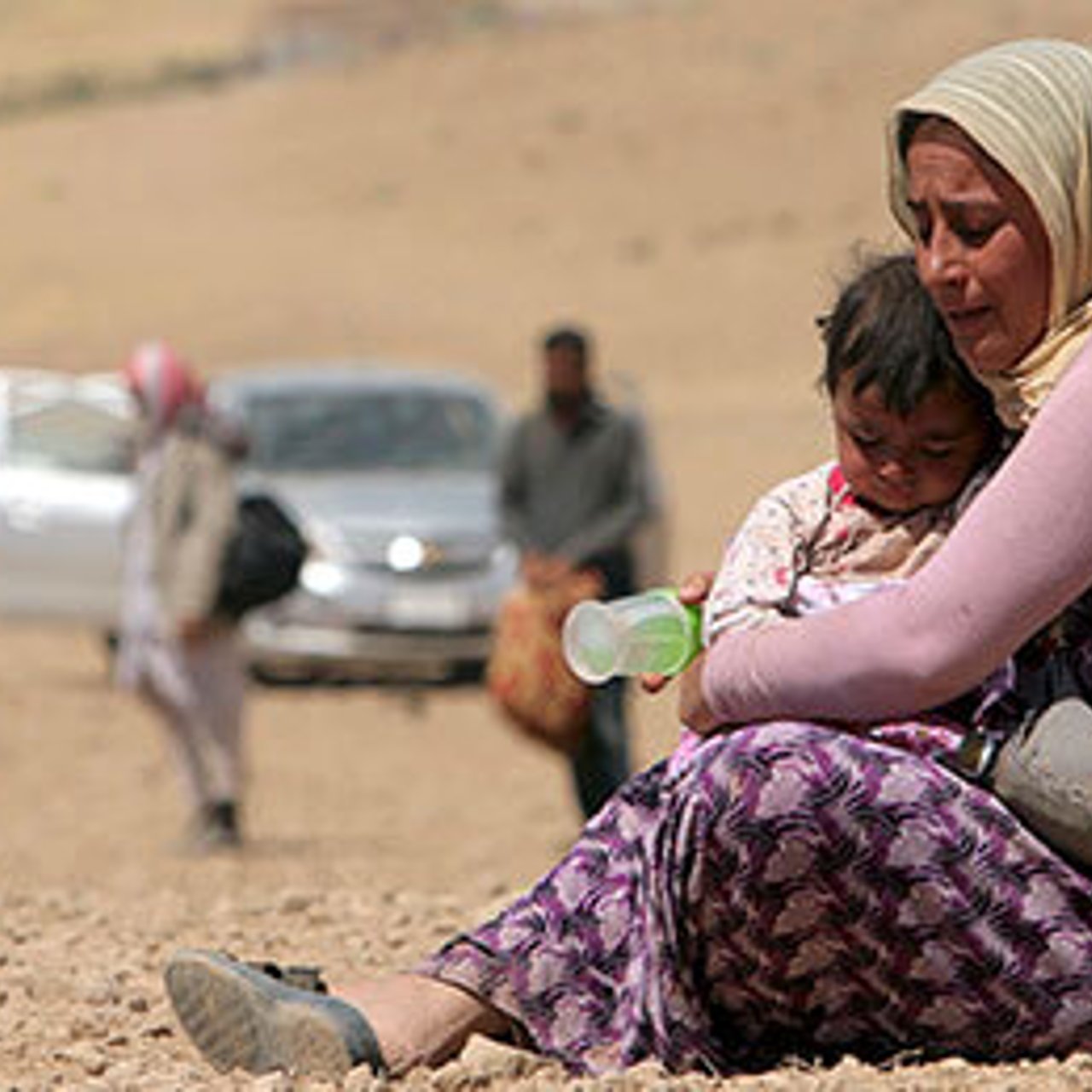
By David Parsons
The ancient Christian communities of the Middle East are now considered ‘low hanging fruit’ for the global jihadists linked to al-Qaida. That is the apparent message being sent by the recent spate of brutal massacres at churches in Iraq and Egypt, as radical Islamists seek easily accessible targets in order to score ready ‘victories’ and bolster their ranks.
Given the usual tepid response of Arab governments to such Muslim atrocities, many of the region’s indigenous Christians are hastily joining the exodus from the region, which has been on the rise for decades. But the shocking assaults on churches in Baghdad in late October and in Alexandria on New Year’s Day may prove to be a tipping point. World concern over the issue has finally awakened, and Arab rulers are having to take action, lest they appear indifferent to – if not in league with – the cruel Wahabbist agenda.
Church carnage
The most recent outrage occurred in Alexandria, as a Coptic congregation in the sprawling port city on the Nile delta was targeted by a suicide bomber on New Year’s Day. Twenty-five parishioners were killed and nearly 100 wounded in a powerful blast after members of the Saints Church were finishing midnight Mass. Survivors recalled a joyous church service suddenly interrupted by a thunderous blast which sent congregants flying over pews, some in pieces.
The attack was followed by several days of unrest as enraged members of the Coptic Christian community, a significant eight percent slice of Egypt’s 80 million citizens, took to the streets to protest and demand government protection. Insisting that “this act of terrorism… hurt the hearts of Muslim and Coptic Egyptians,” Egypt’s ageing president Hosni Mubarak instantly pinned the attack on “foreign fingers.” But police authorities soon acknowledged local Egyptian extremists were also undoubtedly involved. Though no group claimed responsibility, clues were likely to be found in the shocking assault on a church in Baghdad two months earlier.
In that blood-soaked episode, an al-Qaida terror cell stormed into a Baghdad cathedral and held dozens of people hostage while issuing a litany of far-ranging demands. These included the release of two Egyptian women married to Coptic priests who allegedly had converted to Islam and were supposedly being held against their will by order of the head of the Coptic Church, Pope Shenouda. In an ensuing shoot-out with Iraqi police, the gunmen slaughtered 44 Christian worshipers, two priests and seven security personnel.
This act of carnage was followed by a series of ongoing Islamist attacks targeting Baghdad’s Christian neighborhoods, including a string of 13 coordinated bombings two weeks later that claimed another six lives, sowing panic among the dwindling members of this two millennia-old Christian community, many of whom openly spoke of fleeing.
Iraqi caldron
In actuality, Iraq’s Christian community has been under brutal assault by radical Islamic elements for several years now, an easy prey in the chaotic aftermath of the US-led invasion. While achieving its objective of toppling the despotic regime of Saddam Hussein, that conflict was deliberately prolonged by global jihadists who decided to make Iraq the central battleground of their embittered campaign against the free, democratic world. Native Iraqi Christians, in their minds, were nothing more than traitorous allies of the “Crusader” West.
Thus five churches were bombed in Baghdad on one Sunday alone in 2004. Christians have been regularly kidnapped and held for ransom, Christian shops torched, priests beheaded and Christian women beaten for “un-Islamic” dress. Iraqi Christians have even been targeted for perceived offenses against Islam committed thousands of miles away, as in the case of the Danish cartoon riots in 2005 and the pope’s remarks on Islam in September 2006.
While all segments of Iraqi society have suffered in this violence-plagued period, the Christians’ suffering has been disproportionate, as has been their emigration abroad, according to reports by the UN High Commissioner for Refugees. In under a decade, the Chaldean, Assyrian, Syriac, Armenian and Protestant flocks have declined from an estimated 1.4 million to less than half that number. The Christian presence in Baghdad is now one-third of its former strength.
Canon Andrew White, who has spearheaded the Anglican Church’s reconciliation work with the Muslim world over recent decades, decided to set up base in Iraq after the US-led invasion in 2003. He served as chaplain to British and American forces inside the “Green Zone” in Baghdad, and held services in one of Saddam’s ornate palaces. He also established a church of native Iraqis that grew to nearly 4,000 congregants but has seen their ranks decimated in recent years.
White has had 93 members of his church killed in Islamist terror attacks over the past year alone. He told The Christian Edition about the dreadful experience of baptizing 13 adults on one particular Sunday, only to have 11 of them killed over the ensuing week. White has lost more body guards than he cares to remember. Some 500 members of his church have fled in the last three months of violence.
“It’s difficult to describe in words how awful the reality is of what has happened to the Christians of Iraq, one of the oldest churches in the world,” said Rev. White. “I have lived in other parts of the Middle East. I’ve even lived in Gaza. And the situation there was nothing compared to the tragedy of Iraq.”
White notes that Iraqi Christianity traces its origins all the way back to the prophet Jonah’s arrival in Nineveh and later to the preaching of Doubting Thomas. With such deep roots, he believes those who have stayed behind will now persevere.
“We’re not giving up!” insisted White in a Skype transmission. “Everybody who can leave has already left. Those still here believe they have to stay… The Iraqi government is trying to protect us and most in authority are not against us. The government has tried to secure so many churches but they cannot secure every Christian home. It’s their homes which are now under attack.”
White arranged a critical summit in Denmark last month between Chaldean Christian leaders and senior Muslim clerics from Iraq which aimed to elicit a joint Sunni/Shi’ite declaration denouncing killing in the name of Allah. He was pinning a lot of hope on its outcome.
Synod sidetracked
Other Christian minorities throughout the Middle East have experienced similar Islamist campaigns of violence and attrition rates over recent decades, be it the Egyptian Coptics, Lebanese Maronites or the Greek Orthodox faithful in Jordan, Syria and the Palestinian areas (Israel’s growing Christian population is the lone exception in the region).
This has resulted in an unprecedented Christian exodus from Arab lands that has become a serious cause for concern among Western church hierarchies, and was slated to be a major topic of discussion at the Vatican’s historic synod of Catholic bishops from the Middle East back in October. In fact, a groundbreaking document compiled ahead of that gathering identified “political Islam” – for the first time – as the prevailing reason for the Christian flight.
Yet by the time the Middle East bishops concluded their two-week summit in Rome, anti-Israel agitators among them had somehow swayed the entire lot to blame all their problems on the Jews. The synod’s concluding “Message” barely mentioned the main problems plaguing their congregations, such as the rise of radical Islam, political repressions, and official as well as societal constraints on religious freedom. Instead, it issued a plea for the international community to work “to put an end to the occupation” of Palestinian territories, thus spotlighting Israel as the main source of torment.
The absurdity of this clerical charade was laid bare by the Baghdad cathedral massacre just a few days later, as it would have been incredibly hard to blame that tragedy on Israel. And yet during a visit to Indonesia that same week, even US President Barack Obama seemed undeterred from his consoling message that “Islam is a religion of peace…The United States will never be at war with Islam.”
Protection money
The dwindling Christian flocks of the Middle East are increasingly paralyzed by fear and a sense of abandonment, as their shepherds often refuse to name the real menace to their congregants and Western leaders have neglected their desperate cries. Meanwhile, radical Muslims have apparently concluded that Christians are no longer entitled to a place in the Middle East.
The day before the Alexandria church bombing, a jihadi website posted a fatwa (religious ruling) by prominent Salafi cleric Abu Mundhir Al-Shinqiti which permitted the targeting of Christians for breaking their ancient ‘contract’ with Islam. This decree maintained that Christians living in Muslim lands today should no longer enjoy protected minority status under Islamic law, since they have ceased to pay the jizya, the infamous poll tax which Christians and other minorities were customarily forced to pay for protection by Islamic authorities.
Prof. Raphael Israeli, a lecturer in Islamic studies at the Hebrew University of Jerusalem, explains that this traditionally involved a shameful public ceremony repeated for centuries whenever Christians and Jews came to pay the head tax, as the Muslim rulers would always beat them across the neck with poles to remind them that the followers of Muhammad could have killed them but decided to spare their lives.
Israeli is currently authoring a book which places today’s assaults on Christians within the context of what he refers to as the “three invasions of Islam.”
The first invasion lasted over 500 years from the birth of Islam until Muslim forces were finally pushed out of the Balkan and Iberian peninsulas. In those early centuries, the Muslim armies nearly eliminated Christianity from its cradle in the Middle East and North Africa. Until then, most of the region had been Christianized for centuries. But the invaders from Arabia imposed a new religion, language and culture. Most Christians were forced to convert to Islam. Those who refused were eventually given a special dhimmi (second-class) status allowing them to retain their faith so long as they paid the protection tax and accepted Muslim dominance.
As a result, many of the 12 to 15 million Christians left in the region today deeply resent even being called Arabs. The Maronites of Lebanon identify themselves as proud descendants of the Phoenicians. The Copts trace their ethnic origins back to the ancient pharaohs of Egypt. Assyrian Christians in Iraq and Syria still speak the Aramaic language of their ancestors – and of Jesus. They simply refused to let the initial Arab/Muslim conquest swallow them whole.
The second invasion identified by Israeli was the Ottoman Turk advances into Eastern Europe, which were finally turned back at the gates of Vienna. In the meantime, the Ottomans managed to purge the historic Greek Orthodox presence from the former capital of Eastern Christianity in Constantinople.
Israeli assesses there is now a “third invasion of Islam against the Christian West, which has two facets. One aspect is the silent and smooth cultural and economic invasion of Europe characterized by the planting of Muslim colonies in the heart of Europe’s largest cities. The second phase is an ethnic cleansing campaign against the Christian remnant in the Middle East. The radical Muslims want to overwhelm the remaining Christians and drive them out,” said Israeli.
“The Christians are easy prey,” he added. “The Muslims feel they are not just a superior faith. They are the only faith and Christianity and Judaism are false and distorted religions. Islam wants to eliminate them, and this justifies even the use of violence.”
Door to the West
Another factor in the exodus of Middle East Christians is their greater upward mobility due to increased engagement with Western Christianity over recent centuries.
As Ottoman rule over the Middle East began to wane, the Great Powers moved into the region, each concluding deals with the Sultanate in Istanbul to provide protection to various Christian denominations. British envoys arrived to safeguard Protestant interests, France the Lebanese Christians, Russia the Orthodox folds. The Vatican also stepped in to aid certain sects, producing the unique hybrids of the Maronite and Greek Melkite churches which are loyal to the papacy but retain some Eastern Orthodox beliefs and practices.
These Western interlocutors all brought with them schools, hospitals and other modern institutions, thus vastly improving the education, health and job opportunities of the local Christians. With this came increased mobility and higher ambitions in life, and many began to acclimate towards more Western, urbanized settings.
This emigration trend has now accelerated over the past century under pressure from regional conflicts and resurgent brands of Islam, such as the rise of the Muslim Brotherhood in Egypt since the 1930s and the spread of Wahabbism by the oil-rich Saudi regime, which has spawned al-Qaida and similar jihadist movements.
According to Lebanese scholar Malik C. Habib, the resulting displacement has produced growing Coptic and Armenian communities in the greater Los Angeles area, a sizable Assyrian community of Iraqi Christians with their own patriarch in Chicago, and hundreds of thousands of Lebanese Christians in Montreal, São Paulo, Paris, and Sydney.
Demographers estimate, for instance, that roughly 60% of all native-born Lebanese and Palestinian Christians now live abroad.
Parting shots
There are, nonetheless, some encouraging indications that Christianity is growing once again in some parts of the Middle East. Writing in the wake of the Alexandria church bombing, Ramez Atallah, director of the Bible Society of Egypt, noted that Christian businessmen now own an estimated 30% of Egypt’s wealth, while “many churches in Egypt are flourishing with plans to expand their facilities to accommodate the growing number of weekly worshippers.”
“So what’s the true picture of Christians in Egypt: ‘a persecuted minority’ or a ‘thriving community’? Both of these statements are true,” he penned in an email report to friends and supporters.
Still, it is hard not to despair over the plight of Middle East Christians when even police authorities are turning their guns on them.
In but the latest incident of its kind, an Egyptian policeman went hunting for Coptic Christians while on board a train near Cairo, looking for the tell-tale green crosses many Copts have traditionally tattooed onto their wrists. Finding several, he shot one Christian dead and seriously wounded five others.
It remains to be seen whether any amount of Western intervention can do something to help stop this endless bleeding of Eastern Christianity.
David Parsons serves as ICEJ Media Director in Jerusalem