
Key Topics
Palestinian Christians
The Plight of Believers Under Palestinian rule
Under siege and without protection, the Christian population under Palestinian rule has dwindled with each passing year. In October, 2007, after repeated threats, Rammi Ayyad was brutally murdered outside the only Christian Bookstore in Gaza. In 2008, a bomb was set off at one Christian school in Gaza, while at another, run by the Baptist Church, guards were assaulted and a bus hijacked.
Even though Hamas denies involvement in the attacks and claims that it is attempting to protect the small, ancient Christian community in Gaza, attacks on the 3,000 Christians residing there have increased since the Muslim terror militia came seized power.
Basing his findings on ten years of research, an Israeli expert on international human rights law has warned that the shrinking Palestinian Christian community could disappear within 15 years due to the threat of Muslim extremism. “The systematic persecution of Christian Arabs living in Palestinian areas is being met with nearly total silence by the international community, human rights activists, the media and NGOs,” said Justus Reid Weiner, a lawyer and scholar at the Jerusalem Center for Public Affairs.
Given current trends of Muslims persecution, he fears Christian communities within Palestinian-run territories are likely to completely disappear in 15 years.
“Christian leaders are being forced to abandon their followers to the forces of radical Islam” Weiner lamented in a public lecture on the subject. Unless governments or other such organizations intervene, soon the Christian communities will consist solely of top clergy officials, with a few Western Christians. Some 50 years ago, the Palestinian Christian population stood at an estimated 15%, but today it has dropped to 1.5%. Bethlehem once had a strong Christian majority, but that figure today stands at only 20% Christian. In the Gaza Strip, there are only around 3,000 Christians amongst some 1.4 million Muslims. “In a society where Arab Christians have no voice and no protection it is no surprise that they are leaving,” said Weiner.
These brothers of ours in Christ need our prayers and support as never before.
Justice Can Only Be Based On Truth
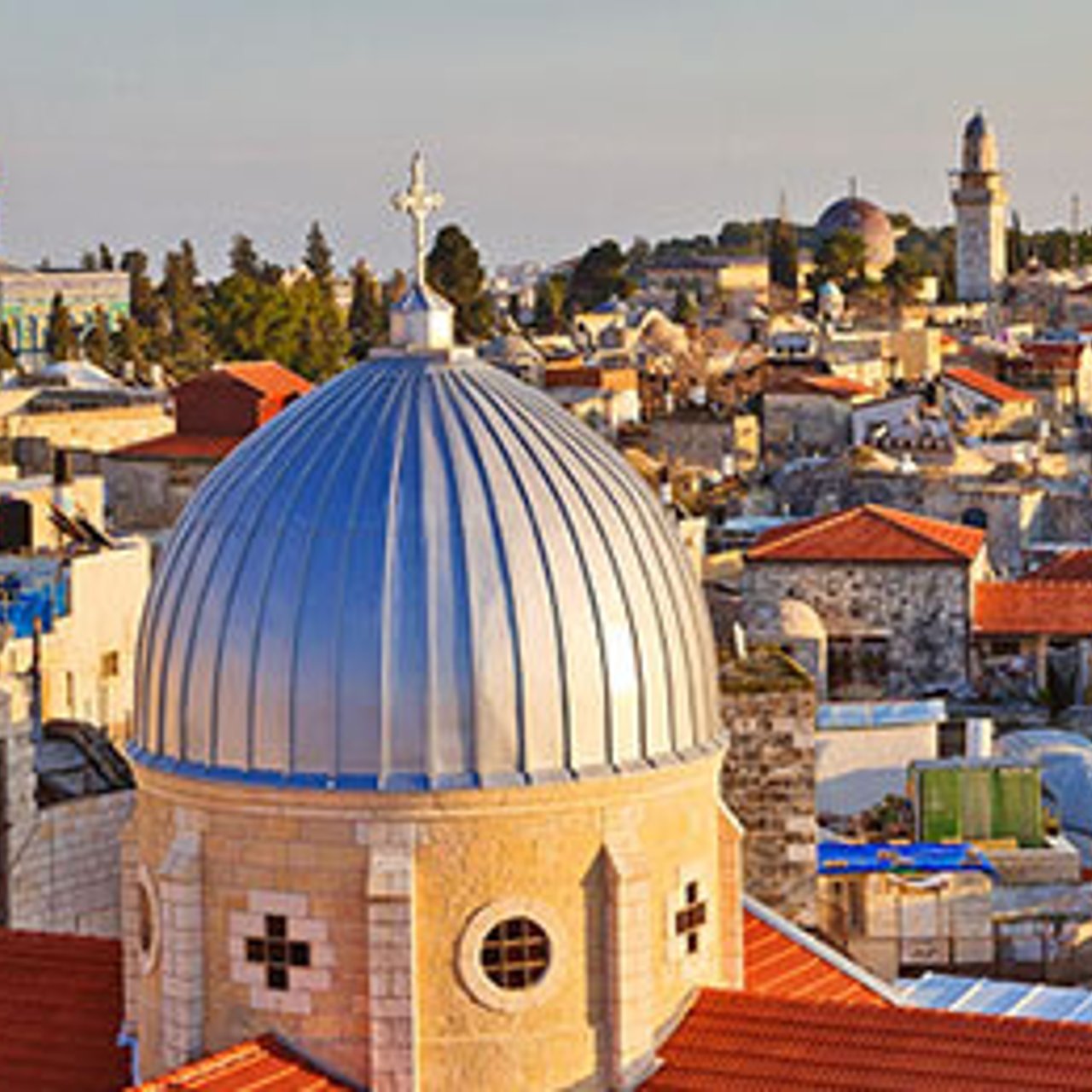
A small but growing circle of Christian leaders is seeking to lead evangelicals in America away from support for Israel and are doing so under the banner of “social justice” and “just peacemaking.” These leaders are portraying themselves as “pro-Israel, pro-Palestinian, pro-peace and pro-justice.” And while their intentions may be good, they are actually playing into the hands of a larger, more sinister campaign seeking to delegitimize and demonize Israel.
Even more disturbing, their words expose a trend in the evangelical world to disregard the authority of the Bible. They deny the irrevocable calling on the Jewish people and they teach variations of Replacement Theology which requires sections of scripture to either be disregarded or spiritualized to take on new meanings. This theology has historically been the basis for anti-Semitism in the Church and its influence should be guarded against.
One does not have to dismiss the biblical significance of the Jewish people and the modern-day return to their ancient homeland in order to have a heart for the Palestinian people. As Christians we should have a love for all men. And in this situation, we need to appreciate the very difficult position that the Palestinian people are in, the additional difficulties facing Palestinian Christians in general and evangelical Palestinian Christians in particular.
Those seeking true justice must ask the question: just what are the Palestinians’ difficulties and who is to blame for them? Instead, the blame is always placed squarely on Israel and rarely do pro-Palestinian voices put any blame on Arab leaders. At the end of the day, this dishonest brokering does nothing to help the Palestinian people.
Future articles in this column will discuss some of the issues that are used to delegitimize Israel such as the legality of Israel’s founding, the plight of the Palestinian refugees, the “occupation” and accusations of being an Apartheid state.
But before taking on the very complex and complicated issues in the Arab-Israeli conflict one must have a firm foundation of biblical and historical truth.
Biblical Justice
Social justice must not be confused with biblical justice. While the Bible is clear that we are to judge situations righteously and honestly it does not call us to impose a certain social structure.
Leviticus 19:15 is very clear that righteous judgment is based on the facts without respect to persons or their status.
15 ‘You shall do no injustice in judgment. You shall not be partial to the poor, nor honor the person of the mighty. In righteousness you shall judge your neighbor.
Justice is based on the truth. That is why one had better know the history, culture and religious ideologies in the Middle East before making judgments and ascribing blame.
Jesus’ Example
In Jesus’ day, there was considerable conflict within society from living under Roman rule, yet Jesus never addressed it and instead went about ministering compassion to the people. So too Christians today should have a heart of compassion for the Palestinian people, living under their own repressive and corrupt government, just as we have for the Jewish people who live under constant threat of war and annihilation.
This is why the International Christian Embassy Jerusalem, which is a ministry raised up to minister love and support to the people of Israel, has always provided humanitarian assistance to Arabs as well. In addition to 33 years of outreach to Israeli Arabs the ICEJ is also partnering with an evangelical Palestinian ministry to provide humanitarian aid in the Palestinian areas.
The Facts
The truth is that the Jewish people have a four thousand year-old claim and connection to the land of Israel. God gave this land to the descendants of Abraham, Isaac and Jacob as an everlasting possession and they are the only people who ever built a nation there. Likewise, Jerusalem was established as Israel’s capital by King David and it has never been the capital of any other nation.
The Jewish people have now returned to their homeland as foretold by the Hebrew prophets and as legally sanctioned by the Balfour Declaration of 1917, League of Nations in 1920, Ran Remo conference in 1920, the UN Partition Plan of 1947 and finally UN recognition of Israeli statehood in 1948.
Israel was not built on stolen land but private land that was purchase and public land conveyed from the Ottoman Empire to the British Mandate and then to Israel. The Jewish people returned in peace. But they were faced with war and in those wars borders changed and some Arabs lost possession of homes, lands and even life. This is an injustice. But who is really to blame? The Jews who returned in peace or the surrounding Arab countries who declared war?
Justice is Based on Truth
Justice for the Palestinian people will only come when their supporters are honest enough to address their situation candidly. They are suffering at the hands of Palestinian leaders who care more about hating Israel than helping their own people and who are skimming off billions of aid dollars into personal bank accounts. Palestinian Christians are suffering discrimination in aid distribution, land ownership and business by the Muslim Palestinian government. Anyone speaking against the Palestinian Authority can be arrested including journalists. There is no freedom of press or freedom of speech.
This is why numerous polls reveal that 40% of Palestinian Arabs living in Jerusalem would move to Jewish neighborhoods in order to remain living under Israeli rule rather than to live under Palestinian statehood. There is obviously more to this than the usual anti-Israel narrative that some Christians are being taught.
When faced with lies and delusion we need to take a stand for the truth – both biblical and historical.
Only then can there be true justice.
The Real Root of the Christian Exodus
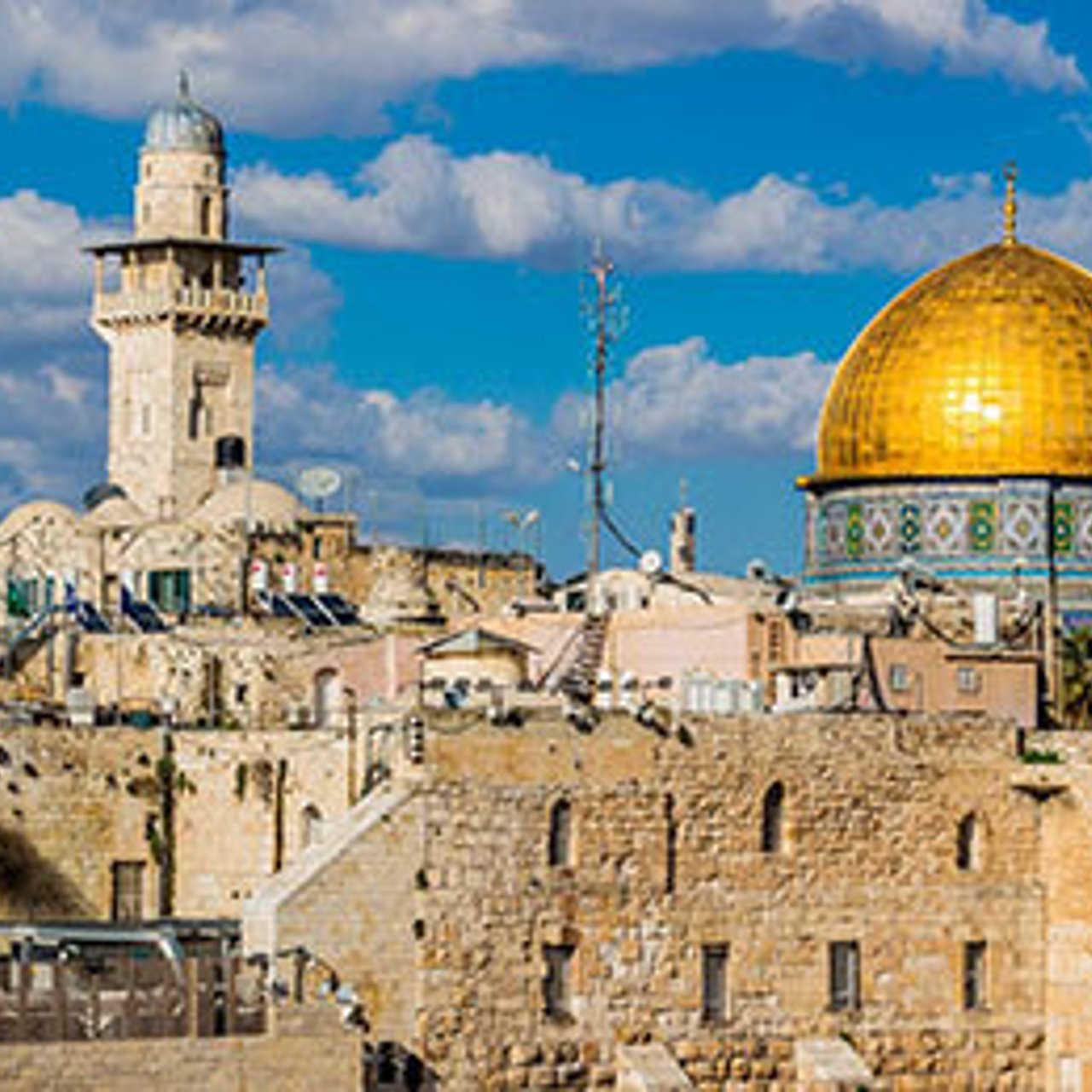
With his recent segment for 60 Minutes, CBS News reporter Bob Simon has once again stoked the perennial debate over why so many native Palestinian Christians have been leaving the Holy Land in recent decades. Sadly, he addressed this important issue with a very superficial brand of journalism. The report relied mainly on one local Palestinian cleric – notorious Israel-basher Rev. Mitri Raheb – to single out the “Israeli occupation” as the scapegoat for this Christian flight. There was no need to dig deeper, since Simon knew the report was sure to be a sensation from the moment Israeli ambassador Dr. Michael Oren caught wind of the production and intervened with his bosses at CBS News.
If Bob Simon had truly wanted to know why Arab Christians have been fleeing in droves from Palestinian areas, he should have asked those émigrés now living in Toronto, Sydney and Santiago. Because that is where the majority of Palestinian Christians now reside – in dispersed communities in Canada, Chile, Australia, Germany, the United States and elsewhere.
The disturbing truth is that more than 60% of the Arab Christians born in Palestinian areas over the past several generations now live abroad. Yet the same holds true for Lebanese Christians, as a similar 60% of their beleaguered community now live in foreign lands.
Indeed, there has been a widening Christian exodus from all the surrounding Arab countries, with Iraq’s ancient Assyrian Christian community collapsing from 1.5 million to as few as 250,000 since the Second Gulf War commenced in 2003. The Coptic Church in Egypt is also losing tens of thousands of parishioners in the wake of the Arab Spring.
So it is indisputable that Arab Christians are fleeing all across the Middle East, and surely the Israeli occupation is not to blame. Rather, this flight has been primarily due to local conflicts and the rise of Islamic militancy, as noted by Ambassador Oren, and the Palestinian Christians are no exception to this trend. The lone exception, in fact, happens to be the state of Israel, the only place in the entire region where Arab Christians are growing in number and are afforded their democratic rights.
Still, some Palestinian clerics insist that Muslims and Christians would co-exist in perfect harmony if not for the Jews and their settlements. That, sadly, is a living portrait of a people in denial. How else to explain that Palestinian Christian flight from the Holy Land predates the “occupation” by decades?
For instance, the last British census in 1948 recorded 29,000 Arab Christians living in Jerusalem, while the first Israeli census in eastern Jerusalem in 1967 found only 11,000. That means two-thirds of the Arab Christian population had fled during the 19 years of the Jordanian occupation of east Jerusalem.
The real root of the current exodus actually lies in the historic interplay between Christians, Jews and Muslims in the Middle East ever since the Islamic conquests began in the seventh century. The region’s Christians and Jews became dhimmis – suppressed minorities living under Muslim dominance. They could keep their faith but had to accept second-class status. To survive, both communities adopted a code of silence which dictated that they never challenge the system nor say anything bad about Islam in public.
This system of dhimmitude basically held until modern times. The Crusades may have brought temporary relief for some Christians, but only terror for the Jews.
When Ottoman rule over the Middle East began to wane, the dynamic finally began to change. The Great Powers of Europe moved into the region, each concluding deals with the Sultanate in Istanbul to provide protection to various imperiled Christian denominations. Western missionaries also brought with them schools, hospitals and other modern institutions. With their better education and job skills, Arab Christians became more mobile and many began to migrate to the West to escape the prison of Islam. Thus the modern-day Christian exodus began.
Meanwhile, the Zionist movement arose with a dream of restoring Jewish sovereignty back in their ancient homeland. Israel’s emergence in 1948 challenged the system of Muslim dominance over Christians and Jews, an achievement the Arab world has never truly accepted.
For many Christians in the Middle East, the rebirth of Israel actually stands as a light and model of freedom from Muslim tyranny. But for Palestinian Christians, the conflict that seeks to destroy the Jewish state has been too close for comfort. They are powerless to end it and struggling to survive.
Thus many Palestinian Christian leaders have taken to patriotically waving the flag of Palestinian nationalism higher than even their Muslim neighbors, in the hope such loyalty to the cause will safeguard their flocks. They rail against the Israeli occupation and the settlements as the reason for their dwindling presence. The checkpoints and security barrier may create hardships for them, but it is not the core reason why proud Christian families who have weathered many turbulent centuries here are now pulling up roots.
We must all understand that they are employing an ancient survival mechanism ingrained through centuries of Muslim oppression. Unable to name the real culprit, Palestinian Christians often deflect Muslim anger away from themselves by directing it at the Jews. Meantime, Ambassador Oren is giving voice to the very things they cannot say.
The Plight of Christians in the Holy Land
The long-neglected plight of Palestinian Christians has finally hit radar screens in the US Congress, though there is still lots of clutter to clear up over the source of their distress and how to remedy it.
The unlikely catalyst was conservative commentator Robert Novak, who relishes any chance to spread dirt on Israel. In a Washington Post column in late May, Novak disclosed that veteran Congressman Henry Hyde, Republican chairman of the House International Relations Committee, sent President George W. Bush a private letter suggesting American support for Israel’s security fence may involve “the affirmation of injustice” due to its “negative consequences on communities and lands under their occupation.”
Accompanying Hyde’s letter was a report compiled by his staff over recent years detailing the alleged impact Israel’s security barrier is having on Arab Christians in the Holy Land, particularly in Bethlehem and Jerusalem.
In response, House members Michael McCaul (R-TX) and Joseph Crowley (D-NY) circulated a proposed resolution in June that blamed the Palestinian Authority’s systematic abuse of Palestinians Christians for their continuing flight from the land where Christianity began.
A heated debate has ensued on Capitol Hill, fueled by Arab clerics and pro-Palestinian American clergy who fault the draft resolution for exaggerating the role Islamic radicalism plays in the Christian exodus from the Holy Land. Three senior Arab clerics in Jerusalem (Latin Patriarch Michel Sabbah, Anglican Archbishop Riah Abu al-Assal, and Lutheran Archbishop Mounib Younan) even invited McCaul and Crowley to visit the region and see for themselves how the “massive migration to other countries of Palestinian Christians [is] largely due to the illegal [Israeli] Occupation.”
This debate is not new and all sides agree that the Palestinian Christian community is dwindling fast, from around 10% of the population in 1948 to barely 1.5% today. What remains in dispute is who should be held responsible for the decline – Israel or the Palestinian Muslims.
IT WOULD seem Chairman Hyde has fallen victim to that evil twin of divestment – namely the dismantlement campaign. Both are anti-Israel propaganda initiatives launched after the infamous UN conference on racism in Durban in 2002. While divestment made some in-roads in the Presbyterian and Anglican churches, the campaign to force Israel to dismantle its security fence has now penetrated the halls of Congress – thanks mainly to Arab Christian activism.
Yet it is farcical to pin the primary blame for the Palestinian Christian exodus on Israel’s security fence or its “occupation,” since the phenomena predates both by decades.
More than 60% of the native-born Palestinian Christians had already fled the land long before the fence started going up three years ago. And most of that emigration occurred prior to Israel’s entry into the West Bank in 1967, when the area was under Jordanian occupation. The last British census in Jerusalem, for example, found 28,000 Arab Christian residents in 1948, while Israel’s first official tally in 1967 registered only 11,000.
So for the bulk of the ancient Arab Christian community of the Holy Land, the current debate over the impact of the security fence is rather pointless – they fled long ago.
TRUTH BE told, Palestinian Christians have been driven out by the Arab-Israeli conflict itself, which arose from and is perpetuated by the Islamic world’s bitter and unremitting rejection of Israel’s very existence.
These Christians have wanted little to do with this conflict, which stymied economic opportunities in the land. More mobile and better educated than their Muslim neighbors, they sought a future elsewhere. Some crossed over into Israel proper, the only country in the Middle East where the Christian community has actually grown over the past 50 years, while scores of others started anew in such far off places as Toronto, Santiago and Sydney.
Those that remain suffer under the same hostile Islamic spirit battering Israel, which views Jews and Christians as followers of “inferior” faiths who are naturally destined to be subjugated by Muslims. Palestinian Christians – like other Christian minorities in Arab lands – have grown accustomed through the centuries to this sad state of dhimmitude, with most of their leaders maintaining a code of silence about it to protect their flocks.
It is a truism that the higher up the Palestinian Christian cleric, the greater their likely silence. The signers of the invitation letter to Cong. McCaul and Crowley are cases in point.
“The entire history of Palestine never witnessed any religious conflict between Christians and Muslims,” Bishop Riah told The Washington Times at a time when Muslim gunmen were invading Christian homes in Beit Jalla to shoot at Gilo.
“[1]n Arab countries there is no persecution of Christians,” Latin Patriarch Sabbah assured Newsweek at Christmas two years later.
BY PUSHING for dismantlement of Israel’s security barrier, Palestinian Christian leaders seek to accomplish two goals:
First, they prove their nationalist credentials to the Palestinian Muslim majority. They have not given any sons as shahids (martyrs) in the jihad against Israel, but they are contributing to the cause and thereby appease the Islamist beast.
Second, they genuinely want to keep the door open to Israel, lest their parishioners get trapped beyond the wall without any escape hatch from the menacing Muslim masses.
Nonetheless, they would have us pretend that Palestinian society is the shining exception to the prevailing Muslim oppression of Arab Christian minorities throughout the Middle East. Hundreds of thousands from the ancient Assyrian Christian community have fled the Sunni insurgency in Iraq over recent years. The proud Egyptian Coptic and Lebanese Maronite communities are wilting and fleeing under official and societal persecution. The practice of Christianity is banned in Saudi Arabia. But all is fine in Palestine!?
I suspect Bob Novak probably cares more about smearing Israel than the fate of Palestinian Christians. By the same token, some probably highlight Muslim maltreatment of Palestinian Christians just to score points for Israel. But for far too many of them, it is much too late to play the blame game over who or what caused their exodus from the Holy Land. Rather, the pertinent question should be what can be done to preserve the embattled Christian remnant still clinging to the land. The answer to that, dear friends, lies largely in Israel’s protective hands.
David Parsons
Media Director
International Christian Embassy Jerusalem
©2010 International Christian Embassy Jerusalem
Our Battered Brethren
By David Parsons
January 2006
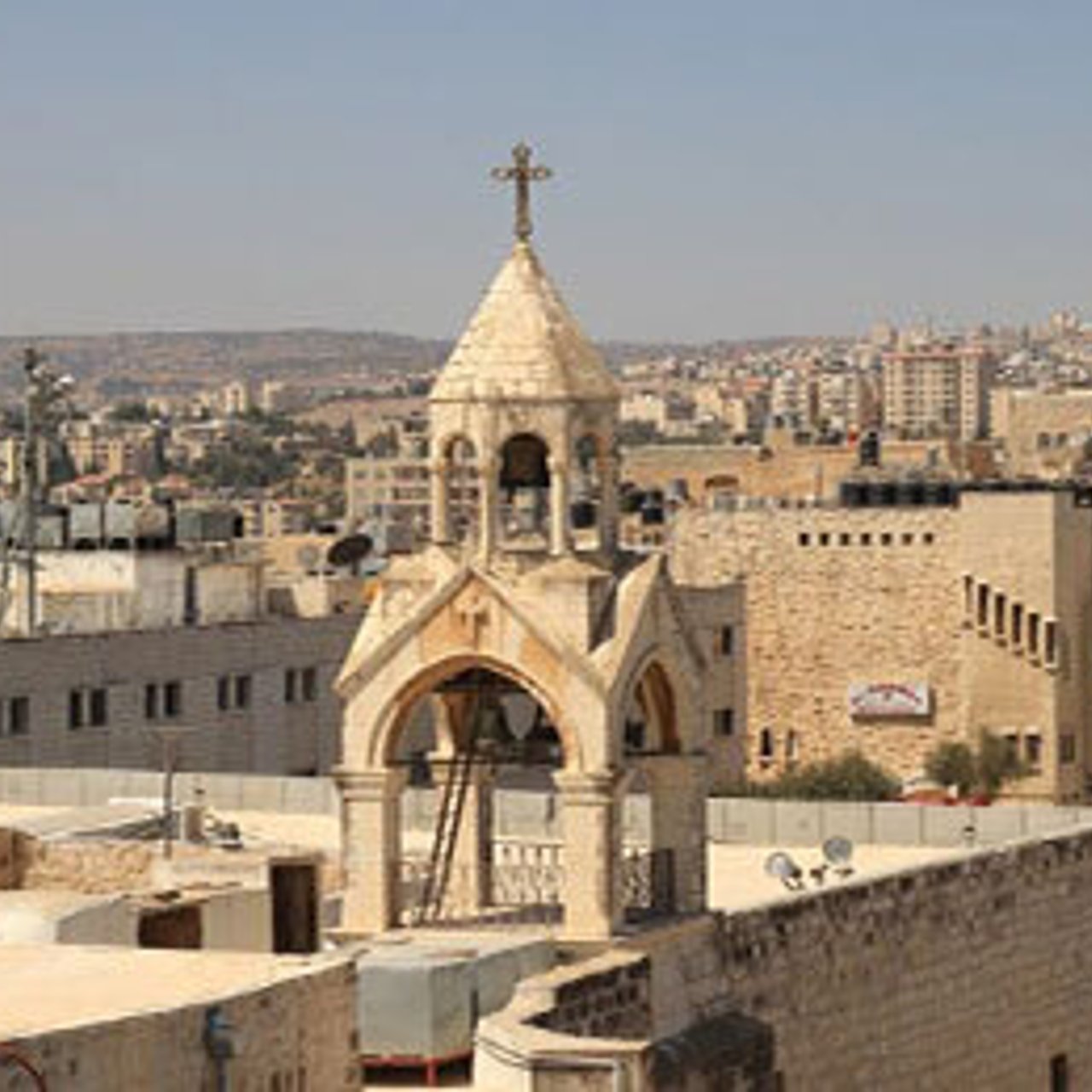
It has the ring of a spy novel “the Bethlehem dossier.”
The author, Samir Qumsieh, an Arab Orthodox parishioner from Beit Sahour, came forward in August with a list he had compiled of 93 incidents of abuses committed against Bethlehem’s Christians by local “Islamic mafia” and 140 cases of land theft against the dwindling Christian community over the past five years. Accompanied by a petition signed by scores of traditional Christians, the Bethlehem dossier was quietly delivered to leading bishops and clerics in Jerusalem, as well as to the Papal Nuncio, Ambassador Pietro Sambi, and the head of the Franciscan Custos in the Holy Land, Father Pierbattista Pizzaballa.
Like Luther nailing his 95 points to the door of the Wittenberg cathedral, the dossier sent ripples through the corridors of Jerusalem’s historic churches. Here was a catalog of grievances compiled by grassroots parishioners documenting what the holy city’s pro-Palestinian bishops and patriarchs had been denying for decades.
Armed Muslim gangs have invaded our homes, extorted our businesses, torched our shops, raped our daughters, and stolen our lands, the dossier charged. Our appeals for protection and redress to Palestinian authorities go unanswered or even worse spark clan retaliation against us for filing complaints in the first place. Thousands of our family members have fled abroad. And the whole time, you shepherds remain silent!
Silent Shepherds
THE SHEPHERDS indeed have not been just silent, but actively deceptive concerning the Muslim oppression of local Christians, adamantly insisting that all is well between Palestine’s Islamic majority and its tiny Christian remnant.
In but one example, prominent Arab clerics totally dismissed substantiated reports early in the second intifada of Muslim militiamen shooting at Gilo from Christian homes in Beit Jalla in a deliberate effort to draw IDF return fire.
“The entire history of Palestine never witnessed any religious conflict between Christians and Muslims,” Anglican Bishop of Jerusalem Riah Abu ‘Assal told the Washington Times at the time.
“The Arab Christian community in the Palestinian territories is an integral part of the Palestinian people. It suffers with it, rejoices with it, and shares with it the same hopes and aspirations,” concurred the Chancellor of the Latin Patriarchate, Father Raed Awad Abusahlia. “Therefore, the recent Israeli rumors about getting the town of Beit Jalla involved in the recent clashes is not a coincidence, but aim to ‘divide and rule’ among the one Palestinian people.”
“Refuse… the propaganda that wants to prove that there were any studied or willed persecution from our Muslim brothers and sisters of the Christians. We consider it as mere propaganda against Islam, a cold war against our Muslim brothers that only benefits the Zionists of Israel,” added Father Labib Kobtl, another representative of Latin Patriarch of Jerusalem Michel Sabbah.
Sabbah himself assured Newsweek at Christmas 2002 that, “[i]n Arab countries there is no persecution of Christians.”
Even now, leading Palestinian clergymen affiliated with the Sabeel Ecumenical Liberation Theology Center in east Jerusalem are being hosted in Protestant churches across North America, spreading the ruse that the salvation of Christians in the Holy Land lies in divesting from Israel and dismantling the security fence. Follow the Sabeel ‘road show’ this fall and you will not hear one word about the “dossier” of appalling cruelties by the Islamic mafia in Bethlehem.
Blaming Israel
THE BETHLEHEM dossier directly challenges these tired blame-it-all-on-Israel refrains instead sending up a desperate, genuine cry from the pews to the church hierarchy in Jerusalem to end their long silence regarding Muslim persecution and finally speak out in defense of their embattled flocks.
The source of the dossier was also startling Samir Qumsieh happens to be no friend of Israel. Exiled for a number of years for his activism in Fatah, he returned to Bethlehem under Oslo to open a local TV station named Al Madeh (“Nativity” in Arabic). But when Muslims recently claimed a plot of his land that he had set aside for expanding the station, Qumsieh had enough.
According to an article in the Italian paper Corriere della Sera in September, he was counseled by the Vatican representative not to go public with his compilation of grievances. “You could be killed”, warned Sambi.
“We have to complain, we have been silent long enough,” responded Qumsieh.
Father Pizzaballa of the Custos was finally ready to speak out as well, telling the Italian daily:
“Almost every day, I repeat, every day, our congregation is being attacked by Muslim extremists in the territories. And if it’s not Hamas or Jihad members attacking us, we run against a wall of ignorance in the Palestinian Authority, who does very little, if anything at all, to punish the culprits. In the past it even happened that these [attacks] were perpetrated by Mahmoud Abbas policemen or militant members of Fatah, by those who are actually supposed to protect us. I am so exhausted to hear the same complaints again and again that I sometimes don’t even check some of them.”
State of Fear
THE HISTORIC explanation for the silence of Arab church leaders in the face of Muslim persecution is well known by now. It stems from their long, sad status as second-class citizens steeped in dhimmitude a survivalist mentality passed down through the generations that conditions them to never say anything bad about their Muslim neighbors since it could prove deadly.
No doubt, Palestinian Christians have a deeply engrained fear that the Islamic religious hostility now directed primarily against Jews might one day be more fully turned against them.
Scholars monitoring the plight of Palestinians Christians are increasingly employing the analogy of the battered spouse syndrome, in which the wife of an abusive husband becomes conditioned to defend and identify with their tormentor even as the abuse worsens.
It helps to have a more precise clinical diagnosis of the problem, but what is much more needed now is an effective and compassionate prognosis for lifting the Muslim siege and preserving these ancient, fragile Christian communities. What is also sorely needed is for the shepherds to stop standing in the way of relief for their beleaguered flocks.
David Parsons serves as ICEJ Media Director in Jerusalem and a Contributing Editor of ‘The Jerusalem Post Christian Edition’ in which this article was first published.
Of Silence and Scorn
By David Parsons
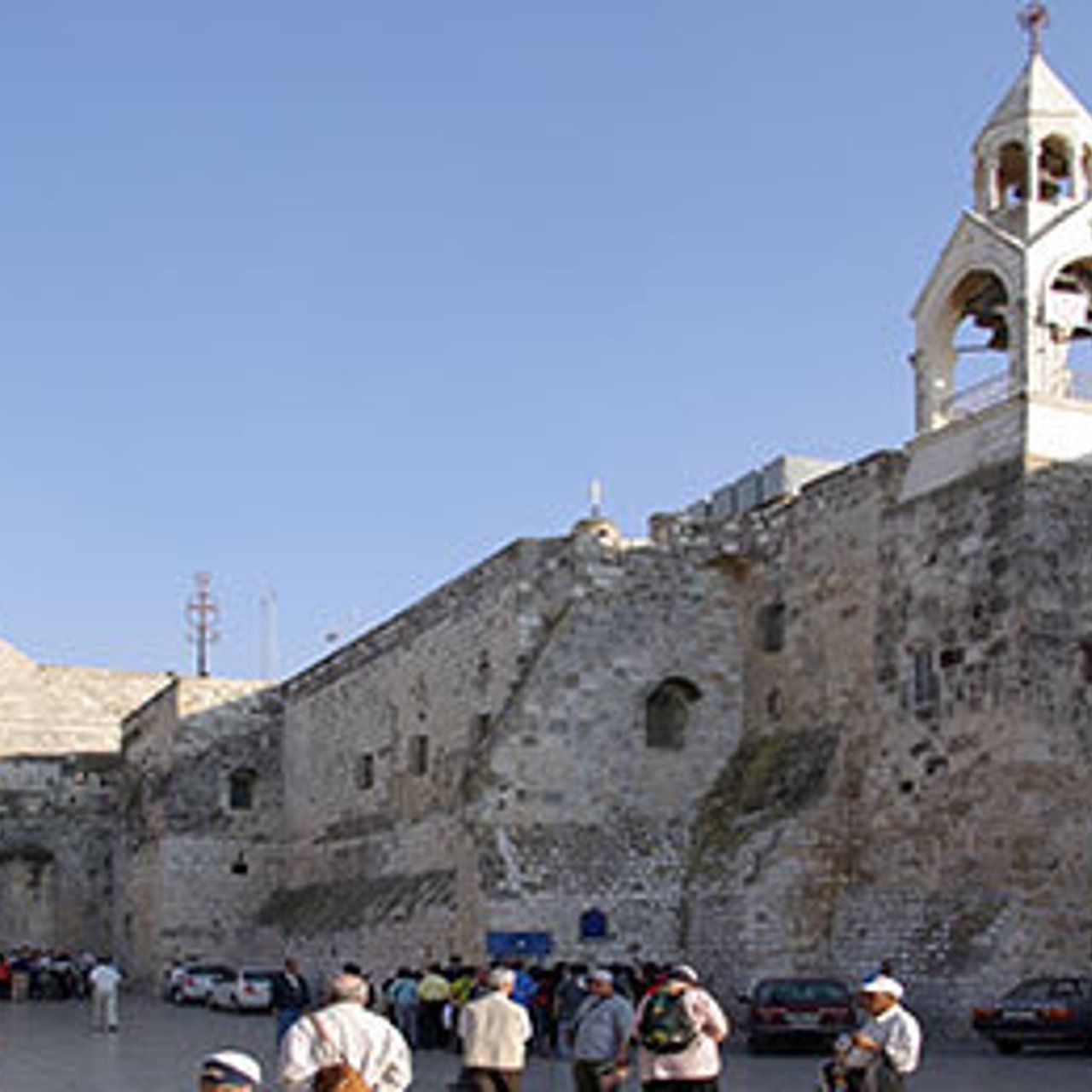
Though relieved over the end to the long standoff at Bethlehem’s Church of the Nativity, many Jews and Christians remain outraged that most Church leaders did not forcefully condemn the blatant Muslim desecration of a major Christian shrine. Here was a clear case of Islamic militiamen deliberately taking their battle against Israel into a revered church and taking clerics and youths as hostages. Yet most of Christendom seemed mysteriously silent! And many churches that did speak out chose to unfairly criticize Israel for its “siege.”
It is vital for Israelis to understand the reasons behind this moral imbalance of silence to Islam and open scorn towards Israel. In this regard, the Bethlehem standoff provides an unusually crisp portal into present Christian attitudes towards Israel and the enduring plight of Arab Christian minorities under Muslim domination.
First, not all Christians were silent. The Christian Embassy, for one, published a statement early on that “strongly condemned… this transgression on the sanctity of the Church of the Nativity,” deeming it “a premeditated offense by militant Muslim outlaws.” This was long before reports surfaced that the Latin Patriarch in Jerusalem had previously met with the Abayat clan that heads the Fatah Tanzim in Bethlehem, offered them keys to the Nativity compound, and encouraged them to seek refuge there if the need arose.
Yet much of the mainstream media refused to pick up on such sober truth telling, since it did not fit their spin on the story, and thus they bear partial responsibility for the perceived silence.
Otherwise, the most obvious reason for the silence is classic Christian anti-Semitism both patent and latent. The standoff indeed unleashed a firestorm of anti-Semitic diatribes from numerous Arab clerics and Western pulpits. There is still much darkness to be purged from the Church. But there were other factors in play that warrant explanation namely self-preservation and self-enrichment.
This first concept is simple to grasp. Arab Christians in Bethlehem and throughout the Middle East have developed over time an ingrained survival mechanism never say anything bad in public about your Muslim neighbors since it could cost you dearly. With the rise of Palestinian nationalism, this penchant for self-preservation prompted some indigent Christians to wax more anti-Israel than the Muslim majority. In his excellent work The Siege, former Irish diplomat (and Catholic) Conor Cruise O’Brien describes it as “waving the bloody shirt” higher than the Muslims in order to show your loyalty to the cause.
Yet the price for demonstrating that loyalty is on the rise. In the first intifada, Bethlehem’s Christians were asked, “Why don’t your sons come throw stones alongside the Muslim boys?” Many Christian families packed up and left. In the current, more deadly intifada, the question being asked is, “Why aren’t you giving any of your sons as shaheeds?” The silence is ever more deafening.
Many church leaders abroad understand the dangers faced by local Christians and thus adhere to the same code of silence to protect these precious flocks. This was prominently on display in the recent standoff, and may be a responsible move to some extent, so long as you do not also unduly blame the Israelis for every wrong.
In addition, as local Arab clerics keep silent about their suffering under Islam, it limits their ability to appeal for vital outside support to meet real needs in their communities. Some respond by jumping at any chance to trumpet supposed sufferings under the “Israeli occupation,” knowing Israel does not bite back. Thus when the IDF first entered Beit Jala last August to quash Tanzim gunfire at Gilo, there was a tremendous outcry that Israeli forces were holding some 45 “orphans” in a Lutheran compound as “human shields.” Total nonsense, of course, and nothing as egregious as Muslim gunmen invading the Church of the Nativity. But it proved profitable nonetheless.
Some local clergy and foreign ministries aligned with them subtly compete for funding, and the winner is often the one who can scream the loudest against Israel. The same can be said about major elements of the so-called human rights movements. Blasting Israel can be good for business.
In a similar vein, many churches that minister in the Arab/Islamic world make the mistake of thinking they have to bash Israel in order to “get in good” with the natives. This has manifested even in Evangelical circles that otherwise would be predisposed to favoring Israel. Yet we can attest that it is possible to raise monies and assist the humble Christians of Bethlehem without compromising on the Bible’s mandate to “bless” the Jewish people.
Be that as it may, there are some very positive signs coming out of the Bethlehem standoff that augur well for future relations between Israel and the Christian world.
One Protestant source close to the Armenian, Greek Orthodox and Vatican delegations involved in the Nativity negotiations insists they were “tremendously grateful to Israel for exercising restraint,” but had “disgust beyond words” for the Muslim gunmen and Palestinian officials they had to deal with. Christian and Israeli officials built a “trustful relationship” during the stretched-out talks, although it will remain problematic to express this publicly. The outrage against the Muslim actions is there, but it is still outweighed by the fears.
The question is whether it is time for responsible Church leaders to remove the gag, since it has done little to relieve the plight of Christians in Bethlehem and elsewhere under the Palestinian Authority. The standoff may be over, but they are still living with a Muslim gun to their heads. And God forbid that the next standoff darken the door of the Holy Sepulchre.
David Parsons
Media Director
International Christian Embassy Jerusalem
©2010 International Christian Embassy Jerusalem
Bethlehem on the Rebound
By Justus Reid Weiner
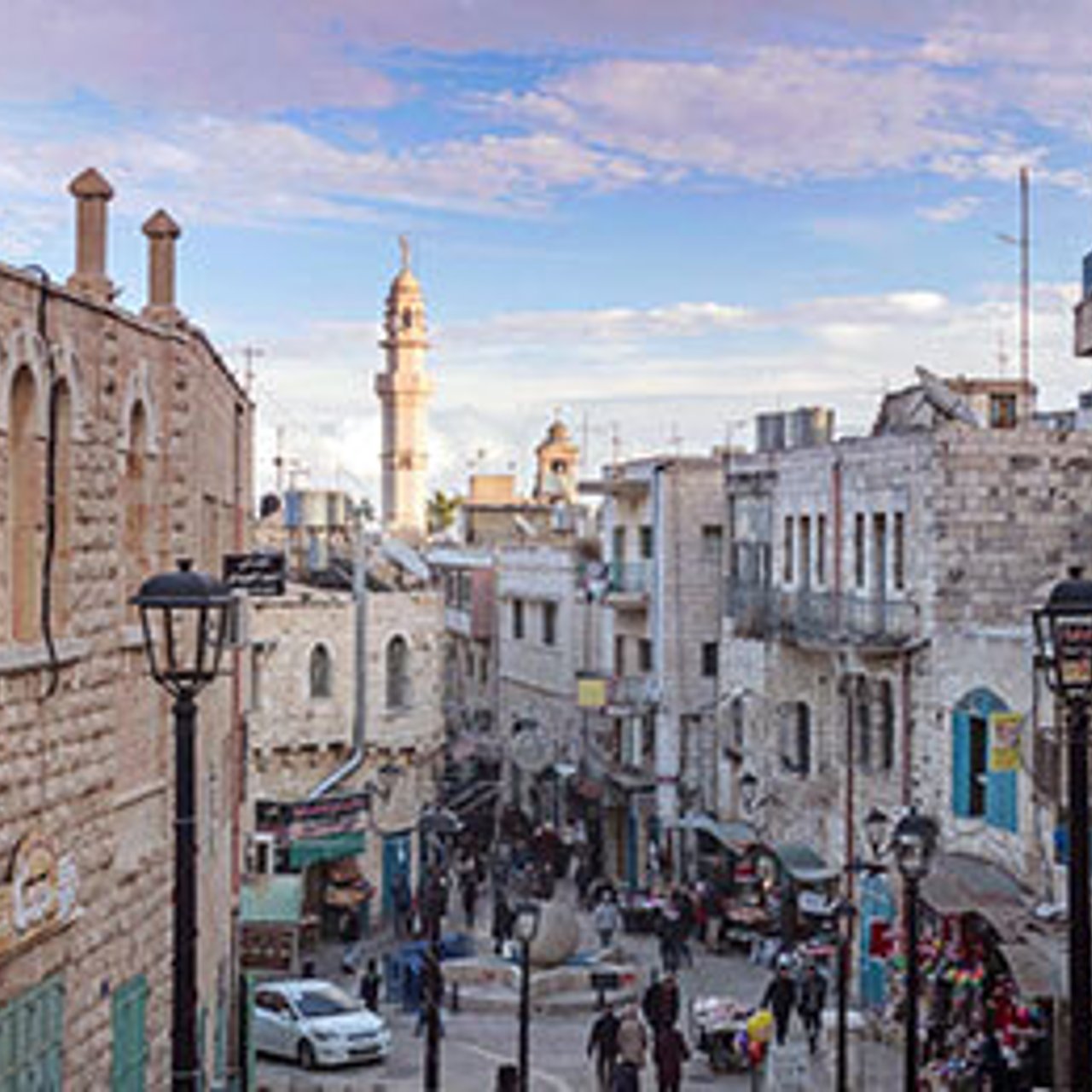
Each year during Christmas, the Christian world puts aside its other concerns and focuses on the birth of Jesus some 2000 years ago in the little Judean village of Bethlehem. The local celebrations are centered on Manger Square, a plaza in the middle of today’s much larger Palestinian town of Bethlehem which leads to the Church of the Nativity, the traditional site of Jesus’ birth.
As many as 90,000 visitors came to Bethlehem for Christmas observances this year, nearly twice last year’s total, resulting in the most successful holiday season in more than a decade. This merits reflection: Why was this Christmas different from all others in recent memory? How did it differ from the regional and historical trends which have in the past witnessed alarming levels of persecution and violence directed at Christians in the Palestinian territories? Having researched the plight of Christian religious minorities in the Middle East over the past 35 years, I have learned to be wary in accepting such good news.
Celebrating Jesus, Not Arafat
The swell of Christian visitors to Bethlehem this year far eclipsed figures in the range of a few thousand holiday visitors during the period of the Second Intifada, which PLO chief Yasser Arafat launched in 2000 and lasted roughly through 2005. This year merriment prevailed, shops were full of pilgrims, the hotels were overbooked, and the decorations and ornaments celebrated Jesus, not Palestinian nationalism and its Fatah leaders. Perhaps most significant, the streets were peaceful.
From the time he took control of Bethlehem on the eve of Christmas 1995 until his death, Arafat’s personage factored heavily in the annual Christmas celebrations. He was the featured guest of honor at Midnight Mass, always given a front row seat among the bishops and patriarchs despite his being a Muslim. In his very last years, Arafat was secluded in his Ramallah compound but had a trademark keffiyah draped over his empty chair in the Grotto of the Nativity to sadly note his absence.
Moreover, Arafat’s visage was prominently displayed on huge posters and banners adorning Manger Square each Christmas. If an alien from outer space had landed amidst the celebrations, he would have thought that Yasser Arafat had been born there – not Jesus.
In such acts, Arafat did his best to project a gracious ‘fatherly’ image to his people, while concealing his central role in stirring street violence and terrorism against Israel. It was this violence and terror which began to discourage pilgrimage to Bethlehem. Even before the second intifada erupted, young Muslim thugs had begun preying upon, harassing, intimidating, and sometimes mugging tourists. Year by year, fewer tourists and worshippers took the trouble to visit Bethlehem. Israeli security checks were also slow and tedious, dissuading pilgrims even more. The nadir for Bethlehem came around 2003, when Hamas elements decorated Christmas trees in Manger Square with the images of Palestinian “martyrs” who had carried out suicide bombings.
Those trends are all on the wane now, however, as violence and terror are down and a new IDF checkpoint seeks to facilitate easier access for those crossing into Bethlehem through the security barrier.
Christian exodus
Christmas as well as Easter are times when the world media spotlight focuses on Palestinian Christians, and in recent years the storyline has consistently been on their flight abroad. Various reports seek to blame Israel for the departure of thousands of Christians from the PA-controlled West Bank and Hamas-dominated Gaza Strip, ignoring the fact that Israel is the only nation in the entire region where the Christian population is growing. Christians now comprise less than two percent of the population of the Palestinian areas, compared to ten times that ratio before the 1948 War of Independence.
The same holds true across the Middle East, North Africa and Asia, as indigenous Christians are being driven out of Muslim-dominated lands. The Lebanese scholar Habib C. Malik writes that Christians in the Levant are in a “terminal regional decline.” And the leading cause has nothing to do with Israel – rather, it is intimidation by Muslims.
Bethlehem has witnessed many forms of intimidation against Christians over recent decades. Perhaps the best-remembered is the IDF standoff with dozens of armed Palestinian terrorists who had taken refuge in the Church of the Nativity in 2002 – looting and desecrating this important holy site while holding numerous Christian clergymen hostage for a month.
Christians in Bethlehem have been cursed and spat upon by Muslims. They have been beaten for eating in restaurants in violation of Ramadan, the Muslim month of day-time fasting. Islamic sharia law has been imposed in the curriculum for Christian children in public schools. Christian women have shunned modern Western garb to avoid being attacked for immodesty. Christian men have grown beards so they will be mistaken for Muslims.
There is widespread bias against Christians in the Palestinian Authority’s civil service hiring and promotion, as well as in the private sector. Church lands have been expropriated and mosques erected on them. Christians have been forced to sell historic family lands to Muslims at ridiculously low prices. Palestinian Authority officials have been exposed for taking bribes to record forged land deeds naming Muslims as property owners.
Particularly infuriating has been imposed marriages of Christian women to Muslim men. In addition, Christian women have been raped and murdered with nothing being done to arrest or punish the Muslim perpetrators.
The list goes on. Most cases of anti-Christian violence have gone unreported. So is anyone surprised why thousands of Palestinian Christians emigrate to any nation where they can obtain a visa?
Still, conditions have been improving for Palestinian Christians in recent years, as seen with this year’s festive Christmas celebrations. The PA’s American trained and equipped security forces have restored a sense of law-and-order to most West Bank cities, benefitting Christians and Muslims alike. Improved coordination and cooperation between the PA security forces and the IDF Central Command has also reduced friction.
PA Prime Minister Salam Fayyad and President Mahmoud Abbas believe that terrorism will not serve their interests now. They will not fight terrorism, but neither do they encourage it. The Palestinian leadership has come to the conclusion that they do not want to trigger another intifada, at least not at this juncture.
The PA wants to move ahead in other spheres, such as improving its economy. It also wants to increase international pressure on Israel, which is harder to mobilize in an atmosphere of terror.
Nonetheless, when dozens of Christians are murdered in Egypt, Iraq, or Pakistan, we should understand that, regrettably, this has been the norm rather than the exception throughout most of the Arab/Muslim world, including in the Palestinian areas as well. A year or two of economic revival, more noticeable during Christmas, cannot and should not be misunderstood as a new beginning until it becomes a lasting pattern. Patience is essential.